If you’ve been reaching for drugstore reading glasses while also dealing with astigmatism, you’re probably asking: are these readers actually helping, or quietly making things worse? The honest answer depends on how significant your astigmatism is, whether you also have age-related farsightedness, and what kind of glasses you’re using.
What Is Astigmatism?
Astigmatism is a refractive error caused by an irregularly shaped cornea or lens. Instead of being evenly curved like a basketball, your eye is shaped more like a football so light focuses at multiple points rather than one, producing blurry or distorted vision at various distances.
It’s extremely common. Most people have between 0.5 and 0.75 diopters of astigmatism, so mild it causes few symptoms. At 1.5 diopters or more, most people need correction. Above 2.5 is considered moderate to severe.
Your prescription captures this with two numbers: CYL (the degree of astigmatism) and Axis (the angle of correction needed). Over-the-counter reading glasses don’t address either of these values. They only magnify.
Symptoms of astigmatism include:
- Blurry or distorted vision at any distance
- Eye strain and headaches after reading or screen time
- Difficulty seeing clearly at night, especially around lights
- Squinting to focus

What Do Reading Glasses Actually Do?
Reading glasses are designed for presbyopia, the age-related loss of near-focus ability that usually starts in your early 40s. They work by magnifying close-up objects, using a simple convex lens with a uniform power (e.g., +1.25, +1.50, +2.00).
What they do not do is correct the irregular curvature that causes astigmatism. That requires a cylindrical lens ground to a specific axis, something only a prescription pair can provide.
Can You Have Both Astigmatism and Presbyopia?
Yes, and it’s very common. As you age, presbyopia develops on top of whatever refractive errors you already have. If you have astigmatism and reach for OTC reading glasses to handle age-related near-blur, you may get partial relief for one problem while the other goes uncorrected.
This is the most important scenario to understand: OTC reading glasses can temporarily ease close-up blur caused by presbyopia, but they will not address the distortion caused by astigmatism, and in moderate-to-severe cases they may make it feel worse by adding magnification to an already distorted image.
Reading Glasses and Astigmatism: Will They Help or Hurt?
Mild astigmatism (under 1.0 diopter)
OTC reading glasses may provide enough near-vision improvement that you notice a real benefit. The astigmatism distortion is minor enough that the magnification boost feels helpful. Low-strength readers (+1.00 to +1.50) are the most likely to be tolerable.
Moderate astigmatism (1.0-2.5 diopters)
This is where generic readers start to fall short. You might be able to read larger print, but fine text may appear smeared, shadowed, or doubled. Headaches after reading sessions are common. At this level, you need a prescription that includes cylindrical correction.
Severe astigmatism (above 2.5 diopters)
OTC reading glasses are likely to make your experience worse, not better. The magnification amplifies the distorted image your eye is already producing. Prescription glasses, or toric contact lenses, are the only reliable solutions here.
What Type of Lenses Actually Correct Astigmatism?
Cylindrical (toric) lenses
These are the foundation of astigmatism correction. Unlike standard spherical lenses, cylindrical lenses have different refractive powers at different meridians of the lens, compensating for your eye’s irregular curvature.
Aspheric lenses
A step up from standard spherical lenses, aspheric designs reduce distortion toward the edges, particularly useful for people with higher prescriptions.
Progressive lenses
If you have both presbyopia and astigmatism, progressive lenses correct for distance, intermediate, and near vision all in one lens, including your astigmatism prescription throughout. This is usually the best single solution for people in their 40s and 50s dealing with both conditions.
Anti-reflective (AR) coating
Astigmatism often causes particular difficulty at night, when lights appear as halos or starbursts. AR coating significantly reduces this glare. If you drive at night and have astigmatism, this coating isn’t optional. It’s essential.
What About Contact Lenses?
Toric contact lenses are soft contacts designed specifically for astigmatism. They use a stabilization system to keep the lens properly aligned with your eye’s axis. For people who want to avoid glasses, toric lenses are a proven option for mild to moderate astigmatism.
For people over 40 with both presbyopia and astigmatism, multifocal toric contacts exist, though they’re more complex to fit and typically cost more than standard contacts.

Common Questions
Will OTC reading glasses make my astigmatism permanently worse?
No. Wearing the wrong glasses causes eye strain and discomfort, but it doesn’t structurally change your eye or worsen your astigmatism over time.
What strength reading glasses work best with mild astigmatism?
Lower powers (+1.00 to +1.50) tend to cause less distortion. If you’re using OTC readers as a temporary measure, start with the lowest power that helps.
Is it a myth that reading in bad light worsens astigmatism?
Yes, completely. Reading in dim light or sitting close to a screen does not cause or worsen astigmatism. It’s determined by the shape of your cornea, which is largely genetic.
Can LASIK fix astigmatism?
In most cases, yes. LASIK reshapes the cornea and can correct mild to moderate astigmatism, though it does not prevent presbyopia from developing with age.
The Bottom Line
For mild astigmatism, OTC reading glasses can offer temporary near-vision relief, but they’re not a real solution. For anything moderate to severe, generic readers are likely to cause more frustration than they solve.
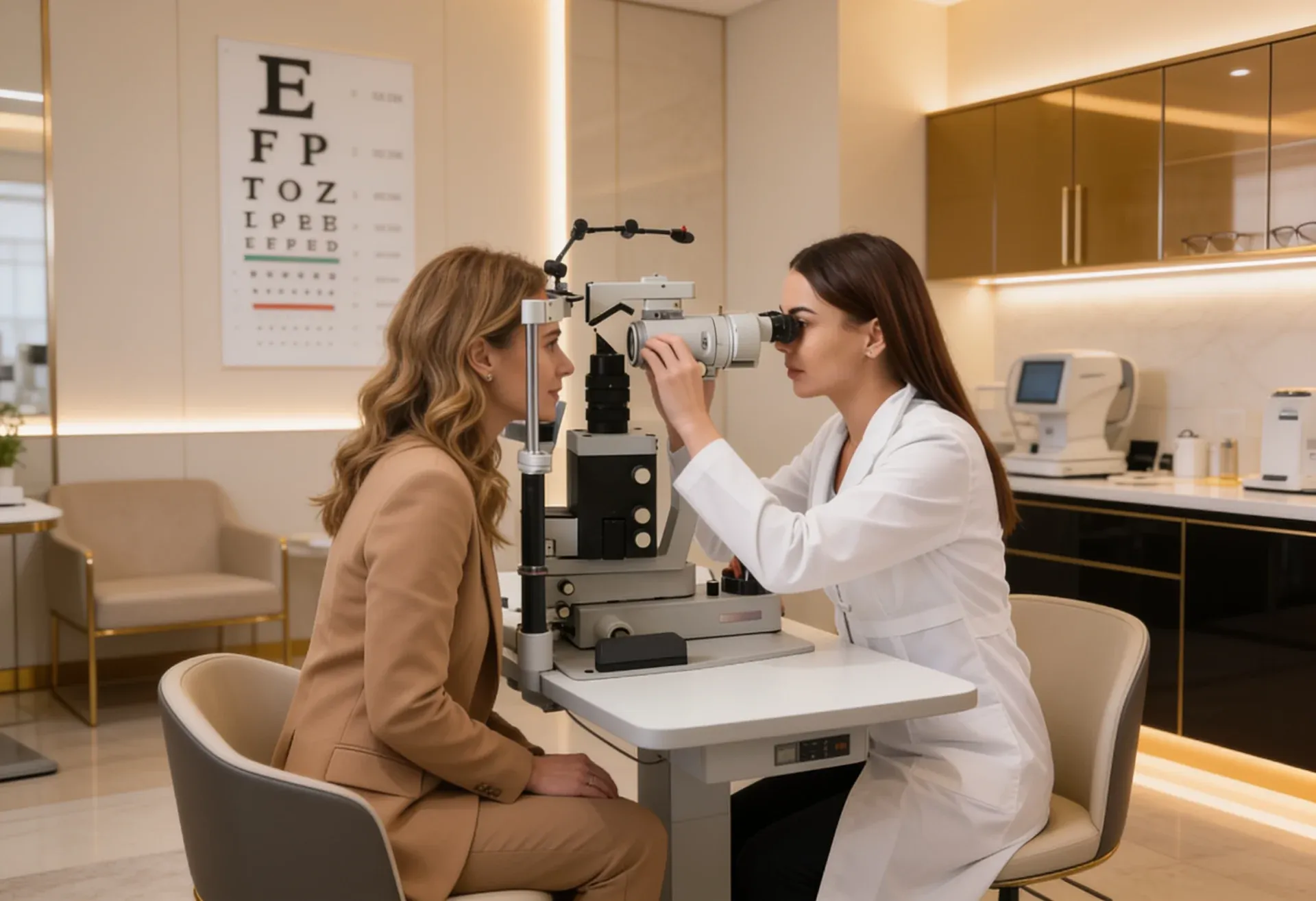
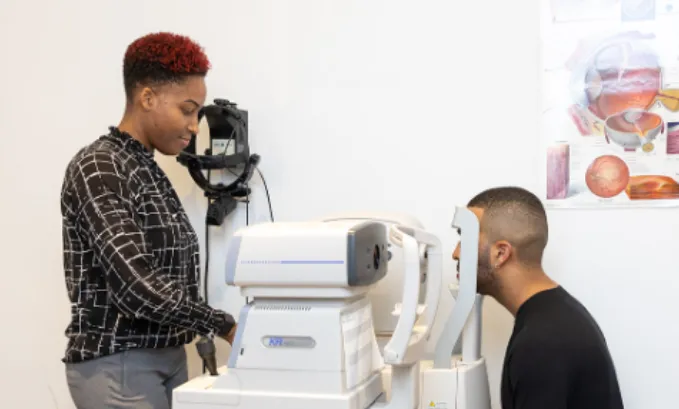
The right prescription, one that includes your exact CYL and Axis values, makes a significant difference in both clarity and comfort. If you’ve been relying on drugstore glasses and still struggling, that’s your sign to schedule a proper eye exam.
At OPTYX, our optometrists measure your complete prescription and help you choose the right lens type for your lifestyle, whether that’s a single-vision pair for reading, progressives for all-day wear, or toric contacts. No two prescriptions are the same, and neither should your glasses be.
Ready for clearer vision? Book an eye exam at your nearest OPTYX location.