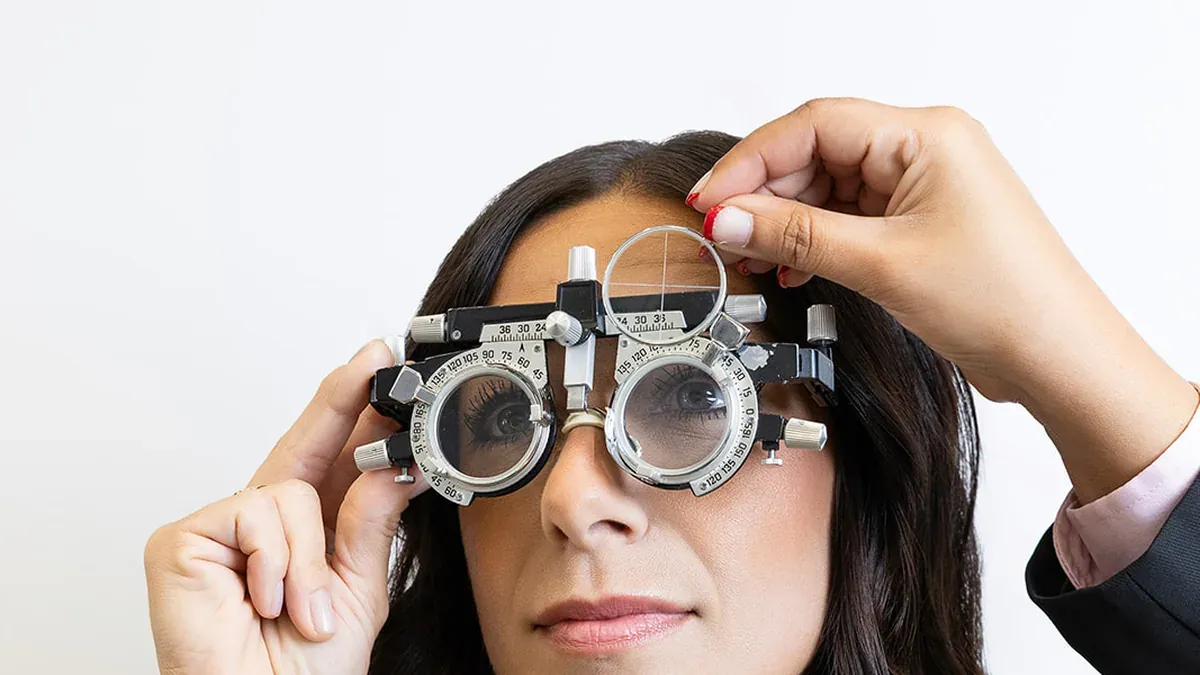

If your eyes tire quickly at a screen or glare makes it hard to focus by midday, your lens coating may be part of the problem. Anti glare computer glasses are fitted with an anti-reflective lens coating that cancels reflected light from overhead lighting, windows, and monitors. That layer reduces squinting and screen eye fatigue across a full workday. They are available with or without a prescription, and an eye exam at OPTYX is the right starting point if you are not sure what your eyes actually need.
What Screen Time Does to Your Eyes

Prolonged screen use puts a specific demand on the visual system. The eyes shift focus repeatedly across text and images at a fixed intermediate distance, sustaining effort that builds over hours. That repetitive strain is a leading trigger of computer vision syndrome (CVS), which includes eye fatigue, dryness, blurred vision, and tension headaches.
Glare is a major contributor. Reflections from ambient light hitting your lenses force your eyes to filter out competing light sources. Anti reflective lens coating addresses this directly by applying micro-thin layers to each lens surface that cancel out reflected light waves.
Anti-Glare vs. Blue Light Blocking: At a Glance
| Feature | Anti-Reflective Coating | Blue Light Blocking Filter |
|---|---|---|
| Reduces lens glare from ambient light | Yes | No |
| Filters short-wavelength blue light | No | Yes |
| Clinical evidence for eye strain relief | Supported for glare reduction | Mixed in clinical trials |
| Changes lens appearance | Subtle sheen | Yellow tint |
| Available with prescription | Yes | Yes |
Do Anti-Glare Glasses Actually Help With Computer Eye Strain?
Yes. Anti glare computer glasses reduce the visual load caused by reflections. When reflections are removed from your visual field, the eye works less to maintain clear focus on screen content. Less compensatory effort accumulates into less fatigue over a full workday.
That said, anti-reflective coating does not resolve underlying vision problems like uncorrected refractive error or dry eye. If screen eye fatigue persists after adding AR lenses, an optometrist can confirm whether your prescription is current and whether another cause is involved. Reviewing the signs that point toward blue-blocking lenses can help clarify what kind of lens upgrade your situation actually calls for.
What Is the Difference Between Anti-Glare and Blue Light Blocking Glasses?
Anti-glare and blue-blocking lenses are two distinct technologies, though many lenses combine both. Anti-reflective lens coating cancels reflected light waves on the lens surface, reducing glare and halos around light sources. Blue light blocking glasses filter or absorb short wavelengths of light before they reach the eye.
The clinical record for the two differs significantly. A 2021 systematic review by Vagge et al. found a lack of consistent evidence for the routine clinical use of blue-blocking lenses for eye fatigue. A 2026 review by Campo-Beamud et al. concluded that blue-filtering lenses do not provide clinically meaningful improvements in visual acuity or symptoms of digital eye strain. A 2023 Cochrane review by Singh et al. identified 17 randomized controlled trials examining these claims, covering a broad range of participant types and follow-up periods.
Where blue light protection eyewear has stronger support is evening use. A 2021 systematic review by Hester et al. found that blue-blocking glasses can reduce sleep onset latency for people with certain sleep disorders by limiting stimulation of the cells that regulate circadian timing.
If daytime glare is your concern, anti-reflective coating is the more targeted fix. For evening screen habits and sleep, the evidence for blue-blocking filters is better grounded.
How Do Anti-Reflective Coatings Protect Eyes From Screen Glare?
The coating is applied in multiple ultra-thin layers on each lens surface, with each layer calibrated to cancel specific wavelengths of reflected light through destructive interference. The result is cleaner light transmission. Far less reflected interference reaches your eye.
Modern AR coatings also include a hydrophobic outer layer that repels water and oils, keeping the lens cleaner throughout the day. A clean surface maintains consistent anti-glare performance. Scratches degrade the coating faster than on uncoated lenses, so using a soft microfiber cloth and lens cleaner matters more with AR glasses.
For people experiencing digital eye strain from computer vision syndrome, anti-reflective coating removes one of the most correctable sources of that strain. It does not replace proper screen distance, ambient lighting, or regular breaks, but it handles the glare variable directly.
Do I Need a Prescription for Anti-Glare Computer Glasses?

No prescription is required. Anti glare computer glasses are sold as non-prescription plano lenses with AR coating. They can also be applied to any corrective prescription lens as an upgrade. If you already wear glasses, ask for the AR coating on your next pair.
If you do not currently wear prescription lenses but struggle with screen-related fatigue, non-prescription digital eye strain glasses are widely available. Screen fatigue sometimes signals an uncorrected vision issue, though. Mild farsightedness or astigmatism that causes no problem for distance tasks can become noticeable during prolonged intermediate viewing.
Before buying, it helps to understand your options. How computer glasses differ from reading glasses is a useful distinction, since the two are built for different focal distances and swapping one for the other will not solve the underlying problem.
Can Anti-Glare Glasses Help Reduce Headaches From Screen Use?
Yes, when glare-related visual tension is a primary contributor. When headaches come from sustained eye effort caused by lens reflections and competing light sources, switching to properly coated lenses can relieve that tension. The muscles around the eye and forehead bear the strain of that sustained effort.
But headaches can also come from screen distance, monitor height, posture, an outdated prescription, or eye misalignment that surfaces only under sustained visual demand. Anti-reflective coating addresses one cause. Persistent eye redness alongside your headaches can point to dry eye or another condition that the coating alone will not fix.
Choosing Anti Glare Computer Glasses: What to Look For

Not every pair labeled anti-glare performs the same. Here is what to check:
- Multi-layer AR coating outperforms single-layer options. Ask your optician specifically about the coating tier, not just whether AR is included. The number of layers directly affects how much reflected light is canceled.
- High-index lenses transmit more light naturally and pair well with AR coating. Standard plastic lenses work, but require consistent cleaning to maintain performance.
- Photochromic lenses with AR coating adapt to lighting conditions, cutting glare in both bright outdoor and dim indoor settings without requiring a second pair.
- Frame fit affects glare control. A frame that sits too far from your face increases peripheral glare around the lens edge. An optician can adjust the fit to close that gap.
- If you use multiple focal distances at a desk, consider whether progressive lenses are a better fit for your screen setup rather than a standard single-vision lens.
At OPTYX, certified opticians across Manhattan, Long Island, the North Fork, the Hamptons, and Westchester can assess your screen environment and recommend the right coating and lens combination in person.
Book an Eye Exam
If screen eye fatigue, glare, or headaches are affecting your daily work, Book an Eye Exam at OPTYX to get a full picture of what your eyes need.
Sources
- Hester L et al. (2021). Evening wear of blue-blocking glasses for sleep and mood disorders: a systematic review. Chronobiology international. PubMed
- Singh S et al. (2023). Blue-light filtering spectacle lenses for visual performance, sleep, and macular health in adults. The Cochrane database of systematic reviews. PubMed
- Vagge A et al. (2021). Blue light filtering ophthalmic lenses: A systematic review. Seminars in ophthalmology. PubMed
- Campo-Beamud C et al. (2026). Blue light and melatonin: A critical review of scientific evidence and biohacker myths in ophthalmology. Archivos de la Sociedad Espanola de Oftalmologia. PubMed