
If you spend hours in front of a screen and regularly deal with dry, irritated eyes, it makes sense to wonder whether blue light glasses could help. They are widely marketed as a solution for screen-related discomfort, and the connection to dry eyes is one of the most common questions our optometrists at OPTYX hear from patients across New York. The short answer is that blue light glasses are not designed to treat dry eyes, but understanding the actual relationship between screens, blue light, and dry eye will help you make a better-informed decision.
Does Blue Light Cause Dry Eyes?
Blue light and dry eyes are frequently linked in marketing, but the science tells a more specific story. Blue light itself is not the direct cause. The more clinically significant factor is reduced blinking during screen use.
Normal blinking happens roughly 15 to 20 times per minute. During screen time, that rate can drop to six or eight times per minute. Blinking is how the eye replenishes its tear film, so when blinking slows, the tear film breaks down and the burning, stinging, or gritty sensations of dry eye follow.
Screen brightness and glare are also contributing factors. Staring into a bright display causes squinting that further disrupts natural blinking. So while does blue light cause dry eyes is a fair question, the more accurate answer is that the behaviors screens produce — reduced blinking and increased glare exposure — are the primary drivers.
Do Blue Light Glasses Help With Dry Eyes?
Do blue light glasses help with dry eyes directly? No. Blue light filter glasses are designed to reduce the amount of high-energy blue wavelength light reaching your retina. They are not built to stimulate tear production, change blinking habits, or treat any aspect of dry eye physiology.
There is an indirect argument worth noting. If a blue light lens reduces screen glare and makes the display feel more visually comfortable, you may squint less and experience slightly less visual fatigue overall. Some screen users find that reducing glare-related strain makes long work sessions more tolerable, which may marginally ease the conditions that worsen dry eye.
But this is not targeted dry eye treatment. If you are protecting your eyes from screens and want to address dry eye seriously, blue light glasses should be one small part of a broader plan rather than the solution on their own.

What Actually Causes Dry Eyes from Screen Use?
Reduced blinking is the most clinically significant factor. Every skipped or incomplete blink leaves the tear film thinner. Over a long session, even small drops in blink rate add up to meaningful tear film instability.
Screen glare and brightness force the eyes to work harder to maintain focus, triggering squinting and tension that disrupts blinking further. Anti-reflective coatings address screen glare directly and are often more relevant to dry eye comfort than blue light filtering specifically.
Air quality and environment are frequently overlooked. Dry office air from heating or air conditioning accelerates tear film evaporation independent of screen use, compounding the effect of reduced blinking.
Can Blue Light Glasses Help With Dry Eyes as Part of a Broader Plan?
Can blue light glasses help with dry eyes when combined with other strategies? Potentially, to a modest degree. If you are already using artificial tears, following the 20-20-20 rule, and managing your environment, adding a blue light lens with an anti-reflective coating may contribute to overall screen comfort.
For patients spending long hours on screens, computer glasses with a combined anti-reflective and blue light coating are often a practical all-day choice. They address multiple sources of eye strain at once.
The key distinction: do blue light glasses help with dry eyes as a standalone treatment? No. As one element in a multi-factor approach, they can play a supporting role.
What Actually Helps With Dry Eyes?
Artificial tears and lubricating eye drops are the first-line recommendation for mild to moderate dry eye. Preservative-free formulations are preferable for daily use. They directly replenish the tear film in a way blue light glasses cannot.
The 20-20-20 rule – every 20 minutes, look at something 20 feet away for 20 seconds — forces regular breaks and prompts a natural blink cycle. Conscious blinking during screen work adds to this, helping maintain the tear film without any equipment.
Anti-reflective lenses reduce screen glare directly. For many patients, glare is a larger driver of strain and blinking disruption than blue light exposure, making an AR coating a higher priority for dry eye relief.
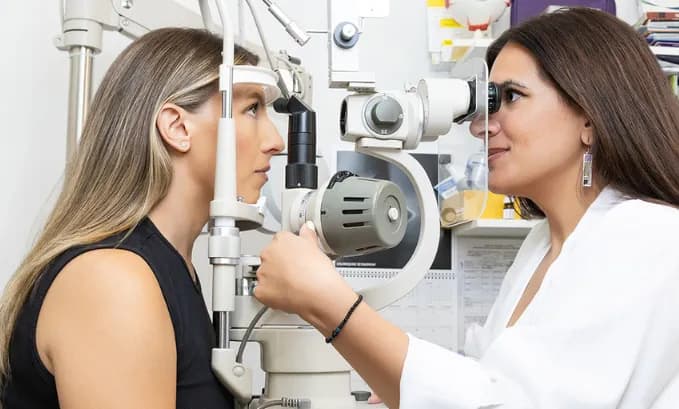
A comprehensive eye exam is the essential starting point if symptoms persist. Dry eye has distinct subtypes that respond differently to treatment, and an outdated prescription can produce strain symptoms that closely mimic dry eye. An optometrist can assess your tear film and ocular surface health to recommend the right targeted treatment.
Get Dry Eye Support at OPTYX New York
If you have been asking whether blue light glasses help with dry eyes or trying to get to the bottom of your screen-related symptoms, the right place to start is a professional eye exam.
At OPTYX, our optometrists assess your full eye health picture and determine whether your symptoms reflect dry eye, a prescription issue, digital eye strain, or a combination. We carry lens solutions for every need, from anti-reflective and blue light coatings to dry eye treatments tailored to your situation. Visit any of our 13+ locations across NYC and Long Island or book a comprehensive eye exam at OPTYX today.

Frequently Asked Questions
Do blue light glasses help with dry eyes?
Not directly. Blue light glasses filter high-energy blue light but are not a dry eye treatment. They may reduce screen glare and visual discomfort, which can make screen use more comfortable, but they do not address the underlying causes of dry eye.
Does blue light cause dry eyes?
Blue light is not the primary cause of screen-related dry eyes. The main driver is reduced blinking during screen time, which breaks down the tear film. Screen brightness, glare, and low environmental humidity are also significant contributors.
Can blue light glasses help with dry eyes?
They may contribute to comfort as part of a broader approach, especially when paired with an anti-reflective coating, regular blinking breaks, and lubricating eye drops. They should not be used as the sole solution for dry eye symptoms.
What is the best way to treat dry eyes from screen use?
Lubricating eye drops, the 20-20-20 rule, conscious blinking, anti-reflective lenses, and an up-to-date prescription are the most effective strategies. A comprehensive eye exam is the right starting point to identify your dry eye type and get targeted recommendations.
Are anti-reflective lenses better than blue light glasses for dry eyes?
For dry eye specifically, anti-reflective lenses address screen glare more directly than blue light filtering, since glare is a major driver of blinking disruption. Many patients benefit from lenses that combine both coatings.
Where can I get dry eye support in New York?
OPTYX offers comprehensive eye exams and dry eye assessments across 13+ locations in New York City and Long Island. Visit OPTYX to find your nearest store or book an appointment today.