
Dry, burning, watery eyes during menopause? You’re not imagining it. You might be dealing with one of the most overlooked symptoms of hormonal change: dry eyes menopause brings to millions of women worldwide.
Studies show that over 60% of women experience dry eyes during perimenopause and menopause. But here’s what most women don’t know: these symptoms are often hormonal, progressive, and treatable with the right diagnosis. The connection between menopause and dry eyes is real, backed by science, and absolutely manageable.
🔎 Fact #1: Yes, Menopause CAN Cause Dry Eyes – Here’s Why
Does menopause cause dry eyes? The answer is a resounding yes. When your estrogen and progesterone levels drop during menopause, it directly impacts the meibomian glands in your eyelids, those tiny oil-producing glands responsible for stabilizing your tear film. Without enough oil, your tears evaporate too quickly, leaving you with red, gritty, and irritated eyes.
💡 Keyword Insight: This condition is medically known as evaporative dry eye disease, and it’s especially common in postmenopausal women. Understanding that menopause dry eyes are a legitimate medical condition is the first step toward finding effective relief.
😖 Fact #2: It’s Not Just “Aging” – It’s Hormonal
Many women experiencing dry eyes and menopause symptoms chalk up their discomfort to “just getting older,” but the truth is more specific. Dry eyes in menopause result from measurable hormonal shifts, not simply age. This distinction is crucial because it means targeted treatments can be incredibly effective.
Common menopause dry eyes symptoms include:
- Burning, itching, or gritty sensations
- Excessive tearing (as a rebound response to dryness)
- Blurry or fluctuating vision
- Light sensitivity
- Difficulty wearing contact lenses
- Eyes that feel tired after screen time
The relationship between menopause and dry eyes becomes clear when you understand how hormones affect your tear system. Estrogen helps regulate both the quantity and quality of tears you produce.
💧 Fact #3: Over-the-Counter Drops Aren’t Enough
If you’re dealing with menopause dry eyes, you’ve probably tried artificial tears. While these provide temporary relief, they don’t address the root hormonal imbalance causing your dry eyes in menopause. That’s why many women find themselves constantly reaching for drops with little lasting relief.
Does menopause cause dry eyes that require more than basic drops? Absolutely. The hormonal component means effective treatment often requires a comprehensive approach.
At OPTYX New York, we offer:
- Comprehensive dry eye diagnostics
- Prescription-strength eye drops and anti-inflammatory therapies
- In-office procedures for long-term relief
- Custom treatment plans tailored to menopausal women
- Ongoing monitoring as hormone levels change
🌿 Fact #4: Lifestyle & Diet Play a Bigger Role Than You Think
Does menopause cause dry eyes that require medical treatment? Often yes. But lifestyle modifications can significantly enhance your comfort and reduce dry eyes in menopause.
Simple changes that help:
- Use a humidifier to fight dry indoor air
- Follow the 20-20-20 rule to reduce screen fatigue
- Increase omega-3s in your diet (flaxseed, walnuts, fish oil)
- Stay well-hydrated and reduce caffeine
- Wear wraparound sunglasses to protect against the wind
- Use warm compresses to stimulate oil glands
- Review medications that may worsen dryness
These strategies work synergistically with professional treatments to provide comprehensive relief for menopause and dry eyes.
🧪 Fact #5: A Dry Eye Exam Is Not the Same as a Vision Test
If you’re dealing with persistent menopause dry eyes, you need more than a basic vision check – you need a comprehensive dry eye evaluation.
Many women with dry eyes in menopause have been told their “eyes look fine” during routine exams. This happens because standard tests don’t assess tear film quality or meibomian gland function.
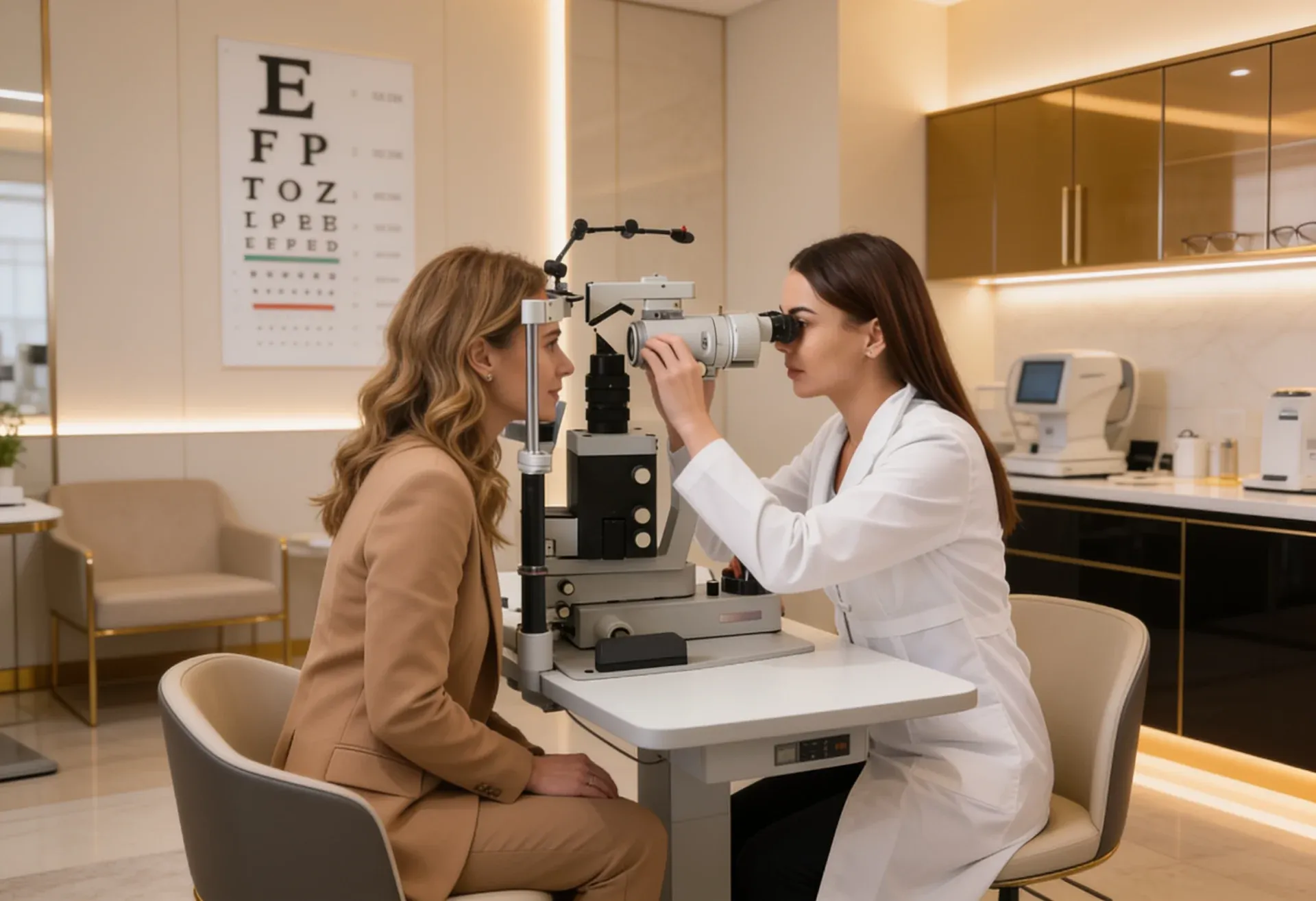
At OPTYX New York, our specialized evaluation includes:
- Advanced tear film analysis
- Meibomian gland imaging
- Tear evaporation rate testing
- Inflammation assessment
- Hormone-related trigger identification
- Customized treatment planning

👁️ You Deserve More Than Just “Dealing With It”
Dry eyes during menopause aren’t just uncomfortable: they impact your quality of life. Reading, driving, computer work, and even sleep can become daily struggles. But you don’t have to suffer in silence.
Ask Yourself:
- Do your eyes feel dry or gritty when you wake up?
- Are you avoiding activities because of eye discomfort?
- Are you using drops more than four times a day?
If you answered yes to any of these, it’s time to see a dry eye specialist.
💼 Why Women Trust OPTYX for Dry Eyes Menopause
OPTYX New York leads in diagnosing and treating hormone-related dry eye disease. We specialize in personalized care for women navigating menopause, understanding that menopause dry eyes require a different approach than other dry eye conditions.
Our optometrists address the underlying hormonal connections causing dry eyes in menopause. Using advanced diagnostics, we create comprehensive relief strategies tailored to each woman’s unique journey.
📍 Find your nearest OPTYX New York location
📞 Call or book online today
🔬 Get the expert care your eyes deserve
💬 Final Thought: Take Control Today
Menopause and dry eyes don’t have to control your life. The connection is clear, the treatments are available, and relief is possible. Symptoms are treatable when you work with specialists who understand the hormonal component.
Don’t let menopause dry eyes limit your activities or reduce your quality of life. Take the first step toward lasting relief by scheduling a specialized evaluation with OPTYX.
Your eyes deserve expert care. Book your assessment today and discover how much better you can feel.
OPTYX New York is an official sponsor of the Rebranding Menopause Podcast with Hosts Ingrid Dodd, Dana Persico, and Sharon Grasso. Listen or watch wherever you stream your podcasts.