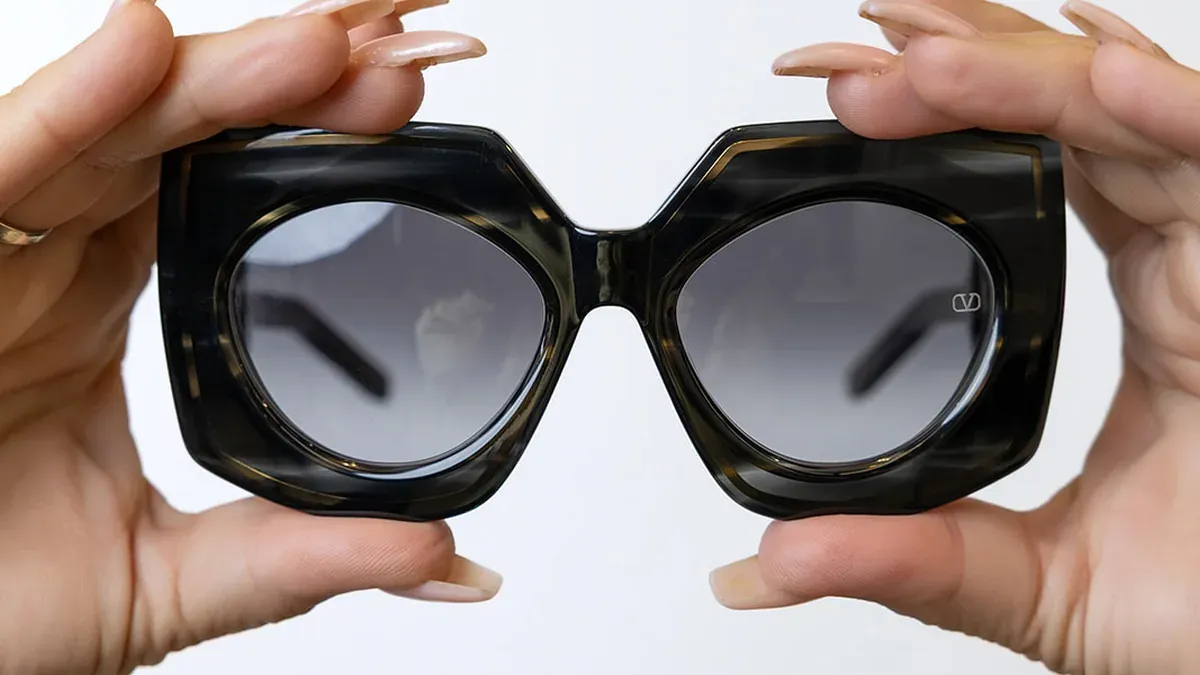

Transition lenses are prescription-compatible eyeglass lenses that darken outdoors in UV light and clear automatically indoors. The photochromic film in each lens completes the full shift in roughly one minute. One pair handles both settings, making them a practical prescription sunglasses alternative. If you move between environments throughout the day, an eye exam will confirm whether photochromic eyeglasses suit your prescription and lifestyle.
Transition Lenses vs. Dedicated Sunglasses

Here is how light-adaptive eyewear measures up against a dedicated pair of sunglasses:
| Feature | These Lenses | Dedicated Sunglasses |
|---|---|---|
| UV protection | 100% UVA and UVB | Varies by lens quality |
| Works with prescription | Yes | Yes |
| Usable indoors | Yes, lenses clear fully | No, too dark to wear |
| Effect inside a closed car | Reduced, UV-dependent | Full protection |
| Cold-weather performance | Transition slows significantly | Consistent tint |
| Requires two pairs | No | Yes |
They function as indoor outdoor glasses, cutting what you carry to one pair. Dedicated sunglasses handle specific conditions they cannot match.
How Do Transition Lenses Work?
They work because a photochromic layer is embedded in the lens itself, not applied as a surface coating. That layer contains molecules that change structure when exposed to UV radiation: the lens absorbs more visible light and darkens as a result. Remove the UV source, and the process reverses.
The darkening cycle takes roughly one minute. Clearing back to clear indoors takes a few minutes longer. Tint depth scales with UV intensity, so the lens adjusts on its own as cloud cover shifts or as you move between sun and shade.
These lenses block 100% of UVA and UVB rays. They also filter blue light up to 400 nanometers, which can reduce eyestrain from screens and bright artificial sources. Most UV-blocking lenses of this type use polycarbonate, a lightweight and impact-resistant material. High-index and standard plastic versions also exist. Available tints include grey, brown, green, and blue.
Are Transition Lenses Worth It?

For wearers who move between indoor and outdoor settings daily, yes. The convenience is genuine: you stop switching pairs and forgetting sunglasses at home, and UV protection becomes continuous throughout the day.
Where they deliver:
- They block 100% of UVA and UVB, with no separate filter needed.
- The lens adjusts to changing light without any action from the wearer.
- Glare and eyestrain decrease across variable lighting conditions.
- Blue light filtration operates up to 400 nanometers.
- They are compatible with single-vision, bifocal, and progressive prescriptions.
- Anti-reflective coating and polarized or custom-tinted upgrades can be added for stronger outdoor clarity.
Where they fall short:
- Full darkening can take up to one minute after stepping outside.
- Cold temperatures slow both the darkening and clearing noticeably.
- The photochromic reaction depends on UV, so closed car interiors and indoor UV sources limit the effect.
- Photochromic lenses cost more than standard lenses due to specialized materials and manufacturing.
Whether the trade-off makes sense depends on your routine and your sensitivity to light. An optometrist can help you decide.
Do Transition Lenses Work While Driving?

Partly. They reduce glare and deliver UV protection in open conditions such as walking in direct sun or driving with windows down. Many wearers find that the lenses do not darken as deeply inside a closed vehicle as they do in open air, since the photochromic reaction depends on UV and car interiors receive different light than open sunlight.
Cold weather adds another constraint. The photochromic process slows significantly at low temperatures, so the lens may respond sluggishly in winter conditions.
For long commutes or high-glare driving, an optometrist may suggest pairing them with polarized clip-ons or keeping a dedicated prescription pair for the car.
How Long Do Transition Lenses Last?
The lenses have a finite performance window. The photochromic molecules degrade over time with ongoing UV exposure, gradually losing their ability to darken as deeply or clear as fully as when new. The rate depends on daily UV load and storage habits.
To extend their useful life:
- Store lenses in a hard case to prevent scratching the photochromic layer.
- Clean them with a soft cloth and a lens-compatible solution, not paper towels or clothing.
- Avoid leaving them in direct sunlight for extended periods when not in use.
- Keep them away from extreme temperatures, which can stress the lens material.
The sign that the layer has degraded is a persistent slight tint indoors, or a tint that no longer deepens usefully outdoors. An eye exam is a good time to evaluate both the lenses and your prescription together.
What Is the Difference Between Transition Lenses and Progressive Lenses?
Different problems, different solutions. The former manages light: it controls how much UV and visible light reaches the eye. Progressive lenses manage focus: they correct near, intermediate, and distance vision in a single lens without a visible line.
The two are complementary, not competing. Multifocal lens designs are compatible with photochromic technology, so a wearer who needs presbyopia correction and consistent UV protection can combine both in one pair. Your optometrist determines whether the combination suits your prescription and daily demands.
Who Should Consider Transition Lenses?
They make the most sense when carrying two pairs of glasses is genuinely inconvenient. Good candidates include:
- People who spend several hours outdoors daily benefit from automatic tint adjustment without thinking about it.
- Prescription wearers get UV protection without buying a separate pair of sunglasses.
- Anyone who relies on eyewear for light sensitivity gains continuous UV-blocking coverage that adjusts throughout the day.
- Outdoor workers and commuters avoid switching pairs every time they move between environments.
They are a weaker fit for people who drive long distances daily or spend extended time in cold weather, where a dedicated tinted or polarized lens delivers more reliable tint depth.
Ray-Ban photochromic options are a useful reference when comparing brands.
OPTYX optometrists across Manhattan, Long Island, the North Fork, the Hamptons, and Westchester will assess your prescription, your environment, and your light sensitivity to make a direct recommendation.
Ready to Find the Right Lenses?
If this sounds like a good fit for your lifestyle, Book an Eye Exam at OPTYX and an optometrist will walk through every option with you.