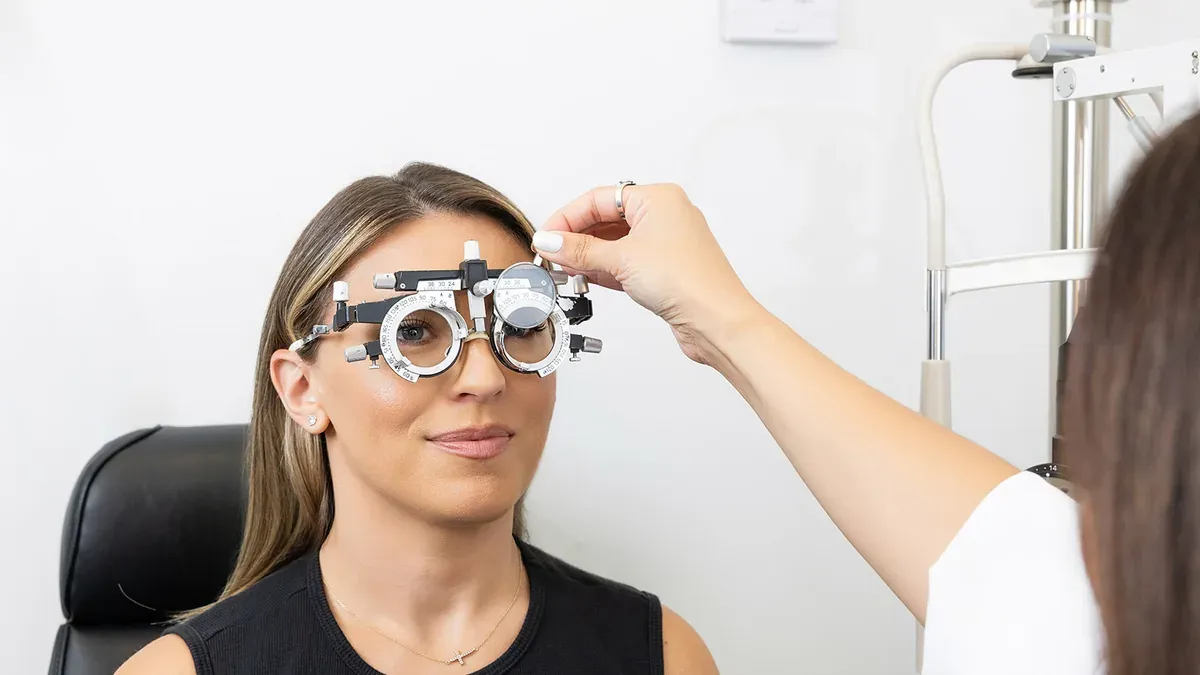

The eye exam cost that NYC residents typically pay runs from about $95 for a basic vision check to $185–$200 for a full comprehensive eye exam without insurance. With a vision plan, your out-of-pocket cost usually lands closer to $100, depending on your plan's benefit structure and copay. Provider type, exam scope, and which part of New York you are in all move that number. Knowing those variables before you schedule helps avoid billing surprises.
Eye Exam Cost NYC: A Quick Snapshot
Here is a practical reference for what New Yorkers typically pay:
| Situation | Estimated Cost |
|---|---|
| Basic vision check, no insurance | ~$95 |
| Comprehensive eye exam, no insurance | $185–$200 |
| Comprehensive exam, with vision insurance | ~$100 (varies by plan) |
The vision exam price you see quoted online often reflects only the base refraction. A full medical evaluation of the eye's internal structures costs more and examines considerably more ground.
How Much Does an Eye Exam Cost Without Insurance in New York?
Without insurance, the eye exam cost that NYC patients pay depends on what the visit actually covers. A basic refraction, which establishes your glasses or contact lens prescription, runs around $95 at most providers. A comprehensive eye exam without insurance, which includes a full health evaluation of both eyes, typically costs $185–$200. The broader scope explains the price gap.
That wider evaluation looks at far more than reading a chart. Intraocular pressure, the condition of the optic nerve, the clarity of the crystalline lens, and the health of the retinal periphery all get assessed. Skipping this to save $90 is a real trade-off. Many serious eye conditions, including glaucoma and early macular degeneration, are asymptomatic in their early stages and offer no early warning. Symptoms arrive too late.
For patients researching eye exam cost NYC to plan their budget, knowing that $90 gap between a basic and comprehensive visit clarifies what each price point actually includes, a prescription update versus a full medical evaluation of both eyes.
An eye exam is worth scheduling even when vision seems perfect. Good visual acuity does not mean healthy eyes. An optometrist can see structural changes inside the eye long before any symptom appears, and finding them during a routine visit is far less disruptive than discovering them in an emergency.
What Is Included in a Comprehensive Eye Exam?

A comprehensive eye exam is a medical evaluation, not just a vision test. What a thorough examination looks like at a full-service practice includes several distinct components:
- Visual acuity testing to measure current clarity of vision
- Refraction to determine the exact corrective lens prescription you need
- Intraocular pressure measurement to screen for glaucoma
- Anterior segment examination of the cornea, iris, and crystalline lens
- Retinal evaluation covering the optic nerve, macula, and peripheral retina
- Binocular vision and eye movement assessment
At OPTYX, optometrists use Optos ultra-widefield retinal imaging, which captures up to 200 degrees of the retinal surface in a single frame, in most cases without pupil dilation. Standard slit-lamp exams cover a much smaller area. Finding an early diabetic change, a retinal tear, or a suspicious lesion at a routine visit costs nothing beyond the exam fee. Discovering the same issue in an emergency room costs considerably more. Timing changes everything.
Some symptoms should not wait for a scheduled appointment. See your optometrist promptly if you notice:
- A sudden increase in floaters or new flashes of light
- A shadow or curtain across part of your vision
- Sudden unexplained double vision or loss of central vision
Those signs can indicate conditions that require same-day evaluation. A planned annual visit is the right moment to catch things early. Acute changes require prompt, unscheduled attention.
Does Vision Insurance Cover a Comprehensive Eye Exam?
Yes. Vision insurance typically covers a comprehensive eye exam once per year or every two years, depending on the plan. Coverage varies: most plans pay between 40% and 80% of the exam fee, which brings the eye doctor visit cost to roughly $100 after the benefit applies. Some plans include the full exam at no copay; others apply a fixed copay of $10–$25.
Medical insurance, which is separate from a vision plan, may also cover an eye visit when a diagnosed condition drives the appointment. Annual monitoring for diabetic retinopathy, ongoing glaucoma management, or a post-injury evaluation are all examples where medical coverage typically applies. The billing code your optometrist uses determines which plan pays.
FSA and HSA accounts generally cover eye exam fees as qualified medical expenses, which is useful for patients paying out of pocket or carrying a high deductible. Most patients overlook this. If you are unsure what your plan covers, check with your nearest OPTYX location before scheduling.
Eye Exam Cost NYC: What Factors Shape the Final Price?

Three variables shape the final number.
Type of Provider
An independent optometrist at a full-service practice typically charges more than a retail optical chain. The eye doctor visit cost at a boutique or independent practice reflects longer appointment times, advanced diagnostic equipment, and care continuity across visits. Retail chains operate on volume: exam rooms turn over quickly, widefield imaging is rarely included, and the focus stays on prescription accuracy rather than overall eye health. For a simple prescription update, either setting can work. For a full medical picture of your eye health, the type of provider matters considerably.
Scope of the Exam
A vision-only refraction costs less than a comprehensive medical evaluation. When a symptom drives the visit rather than a scheduled checkup, the encounter becomes a medical appointment billed under different codes. That also determines which insurance pays. Billing codes matter here. Knowing what kind of visit you need before you arrive helps set expectations about cost and coverage before the exam begins.
Location Within New York
Practices in Manhattan generally charge more than those in Long Island, the North Fork, the Hamptons, or Westchester. That reflects the operational cost of running in a high-rent area, not a difference in clinical quality. OPTYX has locations across all five regions. The eye exam cost that NYC offices on the Upper East Side charge reflects their borough overhead, not a premium on the exam itself.
How Often Should Adults Get an Eye Exam?
Adults with no diagnosed eye conditions benefit from a comprehensive eye exam at least every two years. Annual visits are the better standard for:
- Adults over 40
- People with diabetes
- Contact lens wearers
- Anyone with a family history of glaucoma or retinal disease
Children need more frequent exams because prescriptions can shift significantly from one school year to the next.
The logic for regular visits is straightforward. Conditions that cause significant damage, including glaucoma and early diabetic retinopathy, progress without pain or obvious vision loss in their early stages. By the time a patient notices something is wrong, considerable and often irreversible damage may already be present. That window closes fast. An affordable eye exam once a year is one of the most cost-effective forms of eye disease prevention available.
For a full breakdown of what to expect and how to prepare, the guide to eye exams in New York City covers recommended visit frequency by age group and risk factor.
Is an Eye Exam at an Optometrist More Expensive Than at a Retail Chain?
Yes, typically. An independent optometrist charges $30–$60 more on average than a retail optical chain for a comparable visit. Whether that difference is worth it depends on what you need from the appointment.
Patients comparing eye exam cost NYC across provider types will find the price gap tracks with exam scope rather than location alone, more time with the doctor, more diagnostic technology, and a full retinal evaluation versus a rapid refraction.
Retail chains keep the optometrist cost without insurance lower by limiting exam time and focusing on the refraction. That approach suits patients who are young, have no symptoms, and simply need an updated prescription. The trade-off is a shorter appointment and no widefield retinal imaging.
The eye exam cost that NYC independent practices quote for a comprehensive visit reflects more time and more equipment. Widefield retinal imaging, an extended assessment of the optic nerve, and a thorough conversation about findings all take time. That time is built into the price at a full-service practice. Results justify the cost. For patients with risk factors for eye disease, that scope is what makes the higher vision exam price worth it. When patients search "comprehensive eye exam near me," an independent optometrist catches what a fast refraction-only visit cannot.
What to Expect at OPTYX

OPTYX, in operation in New York since 1971, runs comprehensive eye exams across five regions: Manhattan, Long Island, the North Fork, the Hamptons, and Westchester. No component is skipped. Each visit includes intraocular pressure screening, Optos widefield retinal imaging, binocular vision assessment, and a full prescription evaluation. Certified opticians and styling professionals work alongside the Doctor of Optometry at every location.
After the exam, patients work directly with opticians to select frames from twenty designer brands in the boutique. For anyone who needs both a prescription and new eyewear on the same visit, getting glasses the same day as your exam is possible at many OPTYX locations.
An eye exam without insurance at OPTYX follows the same comprehensive protocol as an insured visit. The scope does not change based on payment method. For patients managing chronic conditions or taking medications that affect eye health, the full-scope visit is the appropriate standard regardless of coverage.
Book an Eye Exam
When you are ready for a full picture of your eye health, Book an Eye Exam at your nearest OPTYX location.