If your optometrist has mentioned “single vision lenses” and you weren’t quite sure what set them apart from any other pair of glasses, you’re asking a more common question than you’d think. Single vision lenses are actually the most common type of prescription lens, but the name itself doesn’t explain much on its own.
This guide covers what single vision lenses are, how single vision glasses differ from reading glasses, and how to know which one is the right fit for your eyes. If you’ve landed here searching single vision vs reading glasses specifically, the short answer is below — but the details matter more than you’d expect.
What Is Single Vision? A Quick Definition
So, what is single vision, exactly? It’s the simplest lens category in eyewear: one prescription power, applied consistently across the entire lens, correcting exactly one field of vision at a time. Everything else in this guide is really just an expansion on that one idea.
What Are Single Vision Lenses?
Single vision lenses are prescription lenses that correct one field of vision — near, intermediate, or distance — at a single, consistent power throughout the entire lens. This is different from multifocal lenses like progressives or bifocals, which combine more than one correction zone in a single lens.
In simple terms: what are single vision glasses? They’re glasses built around one prescription strength, whether that’s for reading, seeing a computer screen, or seeing clearly at a distance while driving.
What Does Single Vision Mean in Practice?
What does single vision mean for your day-to-day experience? It means the entire lens, from top to bottom, corrects your vision the same way. There’s no transition zone and no need to angle your gaze differently to bring things into focus, the way you would with progressive lenses. Whatever distance the lens is designed for, that’s the distance it corrects, consistently, everywhere you look through it.

Single Vision Lenses vs. Reading Glasses: What’s the Difference?
This is where things get a little confusing, since over-the-counter reading glasses and single vision prescription lenses are related but not identical.
Over-the-counter reading glasses apply the same fixed magnification to both eyes and only address one common issue: difficulty focusing up close, typically due to presbyopia. They aren’t customized to your individual eyes and can’t correct astigmatism or a difference in prescription strength between your left and right eye.
Single vision prescription lenses are measured for each eye individually and can correct nearsightedness, farsightedness, and astigmatism, whether the lens is built for near, intermediate, or distance vision. If you’ve been relying on drugstore readers and still feel like something’s slightly off, that mismatch is often exactly why.
If you already know your near vision has changed and want to understand strength options in more detail, our guide on reading glasses strength and magnification is a useful next stop.
Single Vision Lens (or Lenses): Common Types
Single Vision Distance Lenses
These correct distance vision only, and are the standard choice for people who need glasses for driving, watching television, or general daily activities but don’t struggle with near vision.
Single Vision Reading Lenses
Built specifically for close-up tasks, these are often what people mean when they search for single vision reading glasses, distinct from multifocal readers that blend multiple powers.
Single Vision Intermediate Lenses
Less commonly discussed, single vision intermediate lenses are calibrated for arm’s-length distances, useful for people who spend long hours specifically at a computer screen and want a lens dedicated to that range.
Single Vision Glasses vs. Bifocal: How They Compare
Single vision vs bifocal comes down to how many correction zones a lens contains. A single vision lens has one consistent power throughout. A bifocal lens has two distinct powers, usually separated by a visible line, with the top portion built for distance and the bottom for near vision. If your vision needs correction at only one distance, single vision is simpler and often more comfortable, without the adjustment period bifocals or progressives can require.
Single Eye Glass, Single Lens Glasses: Clearing Up the Terminology
A few related search terms are worth untangling, since they often lead people to the same answer. “Single eye glass” and “single lens glasses” are sometimes used loosely to describe single vision lenses, though technically they can also refer to eyewear with just one lens (like a monocle) — not what most people mean when researching this topic. And if you’ve seen the phrase “glasses with one lens” and wondered whether that’s the same thing, in the context of prescription eyewear, it almost always refers back to single vision: one consistent power in the lens, not literally one physical lens in the frame.
To put it plainly: single vision glasses meaning, single vision lens, and what is single vision lenses are all pointing at the same underlying concept, just phrased differently depending on how someone searches.
Do You Need a Single Vision Prescription or Something Else?
A single vision prescription works well if your vision needs are consistent across your daily tasks. But if you find yourself needing different correction for reading versus everything else, a single vision lens for reading paired with a separate lens for distance (or a multifocal option) may serve you better. This is exactly the kind of detail a comprehensive eye exam sorts out, since it measures your prescription needs at each distance rather than guessing based on age or general symptoms.
If astigmatism has come up in a past exam, it’s also worth knowing that single vision lenses can fully correct it. Our guide on whether astigmatism can be corrected covers how that works alongside your regular prescription.
Signs You Might Need Single Vision Glasses
- Consistent blurriness at one specific distance (near, intermediate, or far), but clear vision at other distances
- A prescription that addresses only one type of vision correction, without needing near and distance help simultaneously
- Preferring the simplicity of one correction zone over adjusting to a multifocal lens
Getting Fitted for Single Vision Lenses at Optyx
[IMAGE: Optyx optometrist reviewing a prescription with a client, or a frame fitting shot]
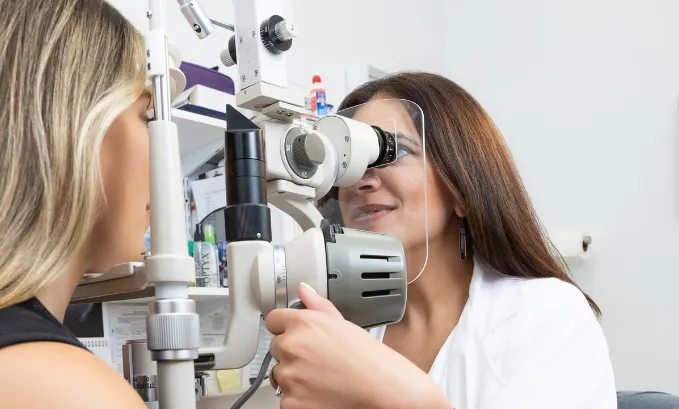
Whether you need single vision distance lenses, single vision reading glasses, or you’re not sure which correction fits your eyes best, a comprehensive eye exam is the clearest way to find out. At Optyx, our optometrists measure each eye individually and walk you through your options, so you leave with the lens type that actually matches how you use your eyes every day.
Visit one of our New York locations to get your prescription confirmed and explore frames that fit your single vision lenses.
Frequently Asked Questions
What are single vision lenses used for? Single vision lenses correct one field of vision — near, intermediate, or distance — at a consistent power throughout the lens. They’re used for everyday tasks like reading, computer work, or distance vision such as driving, depending on which correction you need.
Is single vision the same as reading glasses? Not exactly. Over-the-counter reading glasses apply a fixed, generic magnification to both eyes, while single vision prescription lenses are measured individually for each eye and can correct astigmatism or other refractive errors in addition to near vision.
What is a single vision prescription used for besides reading? A single vision prescription can be built for distance vision (like driving) or intermediate vision (like computer work), not just near vision. What is single vision prescription doing here, in short, is describing one consistent power — the “single” refers to that, not to one specific task.
How is single vision different from progressive lenses? Single vision lenses have one power throughout the entire lens. Progressive lenses blend multiple powers into one lens with a gradual transition, correcting near, intermediate, and distance vision all in a single pair.
Can single vision lenses correct astigmatism? Yes. Single vision lenses can be customized to correct astigmatism in addition to nearsightedness or farsightedness, which is one of the key differences between a true prescription lens and generic over-the-counter reading glasses.
How much do single vision lenses cost? Cost depends on the lens material, any coatings you add, and the frame you choose, so there’s no single price. Standard single vision lenses are typically the most affordable prescription option, since they don’t require the more complex fabrication that progressive or bifocal lenses do. Most vision insurance plans cover single vision lenses at least partially — it’s worth checking your benefits before your visit, and our guide on what an eye exam costs in New York covers the exam side of the bill.