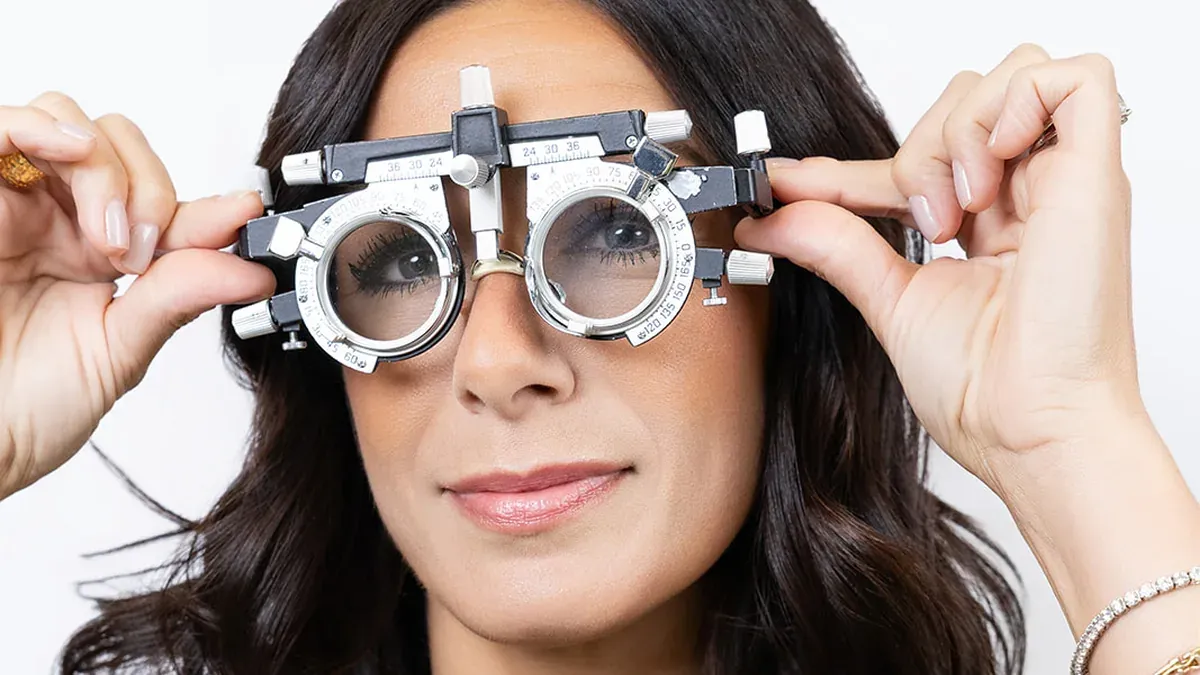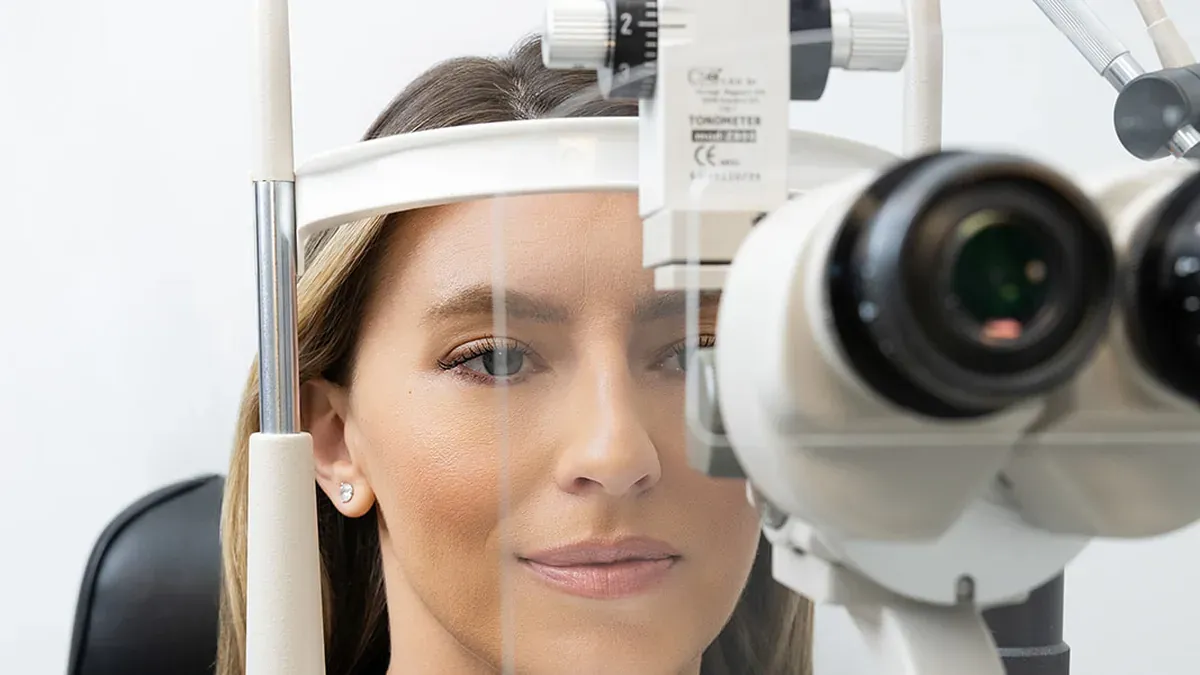

The three main types of cataracts are nuclear sclerotic, cortical, and posterior subcapsular, each forming in a different layer of the crystalline lens and producing distinct visual symptoms. A 2025 review in JAMA by Chen et al. identifies age-related cataract as a leading cause of visual disability, affecting roughly two-thirds of adults over 80. The type matters. Each progresses at a different pace, and an optometrist establishes the right monitoring schedule once the type is confirmed during a routine eye exam.
What Is a Cataract?
The natural lens has three structural layers: a dense central nucleus, a surrounding cortex made of fiber cells, and a thin posterior capsule at the back. Each plays a role in transmitting and focusing light on the retina; when protein changes cloud any of these layers, vision degrades.
As Cvekl et al. (2024) examined in Ageing Research Reviews, the lens fiber cells, lacking nuclei and other organelles, provide a unique opportunity to study loss of proteostasis as a hallmark of aging. Where it starts determines what a person experiences and how the cataract advances over time.

The Three Main Types of Age-Related Cataracts
Nuclear sclerotic, cortical, and posterior subcapsular are the three main age-related types of cataracts, each named for the part of the lens where clouding begins. Chen et al. (2025) identify older age as the primary risk factor for cataracts, with UV exposure, corticosteroid use, and systemic conditions such as uncontrolled diabetes among the additional risk factors.
| Type | Location in Lens | Typical Onset Age | Progression Speed | Hallmark Symptom |
|---|---|---|---|---|
| Nuclear Sclerotic | Central nucleus | 60s | Slow, over years | Distance blur, yellowed colors |
| Cortical | Outer cortex | 60s–70s | Moderate | Glare, halos, contrast loss |
| Posterior Subcapsular | Back of lens | Any adult age | Fast, within months | Near-vision blur, bright-light glare |
Nuclear Sclerotic Cataract
A nuclear sclerotic cataract develops as the central nucleus gradually hardens and yellows over years. Nuclear sclerosis can begin in a person's 50s and progress so slowly that early changes are visible on a slit-lamp exam long before they affect daily vision.
One feature of nuclear cataracts is a temporary near-vision improvement called "second sight." As the nucleus densifies, the change in its refractive index briefly corrects near vision, so a person who depended on reading glasses may notice they can read without them for a period. That gain does not last. As nuclear sclerosis deepens, overall clarity and color perception both decline, with whites taking on a yellow cast the brain compensates for gradually. Cvekl et al. (2024) described how lens fiber cells, lacking nuclei and other organelles, offer a unique opportunity to study loss of proteostasis as a hallmark of aging.
Cortical Cataract
Cortical cataracts form as spoke- or wedge-shaped opacities develop in the outer cortex and extend inward toward the visual axis. An anterior cortical cataract refers to opacities forming near the front of the cortex, though the full depth and periphery can be affected.
Glare is the dominant symptom. The spoke pattern scatters incoming light, creating halos around light sources and reducing contrast sensitivity, most noticeably at night when facing oncoming headlights. Contrast sensitivity frequently drops before standard acuity scores decline, so a person may pass an eye chart test yet struggle to read a menu in dim light or distinguish curb edges clearly while driving.
Posterior Subcapsular Cataract (PSC)
A posterior subcapsular cataract forms at the very back of the lens, just inside the capsule, placing it directly in the central path of incoming light. Even a small opacity at this location creates symptoms disproportionate to its size.
Near-vision tasks are affected earliest, particularly reading, and bright conditions cause intense glare. This is the fastest-progressing of the three types. Corticosteroid use, uncontrolled diabetes, and retinitis pigmentosa are among the additional risk factors for cataracts identified by Chen et al. (2025).
Is It Nuclear Sclerosis or a Cataract?
Nuclear sclerosis is the age-related stiffening and yellowing of the lens nucleus. It becomes a nuclear cataract when protein aggregation advances far enough to cloud vision and disrupt daily function. The two terms overlap in clinical use because the condition exists on a continuum rather than a sharp threshold.
Mild nuclear sclerosis may appear on a slit-lamp exam years before a patient notices any visual change. At that stage the finding is documented and monitored, not treated. The nuclear sclerosis vs. cataract distinction is a matter of clinical severity: the same underlying process, loss of proteostasis, connects early nuclear sclerosis to advanced nuclear cataract. Early detection of these types of cataracts is precisely what makes later progression assessments meaningful.

How Each Type Changes Your Vision
The symptoms of different types of eye cataracts overlap, but each has a primary complaint that sets it apart.
- Nuclear sclerotic cataracts cause gradual distance blur and yellowed or muted colors, often with a temporary near-vision improvement early in the process that disappears as the nucleus darkens further.
- Cortical cataracts produce glare, halos, and reduced contrast sensitivity, most disruptive when driving at night toward oncoming headlights, even when standard acuity scores remain relatively intact.
- Posterior subcapsular cataracts create near-vision difficulty and intense bright-light glare that can worsen quickly over weeks to months rather than years.
What Do Early-Stage Cataracts Look Like, and How Are They Found?
Early cataracts often produce only subtle changes, a slight prescription shift, faint glare, or mildly muted colors, before they register as a noticeable problem. Each type has a distinct appearance that an optometrist can identify before symptoms become limiting.
Faint nuclear yellowing in the central lens is the first sign of a nuclear sclerotic cataract, visible under slit-lamp retroillumination long before blur registers on an acuity test. Early cortical cataracts appear as tiny spoke-shaped opacities at the periphery of the cortex, often detectable only with a systematic scan of the full cortical surface. A small PSC plaque at the posterior capsule is identifiable even when it covers only a fraction of the visual axis. Each can be found during a comprehensive slit-lamp eye exam before it significantly affects daily life.
If you have noticed any of these early changes, an OPTYX optometrist can examine your lens and document exactly what is happening. Book an Eye Exam at a location near you.

Other Types of Cataracts
The three age-related types account for most adult cataract diagnoses, but several other types of eye cataracts arise from non-aging causes and present at different life stages.
Congenital cataracts are present at or near birth, and the types of congenital cataracts vary by the region of the lens affected and the genetic variants involved. A 2025 review by Guo et al. in Progress in Retinal and Eye Research found that monogenic variants likely contribute to approximately two-thirds of congenital cataract cases, a proportion previously underestimated, with variants in specific genes correlated with distinct phenotypes.
Traumatic cataracts develop following blunt or penetrating injury to the eye; they can appear immediately or emerge years after the event. Secondary cataracts result from systemic conditions such as uncontrolled diabetes or corticosteroid use, two of the additional risk factors for cataracts identified by Chen et al. (2025). Radiation-related cataracts can follow significant UV exposure or radiation therapy, underscoring the case for UV-protective eyewear throughout life.
For a broader look at how cataracts are diagnosed and monitored, see the cataracts condition overview. If you have also heard about glaucoma, our glaucoma vs. cataracts comparison covers how the two conditions differ in cause, symptom pattern, and management pathway.
OPTYX locations serve patients across Manhattan, Long Island, the North Fork, the Hamptons, and Westchester; the nearest option is listed on our locations page.
When Should You Schedule an Eye Exam?
Anyone noticing blur, glare, halos, or a prescription change that does not resolve should schedule a comprehensive eye exam rather than wait. Each of these symptoms aligns with the early-stage presentations described above across the known types of cataracts, and catching a change while it is still mild allows the optometrist to establish a clinically useful baseline.
Sudden vision loss, eye pain, or flashes of light with floaters are different. These require same-day or emergency evaluation, not a planned appointment. OPTYX optometrists evaluate eye health and always direct presentations that require urgent care toward the appropriate level.
The type documented at an early exam also informs later discussions about lens replacement options, since different types of cataracts can influence which intraocular lens types an ophthalmologist considers when surgery eventually becomes appropriate.
Book an Eye Exam at OPTYX
OPTYX optometrists use slit-lamp biomicroscopy and advanced retinal imaging to identify which type of cataract is present, how far it has progressed, and when specialist referral to an ophthalmologist is warranted. OPTYX does not perform cataract surgery; the role here is detection, monitoring, and coordination with a surgical team when the time comes. Framing New Yorkers Since 1971, OPTYX brings that same precision to every eye health evaluation.
Book an Eye Exam at an OPTYX location near you.
Sources
- Chen SP et al. (2025). Cataracts: A Review. JAMA. PubMed
- Guo D et al. (2025). Genetic architecture of congenital cataracts: correlation of pathogenic variants with morphology and clinical outcomes. Progress in Retinal and Eye Research. PubMed
- Cvekl A et al. (2024). Aging of the eye: Lessons from cataracts and age-related macular degeneration. Ageing Research Reviews. PubMed