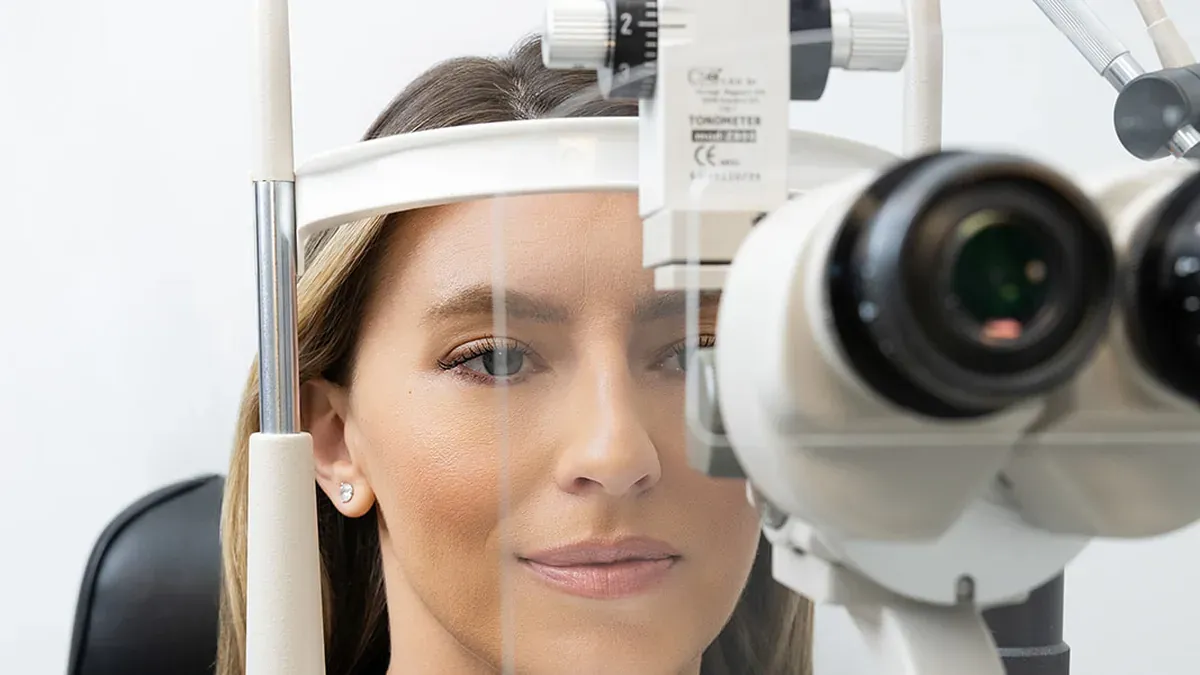
Choosing between an optometrist vs ophthalmologist depends on what your eyes need. Optometrists provide routine eye exams, write prescriptions, and manage most non-surgical eye conditions. Ophthalmologists are medical doctors who perform surgery and treat advanced disease. When deciding "which eye doctor to see," starting with an optometrist is the right call for most visits, they manage the majority of cases and refer you onward when surgery or specialist-level care is needed.
Optometrist vs Ophthalmologist vs Optician: A Quick Comparison

The three types of eye doctors each fill a distinct role in vision care. Here is how to tell them apart at a glance.
| Provider | Credential | Core Scope |
|---|---|---|
| Optometrist | Doctor of Optometry (O.D.) | Eye exams, prescriptions, non-surgical treatment |
| Ophthalmologist | M.D. plus 4-5 years in eye specialty | Surgery, complex disease management |
| Optician | Associate's degree or certificate in opticianry | Fitting and fabricating lenses from a written prescription |
Optometrist vs Ophthalmologist: What's the Difference?

Both examine eyes. Only the ophthalmologist can operate. That is where the paths divide.
An optometrist earns a Doctor of Optometry degree across four years of doctoral training after college. That qualifies them to assess vision, prescribe corrective lenses, and diagnose and manage a broad range of conditions medically.
A 2022 review in Clinical & Experimental Optometry noted that optometrists should be aware of how systemic medications affect the eye, reinforcing their role as part of a patient's broader healthcare team (Williams et al., 2022).
An ophthalmologist follows a longer route. Medical school comes first, then a four-year ophthalmology residency, then often a subspecialty fellowship in retina, cornea, or glaucoma surgery. That extended training opens access to surgical procedures and advanced diagnostics beyond what an optometrist can offer.
The Optometrist: Your Primary Eye Care Provider
Think of an optometrist as the primary care physician of your visual system. They are almost always the starting point. Nearsightedness often surfaces in children between ages 8 and 12 and tends to progress until around age 20, so parents frequently bring children with vision concerns to an optometrist first.
Adults return annually for prescription updates, pressure checks, and disease screenings. In most US states, optometrists can prescribe topical medications and some oral drugs for the conditions they diagnose and treat.
The Ophthalmologist: Eye Specialist for Surgery and Complex Conditions
An ophthalmologist handles what an optometrist refers out. Cataracts ready for removal. Retinal tears. Glaucoma surgery when medication is no longer holding the pressure in check.
Complex inflammatory conditions like anterior uveitis require a tailored, stepwise approach to workup and treatment, an approach Xie et al. (2025) outline specifically for general ophthalmologists. Some subspecialize narrowly in retina or cornea; others work broadly as generalists. Many contribute to research at hospitals and universities.
At OPTYX New York, our optometrists identify problems early and coordinate referrals when patients need that higher level of care. We do not perform surgical procedures.
What Does an Optician Do and How Is It Different From an Optometrist?
An optician is not a doctor. They cannot examine your eyes or write a prescription. Their work starts the moment your prescription is in hand. They select and fabricate your lenses, fit them into your chosen frame, and adjust the frame to your face. Most opticians complete a one-to-two-year program leading to an associate's degree or certificate in opticianry.
The optician vs eye doctor distinction gets blurred because both work in optical retail settings. An optician can build a precisely fitted pair of glasses; only an optometrist or ophthalmologist can determine what power those glasses need to be.
If you are deciding between contacts or glasses for everyday wear, an OPTYX optician can walk you through the practical trade-offs once your current prescription is ready.
Can an Optometrist Treat Eye Diseases?

Yes, within a defined range. Optometrists diagnose and manage conditions including dry eye, bacterial conjunctivitis, mild-to-moderate glaucoma, early diabetic retinopathy, and foreign body removal. They prescribe topical medications in every US state and oral drugs in most. Surgery is outside their scope.
Conditions like sudden floaters or new flashes of light are exactly what an optometrist evaluates and acts on quickly. They determine whether the cause is benign or signals a retinal event that requires an urgent same-day referral.
When a disease stays within the optometrist's treatment range, many patients never need an ophthalmologist at all. The handoff happens when surgery or specialist-level diagnostics become necessary.
When Should I See an Ophthalmologist Instead of an Optometrist?
Start with an optometrist. They handle the large majority of cases and will refer you the moment your situation calls for it. Most patients who search "when to see an ophthalmologist" find that their optometrist answers that question during a regular exam. The optometrist vs ophthalmologist decision in practice looks like this:
You need an ophthalmologist when:
- A cataract is affecting daily function and is ready for surgical removal
- Glaucoma is progressing despite medication
- A retinal tear or detachment is suspected
- An eye injury requires surgical repair
- A complex inflammatory condition needs specialist-level investigation
Sudden vision loss, flashing lights, or a curtain moving across your visual field are emergency symptoms. Seek same-day care or go to an emergency department. Do not wait for a scheduled appointment.
Which Type of Eye Doctor Should I See for a Routine Eye Exam?
When you need an eye doctor for an eye exam, an optometrist is the right choice. They assess your full visual system, update your prescription, check intraocular pressure, and screen for diseases like glaucoma and macular degeneration. Annual exams are the standard recommendation for most adults. Your optometrist decides whether anything requires specialist attention.
Screenings done in an optician store are not a substitute for a clinical exam. A large Danish cohort study is currently tracking approximately 280,000 adults across 100 optician locations to investigate what such screenings can reliably detect and predict (Freiberg et al., 2024), and those findings are still in progress. A licensed optometrist remains the right choice for comprehensive care.
If symptoms like persistent eye redness are making you wonder whether to come in sooner, your optometrist can assess that during your visit.
Book an Eye Exam
Book an Eye Exam at OPTYX and let your optometrist determine which care is right for you.
Sources
- Williams R et al. (2022). Common systemic medications that every optometrist should know. Clinical & Experimental Optometry. PubMed
- Xie JS et al. (2025). Anterior uveitis for the comprehensive ophthalmologist. Canadian Journal of Ophthalmology. PubMed
- Freiberg J et al. (2024). Finding Ophthalmic Risk and Evaluating the Value of Eye exams and their predictive Reliability (FOREVER). Acta Ophthalmologica. PubMed