Nearsightedness is one of the most common vision conditions in the United States, which is why the contacts vs glasses question comes up so often. Neither option is universally better. The right choice depends on your prescription, eye health, and daily habits, and a comprehensive eye exam is where that answer takes shape.
Contacts vs Glasses at a Glance

The eyeglasses vs contact lenses comparison comes down to a few practical trade-offs:
| Factor | Glasses | Contact Lenses |
|---|---|---|
| Appearance | Visible; frame reflects personal style | Invisible on the eye |
| Active Use | Can slip, fog, or bounce | Stay stable during sports |
| Dry Eyes | Generally better tolerated | Can worsen dryness |
| Daily Care | Wipe lenses as needed | Clean nightly or use daily disposables |
| Upfront Cost | Higher | Lower |
| Ongoing Cost | Lower | Higher (regular supply) |
These trade-offs drive most of these decisions. Where you land on two or three of them usually points toward a clear answer.
Are Contacts or Glasses Better for Everyday Wear?

The contacts vs glasses question is sharpest when you look at daily use rather than one-off scenarios.
Glasses are simpler to manage. Put them on; take them off. No hand-washing ritual before touching your face, no removal routine at the end of the day.
If you need correction only for reading or driving, glasses let you decide when to wear contact lenses and when to go without. Glasses also support practical lens add-ons: UV protection for prescription eyeglass wearers matters if you spend real time outside.
Contacts give you a fuller, unobstructed field of view. They work well with helmets, safety gear, and headsets. They stay in place during activity where glasses slip or fog. The trade-off is a daily care routine that demands consistency.
Many patients use both. Contacts for workouts and longer outdoor days, glasses at home and on easier mornings. Knowing when to wear contact lenses versus when to reach for glasses, rather than committing to one option permanently, often settles it more practically than any strict either-or choice.
What Are the Pros and Cons of Wearing Contact Lenses?
Here is the full picture for contact lenses specifically.
Advantages of contacts:
- Contacts are invisible once inserted, leaving your appearance unchanged.
- They stay stable during physical activity, unlike glasses that can bounce or slip.
- Contacts provide a fuller, unobstructed field of view with no frame edges limiting peripheral vision.
- Contacts do not fog in cold air or collect moisture in rain.
Drawbacks of contacts:
- Insertion takes practice, and some patients never fully adapt to the eye-touch reflex.
- Worn beyond their recommended replacement schedule or handled with unwashed hands, contacts raise corneal infection risk.
- Not every prescription transfers cleanly to a contact lens. Fitting is a separate clinical step from a glasses prescription.
Can You Wear Contacts If You Have Dry Eyes?
Dry eyes and contacts are a difficult combination. Contact lenses reduce the oxygen reaching the cornea and accelerate tear evaporation. Both effects make dryness worse through the day. For patients weighing contacts vs glasses with dry eye in the picture, that reality typically tips the recommendation toward glasses.
Daily disposable lenses change the picture somewhat. They eliminate the protein and lipid buildup that aggravates dry eyes over time, and certain silicone hydrogel materials are significantly more breathable than older lens types. The right match depends on your specific tear film.
An optometrist at OPTYX's locations across Manhattan, Long Island, the North Fork, the Hamptons, and Westchester can assess your dry-eye pattern and tell you whether glasses for dry eyes are the more comfortable long-term route, or whether a different lens material makes contacts viable.
A well-fitted pair of glasses with a current prescription can be genuinely comfortable all day. That removes most of the friction driving patients toward contacts in the first place.
Do You Need a Separate Eye Exam for Contact Lenses?

Yes. The contacts vs glasses switch is not just a preference shift. It requires a separate exam, and your glasses prescription does not automatically convert to a contact lens prescription.
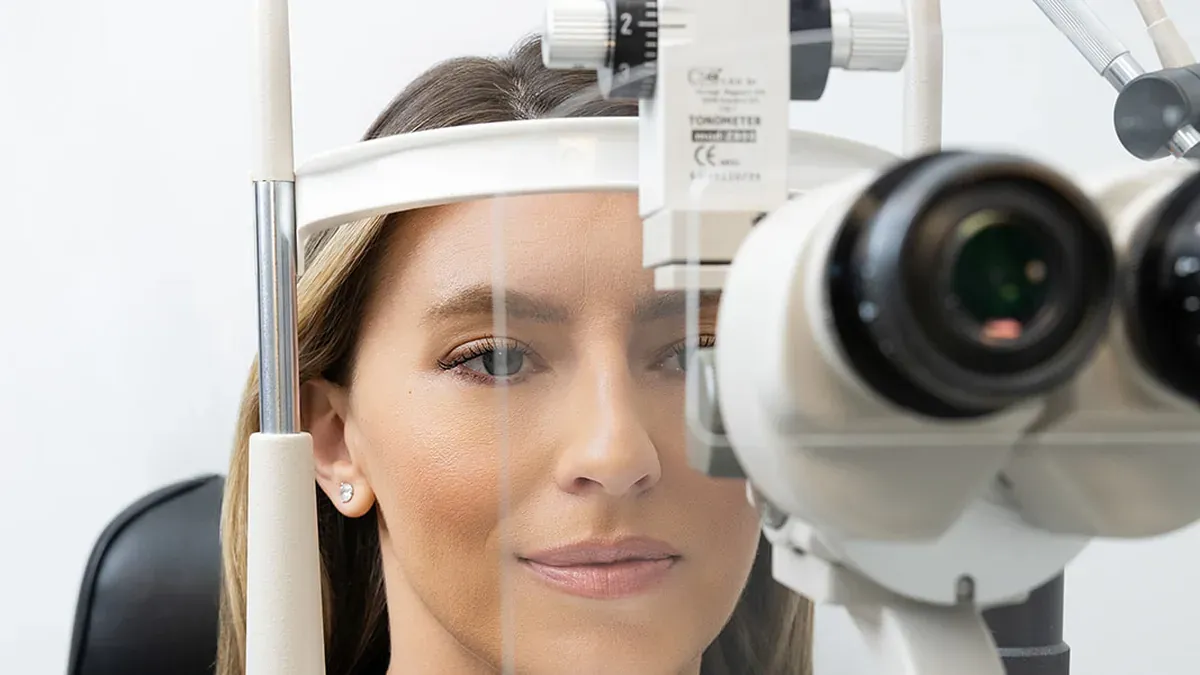
The difference between a contact lens exam and a standard eye exam lies in what gets measured: corneal curvature, base curve, and lens diameter.
A contact lens evaluation also includes a trial lens placement and a follow-up check after you have worn the lens. Skipping the fitting step raises the risk of a poor fit, persistent discomfort, and corneal damage over time.
If you are switching from glasses to contacts for the first time, or if your last fitting was several years ago, a contact lens fitting in NYC at OPTYX covers everything the transition requires. Lens materials and designs have improved, and an outdated fit is a common reason patients assume contacts simply do not work for them.
How Do I Know If Contacts Are Right for Me?
Sorting out the contacts vs glasses choice gets easier with a few direct questions:
- Are you comfortable touching your eye? Insertion requires direct contact with the eye surface, and not everyone adapts to the initial reflex.
- Can you maintain a daily cleaning routine? Skipping lens hygiene steps raises infection risk.
- Is your work environment free of dust, fumes, or airborne particles? These conditions make contact lens wear less safe.
- Does your prescription fall within the range contacts can match accurately? Very high prescriptions or irregular corneal surfaces limit options.
If those answers lean toward contacts, the next step is a contact lens eye exam, not just an updated glasses prescription. If you have a vision plan or a flexible spending account, your FSA balance typically covers glasses, contact lenses, and eye exams in most plan designs, worth confirming before year's end.
This choice is not permanent. Needs change, eyes change, and a current prescription keeps both options available whenever you want to revisit it.
Book an Eye Exam
Book an Eye Exam at your nearest OPTYX location and leave with a clear prescription for contacts, glasses, or both.