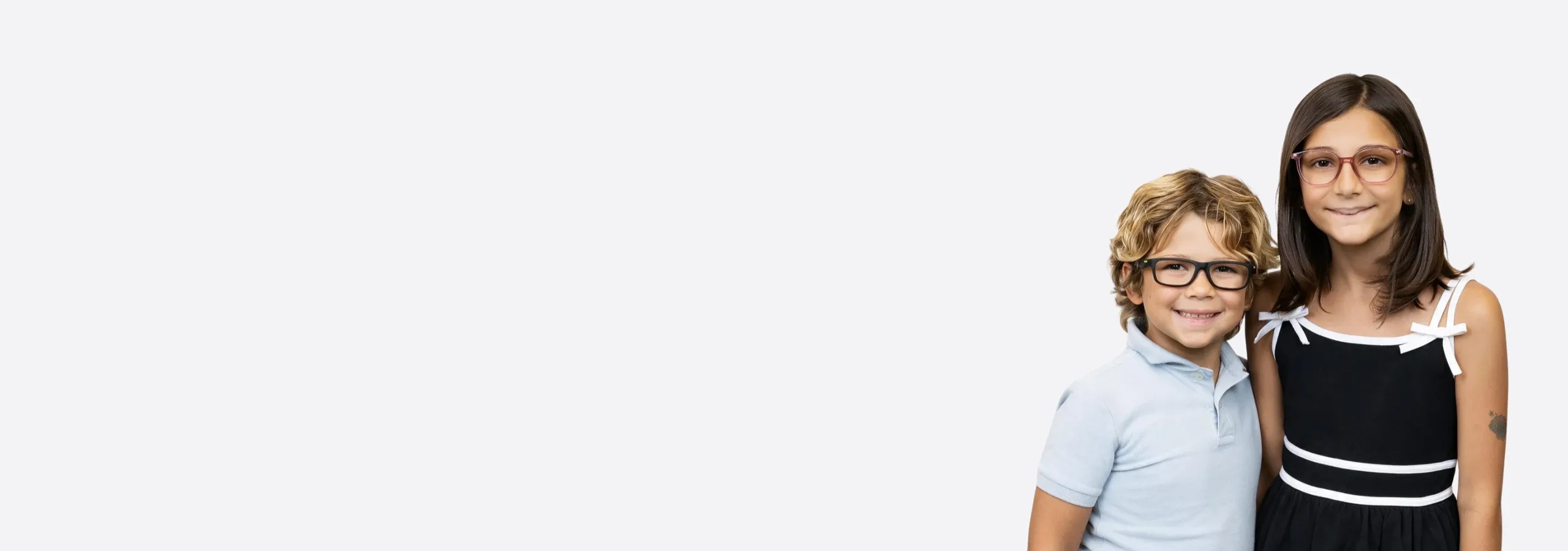
A child who squints at the board rarely says so. Most assume everyone sees the world a little blurry. Nearsightedness is becoming more common in kids, and more New York parents now ask our optometrists about myopia management for kids, not just a new pair of glasses. One option getting a lot of attention is Essilor Stellest, an FDA-authorized eyeglass lens that was just named one of TIME's Best Inventions of 2026. Below, we explain what it is, how it works, and who it may help.
What Is Myopia in Children?
Myopia, or nearsightedness, means your child can see things up close clearly, but objects far away look blurry. It usually happens because the eye grows a little too long, so light focuses just in front of the retina instead of directly on it. If you want a quick refresher on the difference, our guide to nearsighted vs farsighted vision explains it simply.
Myopia in children often shows up during the school years. Common signs include squinting, rubbing the eyes, headaches after school, holding a tablet very close, or saying the board is hard to read. Some kids never complain at all. Blurry distance vision is simply what they are used to, which is why a school screening is a useful filter, not a diagnosis.
Is Myopia Genetic?
Genes play a real role. A child with one or two nearsighted parents is more likely to become nearsighted too. Lifestyle matters as well: lots of close-up time on screens and books, and less time outdoors, are linked to myopia starting earlier. When parents tell us they wear glasses themselves, we pay closer attention to their child's prescription, even if the child seems to see fine.
Why Early Myopia Management for Kids Matters
Children's eyes keep growing, and myopia often gets worse year after year until the late teens. A faster rise in prescription means more blur, thicker lenses, and more frequent changes. Higher levels of myopia later in life are also linked with a greater risk of certain eye health problems in adulthood. That is why the childhood years matter so much. This is the window when helping to slow progression can make a meaningful difference.
What Is Myopia Management?
Regular glasses and contact lenses correct blurry vision, but they do not address why the prescription keeps climbing. Myopia management is a care plan designed to help slow how quickly myopia progresses while a child's eyes are still developing. It combines a treatment option chosen by your optometrist with regular follow-up visits to track how your child's vision is changing over time.
Can Myopia Be Reversed?
Parents ask us this often, and the honest answer is no. Glasses, including myopia control glasses, do not cure or reverse nearsightedness. What myopia management can do is help slow its progression in eligible children. Every child responds differently, so results vary, and your optometrist will monitor progress at each visit.
What Are Stellest Lenses?
Stellest lenses are specially designed eyeglass lenses from Essilor for children with myopia. At first glance, they look just like regular glasses. Kids wear them the same way, pick their own frames, and go about their day at school, at home, and on the playground. There are no drops, no contact lenses to handle, and nothing invasive.
In the United States, Stellest is the first FDA-authorized eyeglass lens to help slow the progression of myopia in eligible children ages 6 to 12 at the start of treatment.
How Do Stellest Lenses Work?
The center of each lens corrects your child's distance vision, so they see clearly. Around that center, the lens contains 1,021 tiny lenslets that are invisible from a normal distance. These lenslets send a gentle visual signal to the eye that is designed to help slow the eye's excessive growth, which is what drives myopia to get worse. Your child does not need to do anything special: the lens works while they simply wear their glasses throughout the day.
Myopia Control Glasses vs. Regular Glasses
Here is the simplest way to explain the difference:
- Regular glasses correct blurry vision so your child can see clearly today.
- Stellest glasses for kids also correct vision, and they help slow myopia progression in eligible children.
- Both look like everyday eyewear, and your child can choose frames they actually like wearing.
For parents comparing myopia glasses for kids, this is the key point: standard lenses focus on clear vision now, while Stellest is designed with your child's future vision in mind as well.
Recognized by TIME as One of the Best Inventions of 2026
In October 2026, TIME included Essilor Stellest in its Best Inventions of 2026 list, highlighting it as lenses that help slow nearsightedness in children. For parents, this recognition is a helpful signal that myopia management is no longer a niche topic. It is a growing part of everyday children's eye care, and families now have a simple, glasses-based option to talk about with their optometrist.

Are Stellest Glasses for Kids Right for Your Child?
Stellest may be a good fit if your child:
- Is between 6 and 12 years old when treatment begins
- Has been diagnosed with myopia, or has a prescription that keeps getting stronger
- Has nearsighted parents or siblings
- Is comfortable wearing glasses for most of the day
Stellest is not for every child, and that is exactly why we start with a full eye exam. Only an exam can show whether your child's prescription and eye health make Stellest a suitable choice. If it is not the right option, our optometrists will explain why and talk you through next steps.
What to Expect at Your Child's Myopia Management Appointment
We keep the visit relaxed, because a rushed child is a less cooperative one. If your child has never had a full exam, our guide to pediatric eye exams in New York covers the basics. Here is how the process usually works:
- Children's eye exam: Your optometrist checks your child's vision, overall eye health, and how their prescription has changed. You can learn more about each step in our comprehensive eye exam guide.
- Recommendation: If Stellest is appropriate, your optometrist explains how it works and what to expect, and answers your questions.
- Choosing frames: Glasses only work if they stay on. Our opticians help your child choose frames from our children's collection that they actually want to wear, and fit every pair in person.
- Wearing and follow-ups: Kids are typically asked to wear their lenses for most of the day, at least 12 hours. Regular follow-up visits help your optometrist track progress over time.
Most kids adjust to their new glasses within a few days. If anything feels off, our team is a phone call away.
Where Can I Get Stellest Lenses in New York?
OPTYX optometrists have cared for New York's eyes since 1971, and today Stellest lenses are available at our locations across Manhattan, Long Island, and the North Fork. We guide your family through the whole process, from the first exam to choosing frames and follow-up care.
Book Your Child's Eye Exam
Your child's eyes are still growing, and that makes now the right time to look ahead. Whether you have noticed signs of nearsightedness or simply want to know if your child is eligible for Stellest, the first step is an eye exam with one of our optometrists.
Book your child's eye exam or visit our Essilor Stellest page to learn more.