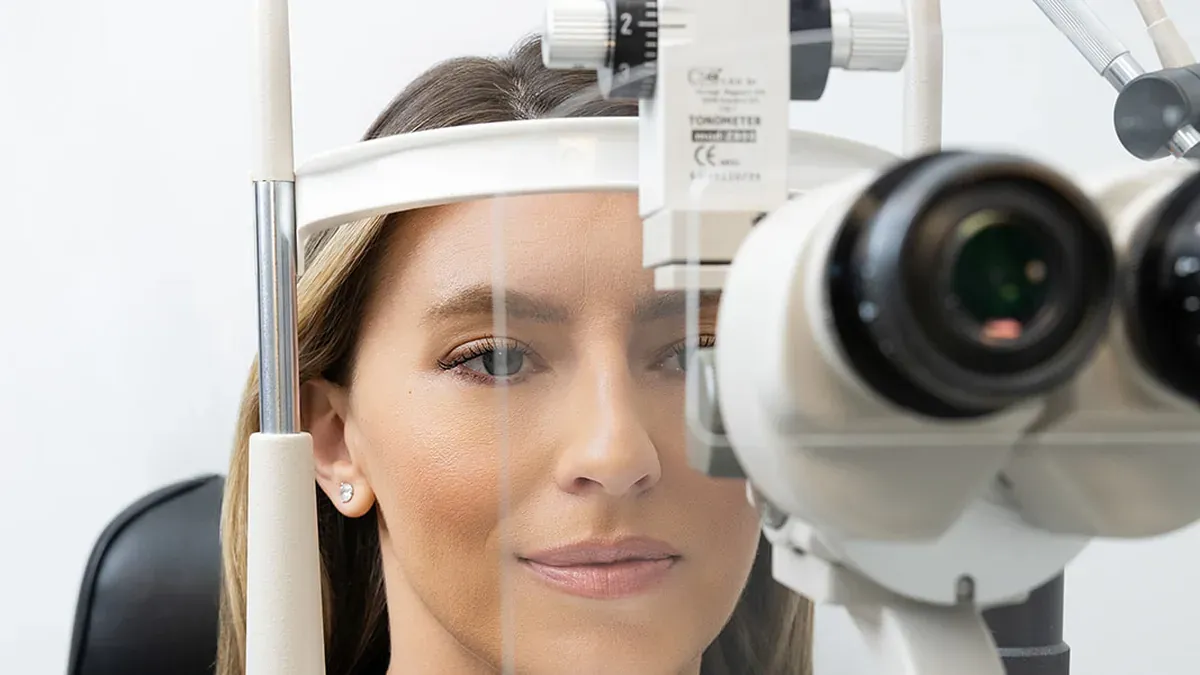

The most common signs you need glasses are persistent squinting, blurry vision at specific distances, frequent headaches after reading or screen time, and difficulty seeing at night while driving. These symptoms develop gradually, which makes them easy to attribute to tiredness rather than an actual change in your vision. If two or more apply to you, a comprehensive eye exam is the most direct way to find out.
How Do You Know When You Need Glasses?

Vision getting worse rarely announces itself all at once. The shift is incremental. You start squinting at street signs that used to be sharp, or you notice yourself holding a menu further away than you did last year. These small adjustments are your eyes compensating for a refractive error. They only work up to a point.
A few practical questions can help you gauge where you stand before seeing an optometrist:
- Do you squint to read distant text that others see clearly?
- Do you hold reading material further away than you used to?
- Do headaches arrive most afternoons after close work or screen time?
- Does driving at night feel harder than it did a year ago?
- Do you cover one eye to get a clearer view of a screen?
Two or more of these is a signal worth acting on. The table below maps the most common signs you need glasses to what they typically indicate and when to act.
| Sign | What It Typically Indicates | When to Act |
|---|---|---|
| Squinting at distances | Near-sightedness (myopia) | Schedule a routine exam |
| Blurry vision up close | Far-sightedness or presbyopia | Schedule a routine exam |
| Headaches after reading or screens | Eye muscle strain from uncorrected prescription | Schedule a routine exam |
| Night vision difficulty while driving | Myopia, early cataracts, or outdated prescription | Schedule a routine exam |
| Sudden blur or shadow in one eye | Possible urgent condition | Seek same-day care |
Most of these concerns develop across months or years. The last row is different. Sudden, one-sided changes in vision, new floaters, or a curtain-like shadow across your visual field need same-day evaluation, not a wait-and-see approach.
Does Eye Strain Mean You Need Glasses?

Eye strain alone does not confirm you need glasses. It is one of the most consistent early signals, though. When a refractive error goes uncorrected, the ciliary muscles inside your eye contract harder than normal to pull the image into focus. That sustained effort across a full workday produces the burning, aching sensation most people recognize as eye strain and blurry vision combined.
Full-time workers commonly spend the majority of a workday in front of a screen. At that level of exposure, even a mild uncorrected prescription causes real fatigue by mid-afternoon.
Eye strain, blurry vision that worsens as the day progresses, difficulty shifting focus between near and far objects, and the persistent urge to squint all point toward a prescription issue rather than simple screen overuse. Vision getting worse over months compounds the problem. Lenses that corrected your prescription two years ago may no longer be adequate.
If your symptoms center on close work, whether reading glasses help with eye strain is worth exploring alongside a full prescription evaluation.
What Causes Headaches Related to Vision Problems?
Squinting and headaches frequently go together for the same underlying reason. The ciliary muscles that adjust your lens shape fatigue when they are constantly compensating for blur. That muscular fatigue registers as a dull ache across the forehead or behind the eyes, arriving predictably after reading, driving, or sustained screen use.
Most people attribute these headaches to stress or dehydration first. The distinguishing feature is the pattern. A vision-related headache arrives reliably after specific visual tasks and returns even when pain relief provides temporary comfort, because the prescription error behind it has not been corrected.
These are among the signs you need glasses that respond most clearly to correction. An optometrist measures whether your focusing muscles are overworking and checks for astigmatism, which produces particularly stubborn eye-fatigue headaches because the eye cannot settle into a stable focus at any distance.
Can Squinting Damage Your Eyesight?
Squinting does not permanently harm your eyes. What it does is narrow the eyelid opening, reducing the amount of unfocused light that reaches the retina and temporarily sharpening the image. It is an automatic compensatory response. Relying on it consistently means a refractive error needs addressing.
In children, persistent squinting always warrants a prompt exam. It can be an early indicator of amblyopia, commonly called lazy eye. Lazy eye in adults is considerably harder to treat than in children, because the visual processing pathways are still developing during early childhood, and adults who go unexamined for years often have fewer treatment options available by the time a diagnosis is made.
When the brain begins suppressing input from a weaker eye to avoid conflicting signals, that suppression becomes increasingly difficult to reverse. The window for straightforward correction narrows with age. Early treatment with glasses, patching, or a combination of both is what keeps the condition from becoming permanent.
How glasses correct the underlying optics of the eye explains why catching refractive errors early matters, whether in a squinting child or an adult whose prescription has gradually shifted.
Night Vision Difficulty While Driving
Struggling to see clearly after dark is one of the signs you need glasses that people most readily dismiss as inevitable. Night vision difficulty driving is particularly pronounced with uncorrected near-sightedness. The pupil dilates in low light, allowing more unfocused light to reach the retina. The blurring effect worsens.
Early cataract development can produce the same complaint. Cataracts scatter incoming light rather than directing it cleanly to the retina, producing halos around oncoming headlights and reducing contrast sensitivity. Some medications reduce night vision as a recognized side effect, so a full medication review often forms part of a night-vision assessment.
The behavioral marker to watch for is a change in what you do, not just what you see. Slowing down on familiar roads, missing turn signs you normally catch, or avoiding highways after dark all indicate meaningful impairment. That warrants a prompt exam. An optometrist at OPTYX can assess whether the cause is refractive, structural, or medication-related and guide you toward the right correction.
When Should You See an Eye Doctor for Blurry Vision?

Gradual blurry vision at a specific distance belongs in a routine eye exam. Schedule it soon rather than waiting for the problem to compound.
Blurry vision up close developing gradually after age 40 is most commonly presbyopia. The eye's internal lens stiffens with age and loses close-focus flexibility. Holding books or your phone at arm's length, needing more light for close tasks, and experiencing eye strain or blurry vision after near work are the hallmark signs.
If you have tried over-the-counter reading glasses and found they cause more blur than they fix, why vision blurs with reading glasses explains when a proper prescription becomes necessary.
Certain presentations need same-day attention. Seek urgent eye care for sudden blurry vision in one eye, new floaters or flashing lights, a shadow across any part of your visual field, or eye pain with redness and light sensitivity. These may indicate conditions where time directly affects outcome.
When to get an eye exam for routine concerns? Most adults benefit from a comprehensive exam every one to two years. Anyone noticing the signs you need glasses described in this guide should schedule sooner rather than waiting for their next routine appointment.
Book an Eye Exam
When the signs are there, an optometrist is the only way to confirm a prescription and check your eye health beyond surface symptoms.
Book an Eye Exam at your nearest OPTYX location.