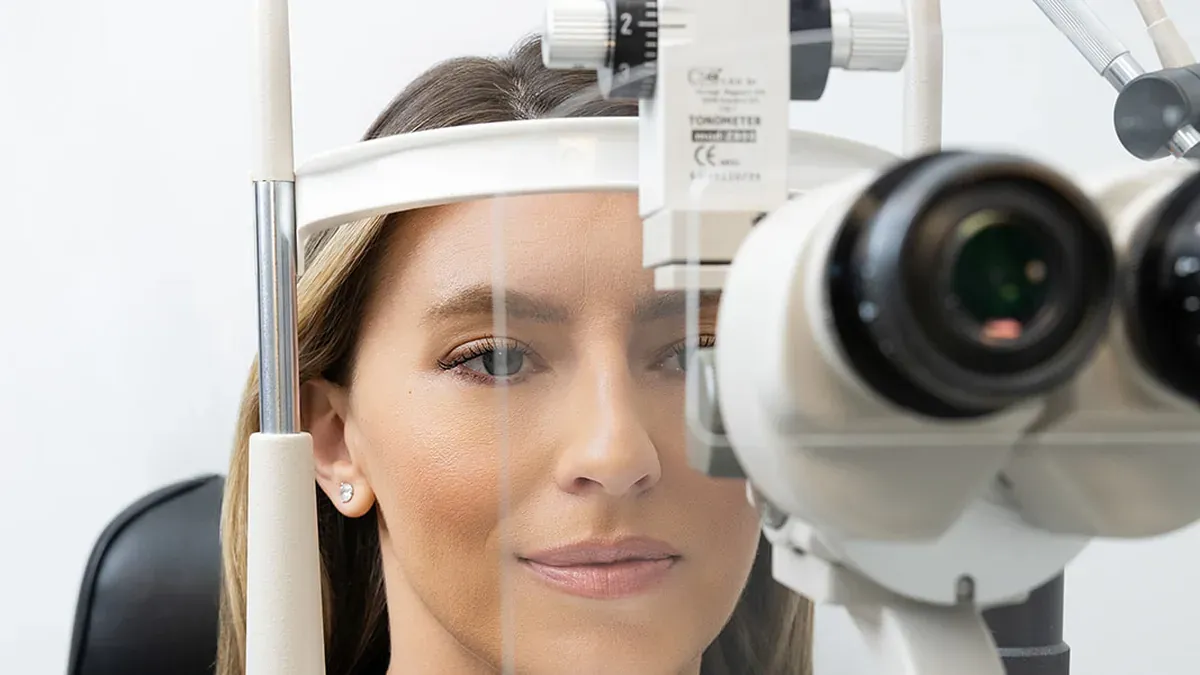

Most people put eye care on hold until something goes wrong. These eye care tips work best as prevention: wear UV-blocking sunglasses outdoors, take real breaks from your screen, and stay current with your annual eye exam. Those three habits cover the most common preventable risks to long-term vision.
Eye Care Tips That Make the Biggest Difference

A well-chosen set of eye health habits covers most of the risk. Use this as your starting checklist:
- Schedule a comprehensive eye exam every year. Many conditions, such as early glaucoma, produce no symptoms until damage is already done.
- Wear sunglasses rated UV400 outdoors. Cloud cover does not block UV radiation.
- Follow the 20-20-20 rule during screen use. Every 20 minutes, look at something 20 feet away for 20 seconds.
- Blink deliberately when working at a screen. Screen users blink far less often than normal, which accelerates dry eyes.
- Use protective eyewear during physical work and contact sports. Most acute eye injuries are preventable with the right gear.
None of these require dramatic lifestyle changes. They simply need to be consistent.
How Does Screen Time Affect Your Eyesight?

Screen time drives digital eye strain faster than most people realize. A 2024 systematic review and meta-analysis of more than 66,000 participants found a pooled prevalence of computer vision syndrome of 69%, with women and university students among the most affected groups (Ccami-Bernal et al., 2024). Headaches, blurred vision, and tired eyes by late afternoon are the most recognizable symptoms.
Screens do not burn or damage the retina directly. What they do is force sustained close focus, exhausting the ciliary muscles that adjust lens shape throughout your workday. Blink rate drops too. Screen users blink significantly less than normal, which worsens dry eyes and discomfort over a long day, and an outdated prescription amplifies every bit of that strain.
Blue light glasses are often marketed as the solution to screen fatigue, but the evidence is more nuanced than the marketing suggests. Before you invest in a pair, the breakdown on whether blue light glasses help with dry eyes is worth reading.
For screen-specific eye care tips on positioning and display settings, the guide on protecting your eyes from screens covers them in one place. Adjusting even one or two of those factors consistently can reduce end-of-day eye strain.
What Type of Sunglasses Best Protect Your Eyes?
Sunglasses UV protection depends on the lens coating, not on tint darkness. Look for lenses labeled "100% UV400," which means the lens blocks wavelengths up to 400 nanometers and covers both UVA and UVB rays.
A dark lens without a UV coating can actually increase UV exposure. Pupils dilate behind dark tint, allowing more radiation to reach the retina than they would under no lens at all.
Polarized lenses reduce glare well and help with driving and water environments, but polarization and UV protection are separate features. Confirm both before you buy. Wraparound frames add peripheral coverage that standard lens cuts cannot match.
If you wear a prescription, UV protection is still achievable. Prescription sunglasses, photochromic lenses, and prescription UV eyewear options can all be fitted to your exact correction at an OPTYX fitting.
How Often Should You Get an Eye Exam?
Once a year is the baseline recommendation for most adults. An annual eye exam does more than update a glasses or contact lens prescription. Your optometrist checks intraocular pressure, optic nerve appearance, peripheral vision, and retinal health, all of which can reveal early signs of systemic conditions, including early-stage diabetes and hypertension, before any other symptoms surface.
Frequency adjusts with circumstances. Children need regular monitoring because their prescriptions often shift from year to year. Adults over 60 and anyone with a family history of glaucoma, macular degeneration, or diabetes typically benefit from more frequent visits. Eye care professionals consistently advise the same: do not wait for your vision to change before scheduling.
Can Eye Strain Cause Permanent Vision Damage?
Eye strain does not cause permanent damage. Symptoms from screen use, including blurring, tired eyes, and tension headaches, resolve with rest. That is worth knowing if you have been worried.
What strain can do is obscure something that deserves attention. Persistent discomfort that does not improve after breaks, or new symptoms such as double vision, sudden light sensitivity, or visual disturbances, warrant same-day evaluation, not a wait-and-see approach.
Dry eyes prevention matters here too. Chronic dryness left unmanaged can affect the ocular surface over time, and your optometrist is the right person to determine whether symptoms point to dry eye disease, a prescription issue, or another underlying cause.
How Do I Know If My Eyes Are Healthy?

The most reliable answer comes from an annual exam. At home, watch for warning signs: halos around lights at night, persistent redness, difficulty adjusting between bright and dark environments, light sensitivity, or any change that feels one-sided. None of these are diagnostic on their own. Any that are new or worsening justify scheduling an exam sooner rather than waiting.
Good eye care tips leave a track record you can follow. If your exams are current, your correction is accurate, UV exposure is managed, and screen habits are reasonable, you have addressed the main modifiable risk factors for long-term vision loss.
OPTYX optometrists across Manhattan, Long Island, the North Fork, the Hamptons, and Westchester conduct comprehensive assessments that extend well beyond a standard vision chart. Learn more about what complete eye care looks like at the OPTYX New York homepage.
Book an Eye Exam
Book an Eye Exam at OPTYX when you are ready to put these eye care tips into action.
Sources
- Ccami-Bernal F et al. (2024). Prevalence of computer vision syndrome: A systematic review and meta-analysis. Journal of optometry. PubMed