
If you wear progressive lenses and spend most of your workday at a screen, finding a comfortable viewing angle takes more effort than it should. The optometrists at OPTYX NEW YORK hear this regularly: lenses that work well for driving and daily tasks become a source of neck strain, blurred text, and headaches once they meet a full day of screen time.
Progressive lenses for computer work can function at a desk, but standard progressives are not optimized for screen distance as a primary zone. Whether they work well depends on your prescription, your monitor placement, and the type of lens you have.
What Progressive Lenses Are Designed to Do
Standard progressive lenses correct vision at three distances in a single lens. The top zone handles distance. A narrow middle corridor handles intermediate distances, roughly arm’s length. The bottom handles close reading.
The intermediate corridor is the narrowest part of a standard progressive and is where screen distance falls. Standard progressives are built for far and near vision, with intermediate functioning as a transitional zone rather than a dedicated working area.
Why Progressive Lenses Get Blurry at a Computer
Progressive lenses blurry when looking at computer screens is one of the most common complaints from progressive wearers who work at desks. The same lenses that perform fine for driving and reading books produce persistent frustration at a screen.
A monitor sits roughly 20 to 26 inches from your face, placing it in the intermediate zone. Because this zone is narrow, any slight head tilt or posture shift moves your gaze outside the clear area. Wide monitors make this worse because the clear corridor does not extend across a large screen without peripheral blur at the edges.

How Computer Progressive Lenses Differ from Standard Progressives
Computer progressive lenses, also called office progressives or occupational progressives, are designed with a wider, deeper intermediate zone and a modified near zone. Distance correction is reduced or removed because desk work does not require it.
The result is a much larger clear area at screen distance. The intermediate zone is wide enough to cover a standard monitor without constant head adjustment, and the near zone handles close-range tasks like reading printed documents alongside a screen. For context on how progressive correction works across different lens types, the OPTYX NEW YORK guide to progressive reading glasses covers the distinctions in detail. Office progressives are not appropriate for driving and are not a replacement for standard distance progressives.
Are Progressive Lenses Good for Computer Work? Key Factors
Progressive lenses for computer use work well for some people and not for others, depending on a few variables.
Prescription strength. Higher add powers produce a narrower intermediate corridor. People with strong prescriptions experience the computer blur problem most intensely with standard lenses.
Monitor placement. Positioning the monitor so the top of the screen sits at or just below eye level lets you look through the center of the intermediate zone. Small height adjustments often reduce blur noticeably.
Screen size. Wide monitors and dual-screen setups expose the limited horizontal width of a standard progressive intermediate zone. Office progressives address this because their intermediate zone is wider by design.
Progressive Lenses for Computer Use: Who Benefits Most
The people who gain most need clear vision at multiple distances during a typical workday: monitor, keyboard, and printed documents in the same session. A single-vision lens set to one fixed distance will not cover all three cleanly. Progressive lenses for computer use handle all three in one pair, which is why they are the standard recommendation for presbyopic patients who work in office environments.
Adjustments That Help With Standard Progressives at a Desk
If you already have standard progressives and want to manage progressive lenses blurry when looking at computer distance before switching, these adjustments help.
- Lower your monitor so the top of the screen sits at or just below eye level. This directs your gaze through the center of the intermediate zone.
- Increase text size rather than leaning in. Leaning shifts your gaze into the near zone and worsens blur at screen distance.
- Stay at 20 to 26 inches from your monitor. Moving closer when text blurs compounds the problem.
- Use the 20-20-20 rule: look at something 20 feet away for 20 seconds every 20 minutes to reduce accumulated eye strain.
For a comparison of lens types for screen use, the OPTYX NEW YORK breakdown of computer glasses vs reading glasses covers the distinctions clearly.
What to Expect With Computer Progressive Lenses
The adjustment period for office progressives is typically shorter than for standard progressives. The wider intermediate zone removes most of the precise alignment required to find the clear area, and most wearers adapt within a few days, often noticing immediately how much wider the clear zone feels. The need to tilt and reposition your head to maintain a clear image is significantly reduced.
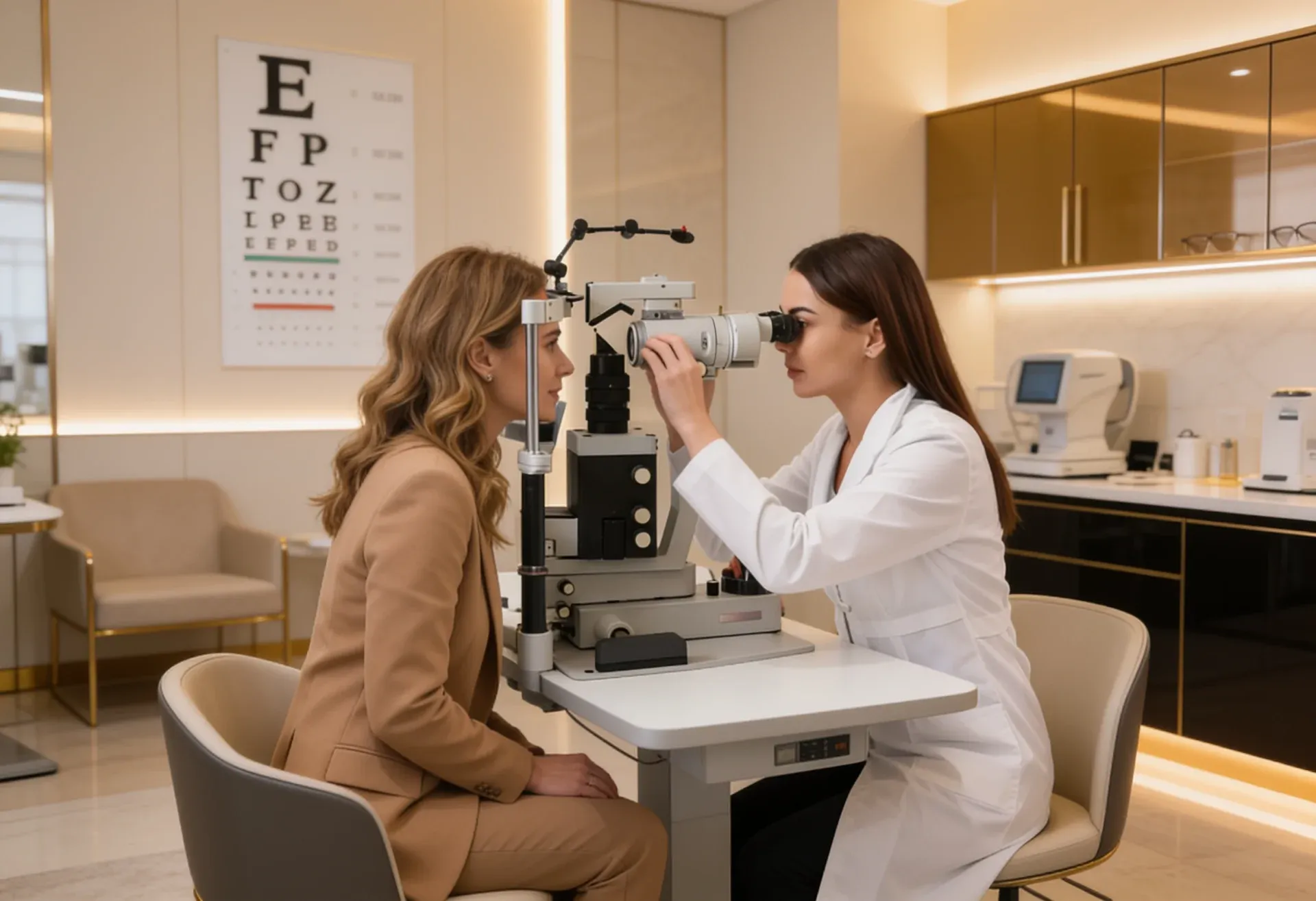
Getting a pair requires a dedicated appointment. Your OPTYX NEW YORK optometrist will take working distance measurements tailored to your desk setup, including monitor distance and sitting posture, to calibrate the lens for your actual working environment.

Book a Consultation at OPTYX NEW YORK
Whether you are dealing with progressive lenses blurry when looking at computer screens or ready to explore computer progressive lenses for a new pair, our optometrists can match your prescription and setup to the right lens type.
OPTYX NEW YORK has 14 locations across Manhattan, Long Island, the North Fork, the Hamptons, and Westchester. Book an eye exam and get lenses that work for your workday.
Frequently Asked Questions
Are progressive lenses good for computer work?
Standard progressive lenses can be used at a computer but are not designed for it. The intermediate zone is narrow, making extended screen work uncomfortable for many wearers. Computer progressive lenses have a wider intermediate zone built specifically for desk environments.
Why are my progressive lenses blurry when looking at a computer?
Progressive lenses blurry when looking at computer screens is caused by the narrow intermediate zone of standard progressives. Any slight gaze shift outside the sweet spot produces blur. Adjusting your monitor height helps. Office progressives address the issue more completely.
How do progressive lenses for computer use differ from regular progressives?
Regular progressives prioritize distance and near vision with a narrow intermediate corridor. Progressive lenses for computer use prioritize intermediate and near vision with a wider clear area at screen distance. The result is less head adjustment and more comfortable sustained screen work.
Can I use the same progressive lenses for both driving and computer work?
Standard progressives technically cover all three distances, but people who spend long hours at screens often find them inadequate for sustained computer use. A dedicated pair of progressive lenses for computer work alongside standard progressives for driving and daily use is the most practical solution.