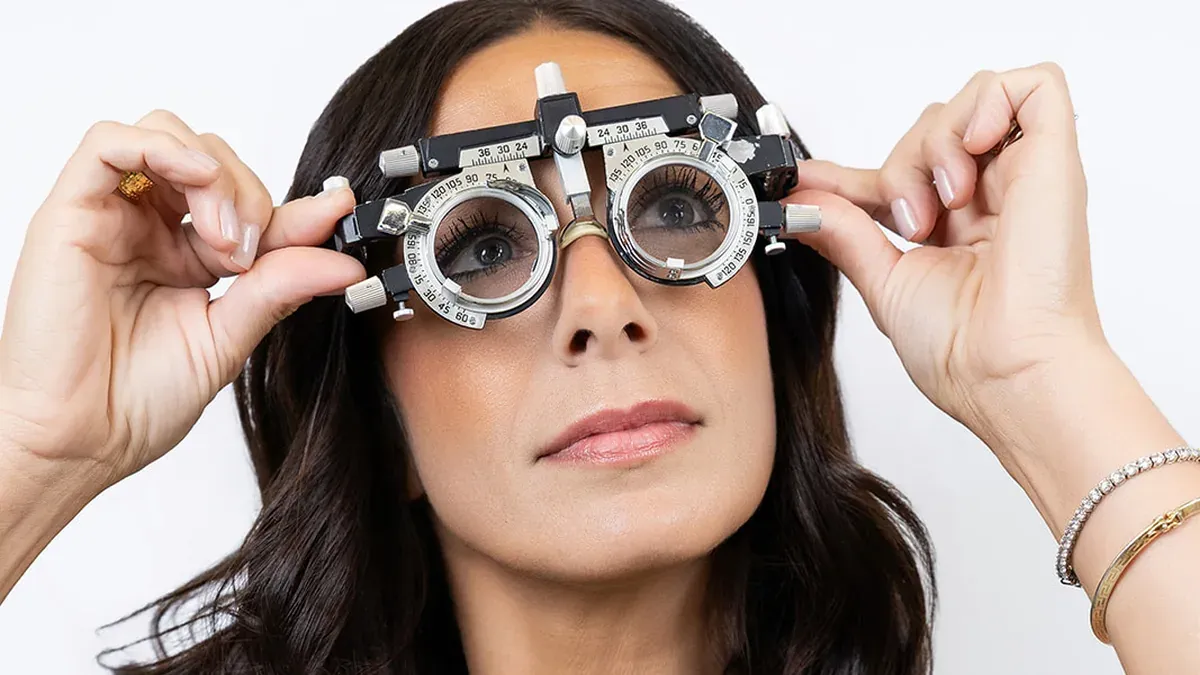

Finding the best eye doctor NYC starts with more than a quick prescription check. When you search for an eye care clinic near me in New York, dozens of options appear. The right provider combines board-certified credentials, current diagnostic technology, and the ability to catch conditions like glaucoma or macular degeneration before you notice any change in your vision. OPTYX operates 13 practices spanning Manhattan, Long Island, the North Fork, the Hamptons, and Westchester, putting professional New York vision care within reach wherever you live or work.
What Should I Look For When Choosing an Eye Doctor in New York?

The search comes down to four practical factors. Check these before you book:
- Board certification: only consider a Doctor of Optometry (OD) licensed in New York State
- Diagnostic technology: confirm the practice has widefield retinal imaging, visual field testing, and eye pressure measurement as standard equipment
- Scope of care: choose a provider who manages conditions like dry eye, glaucoma, and myopia alongside routine prescriptions
- Insurance fit: check your plan with your local OPTYX location before booking
Reviews and referrals help too. An eye specialist New York patients consistently recommend will explain findings clearly and tell you when specialist referral is needed. Word of mouth from someone with a similar condition carries real signal.
Technology is not optional. Access to current diagnostic equipment reveals pressure changes, retinal irregularities, and peripheral vision gaps that a standard letter chart cannot. Those gaps are where serious conditions tend to hide.
How Often Should I Get an Eye Exam in NYC?
Adults with no known risk factors should schedule a comprehensive eye exam NYC at least once every one to two years. The schedule shifts when risk factors are present. Diabetes, a family history of glaucoma or macular degeneration, high myopia, or age over 60 all call for an annual eye exam New York appointment without exception.
Children follow a different cadence: one exam before age one, another around three, and again before first grade. After that, every year or two is appropriate unless a prescription is changing quickly.
Skipping exams is a common mistake. Many serious conditions have no early pain or blurring. For detail on how often New Yorkers should schedule an eye exam and what to expect, there is a full guide available on this site.
What Is the Difference Between an Optometrist and an Ophthalmologist?

An optometrist (OD) performs comprehensive eye exams, prescribes corrective lenses, and manages conditions including dry eye, glaucoma monitoring, and myopia control. An ophthalmologist is a medical doctor who performs eye surgery, such as cataract removal or LASIK. The two roles are complementary, not interchangeable.
For most New Yorkers, an optometrist Manhattan is the right starting point. OPTYX maintains three Manhattan practices, including two on the Upper East Side, making it easy to find an eye doctor Upper East Side who handles the full scope of primary eye care. OPTYX optometrists manage exams, detection, condition monitoring, and referrals to ophthalmologists when surgery is the appropriate next step.
What Happens During a Comprehensive Eye Exam?

A comprehensive eye exam at OPTYX New York covers far more than reading a chart. Here is a typical sequence:
- Visual acuity and refraction to determine your prescription
- Eye pressure measurement to screen for glaucoma risk
- Slit-lamp evaluation of the cornea, lens, and anterior eye segment
- Widefield retinal imaging that captures up to 200 degrees of the retina in a single scan, with no dilation required in most cases
- Peripheral vision mapping to check for field-of-vision changes
Most appointments run 45 to 60 minutes. Your optometrist reviews every finding and discusses anything that needs monitoring or follow-up. Contact lens patients receive a separate fitting evaluation.
Does Vision Insurance Cover Eye Exams in New York?
Most major vision plans cover one comprehensive eye exam per year, though copays and covered amounts vary by plan. FSA and HSA funds can typically be applied to exam fees and prescription eyewear. If your plan year ends in December, scheduling before then avoids losing benefits you have already paid for.
Check your plan with your local OPTYX location. The eye exam cost in New York guide covers what to expect at checkout, including out-of-pocket ranges and insurance breakdowns.
Book an Eye Exam
If you are due for a checkup or have noticed a change in your vision, the next step is straightforward. Book an Eye Exam at your nearest OPTYX location.