If you have booked an eye exam expecting to walk out able to order contacts, there is something worth knowing first. A standard exam and a contact lens exam are not the same appointment, and the prescription one produces will not let you buy the other. The difference is not administrative padding — contacts sit directly on the eye, and fitting them requires measurements a glasses exam never takes.
What Is a Contact Lens Exam?
A contact lens exam is a comprehensive eye examination plus a fitting: a set of measurements and assessments that determine which lens will sit correctly and safely on your particular eye. A glasses prescription describes the optical correction you need. A contact lens prescription describes a physical object that has to match the shape of your cornea, work with your tear film and stay comfortable for twelve hours.
You cannot derive one from the other, which is why an eye exam for contacts always includes the fitting stage.
How a Contact Lens Eye Exam Differs From a Regular Eye Exam
Everything in the standard exam still happens: visual acuity, refraction, eye pressure, and a health assessment of the front and back of the eye. The contact lens eye exam then adds:
- Corneal curvature measurement, to match the lens base curve to your eye
- Corneal diameter, which determines lens size
- Tear film assessment, since dryness dictates which materials will work
- Lid and conjunctival examination, checking the surfaces the lens will touch
- Pupil size, which matters for multifocal designs
- On-eye evaluation, watching how a trial lens centres, moves and settles
Then there is the optical reason the two prescriptions differ. Glasses sit about 12 millimetres in front of the eye; contacts sit on it. That distance changes the effective power required, meaningfully so in stronger prescriptions. Add cylinder axis for astigmatism, which has to be specified for a lens that must hold its rotational position, and you have two genuinely different documents. Our guide to how contact and glasses prescriptions differ covers this in more detail.
What Happens During a Contact Lens Fitting
A contact lens fitting is the practical half of the appointment. We take the measurements above, discuss how you intend to wear lenses — daily, occasionally, for sport, for screen work — and select a lens type and material to suit.
Measurements We Take
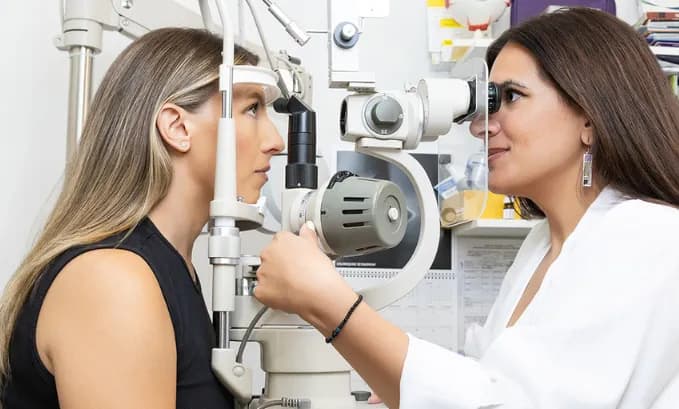
Keratometry or topography maps the curvature of your cornea. We assess tear quality and quantity, examine the lid margins, and measure pupil size where the lens design depends on it. Together these narrow thousands of available lenses down to a handful worth trying.
The Trial Pair and Follow-Up
You leave with trial lenses rather than a finished prescription. We check the fit on the eye, teach insertion, removal and care if you are new to lenses, then see you again after a week or two of real wear. Only once the lens performs properly in your life is the prescription finalised. If a lens decentres, dries out by evening or blurs when you blink, we change it — that is what the follow-up is for.
Should You Wear Your Lenses to the Appointment?
Come wearing them, and bring your glasses too. We want to see how your current lenses sit on the eye and hear how they feel late in the day. If you are being assessed for a change of lens type, we may ask you to leave them out for a period beforehand so the cornea returns to its natural shape — we will tell you how long when you book.

Do You Need an Eye Exam for Glasses and Contacts Separately?
Not separately, but not for the price of one either. An eye exam for glasses and contacts is a single visit that produces two prescriptions, with the contact lens portion added to the standard exam. Almost everyone who wears contacts also needs glasses — for evenings, for illness, for the days when an eye is irritated — so leaving with both is the sensible outcome.
Contact Lens Exam Cost: What You’re Paying For
The contact lens exam cost is usually quoted as two components: the comprehensive eye exam, and the contact lens fitting. When people compare how much is a contact lens exam between providers, they are often comparing one component against two, which is why quoted numbers look so inconsistent. Ask whether a stated cost of contact lens exam includes the fitting or only the exam.
The Contact Lens Fitting Fee Explained
The contact lens fitting fee covers the measurements, the trial lenses, the on-eye evaluation, the teaching if you need it, and the follow-up visit. It is higher for specialty fittings — toric lenses for astigmatism, multifocals, or hard-to-fit corneas — because those take more chair time and more trials to get right.
What it buys is a lens that fits your eye rather than approximately fits most eyes. A poorly fitted lens is not a bargain: it causes dryness, blur and, in the worst cases, corneal damage.
Does Insurance Cover a Contact Lens Exam?
Often partially. Many vision plans cover the comprehensive exam in full and apply an allowance toward the fitting and the lenses themselves, leaving a balance. Wondering how much is a contact lens exam without insurance is reasonable, and the honest answer depends on which lens type you need, so ask when you book. We check your benefits in advance — see our insurance information for what we work with.
How to Read Your Contact Lens Prescription
Learning how to read contact lens prescription notation takes a minute:
- OD / OS — right eye and left eye
- PWR or SPH — lens power, in dioptres, minus for short-sighted and plus for long-sighted
- BC — base curve, the curvature of the lens
- DIA — diameter, in millimetres
- CYL and AXIS — cylinder power and orientation, present only for astigmatism
- ADD — reading addition, on multifocal lenses
- Brand — part of the prescription, not a suggestion
That last point surprises people. Base curve and diameter differ between manufacturers even at identical power, so a prescription is only valid for the specific lens it was fitted for. Substituting a different brand at the same power is not an equivalent lens.
How Long Is a Contact Lens Prescription Good For?
Typically one year in New York, though it can be shorter if we are monitoring something. The expiry is not a sales mechanism. Lens wear changes the eye over time — corneal oxygen supply, tear film stability and lid health all shift — and an annual check catches problems while they remain reversible. Most of the complications we see in long-term wearers come from lapsed prescriptions and stretched replacement schedules, which is why what is and isn’t safe with lenses is worth reading.
Can You Get a Contact Lens Prescription From an Online Eye Exam?
An online refraction can estimate lens power. It cannot measure corneal curvature, assess your tear film, examine your lid margins or watch how a lens behaves on your eye — and those are the parts that make a prescription a fitting rather than a guess. It also cannot check eye health, which is a significant part of why the annual visit exists.
Book a Contact Lens Eye Exam at OPTYX in New York
If your prescription has expired, or you have never been properly fitted, this is the appointment to make. Searching for a contact lens eye exam near me, an eye exam for contacts near me or a contact lens fitting near me returns plenty of options; what distinguishes them is chair time, the range of lenses available to trial, and whether anyone follows up to check the fit actually worked.
Our optometrists provide contact lens exams across every OPTYX boutique, from the Upper East Side and Upper West Side through Long Island to the Hamptons. If you are still deciding which lens type suits you, our comparison of daily versus monthly lenses is a good place to start. Book a comprehensive eye exam, reorder through our contact lens service, find your nearest OPTYX location, or explore everything at OPTYX New York.
Frequently Asked Questions
What is a contact lens exam, in short? A full eye exam plus a fitting. The fitting measures your cornea, assesses your tear film and evaluates a trial lens on the eye, producing a prescription specific to one lens design.
Can I use my glasses prescription to order contacts? No. Contacts sit on the eye rather than in front of it, so the power differs, and a glasses prescription contains no base curve, diameter or brand. Retailers require a valid contact lens prescription.
How long does a contact lens exam take? Around 45 to 60 minutes for the exam and fitting, longer for a first fitting where insertion and removal are taught. A follow-up visit a week or two later completes it.
Do I need an eye exam for contacts every year? Yes. Prescriptions typically run for a year, and the annual visit checks how your eyes are tolerating lens wear rather than simply reissuing the same numbers.
Is the contact lens fitting fee separate from the eye exam? Usually, yes. The exam covers vision and eye health; the fitting covers measurements, trials and follow-up. Vision plans often treat them differently too.
Should I take my lenses out before the appointment? Wear them in for a routine annual check. If we are reassessing the fit or changing lens type, we may ask you to leave them out beforehand and will tell you for how long.