
Choosing between daily and monthly contact lenses is one of the first decisions new lens wearers face, and it comes up again every time a prescription is renewed. Both options correct your vision just as well. The real difference is how they fit into your budget, your morning routine and your comfort through a long day in the city. This guide walks through the daily vs monthly contacts question the way our optometrists explain it in the fitting room at OPTYX, so you can walk in already knowing which direction suits you.
What Are Daily Contacts?
Daily contacts, also sold as daily disposable contacts, are designed to be worn once and thrown away at the end of the day. You open a fresh sealed blister in the morning, wear the lenses for the day, and bin them before bed. There is no case, no solution and no cleaning step.
Because every pair is brand new, protein and lipid deposits never have time to build up on the lens surface. That single fact explains most of the advantages people notice when they switch.
What Are Monthly Contacts?
Monthly contacts are reusable lenses worn during the day, removed at night, cleaned and stored in fresh solution, then worn again the next morning for up to 30 days. They are made from thicker, more durable materials that hold their shape through repeated handling and disinfecting.
One pair covers a full month of wear, which is why the same box lasts far longer than a box of dailies.
The Main Difference Between Daily and Monthly Contacts
Strip everything else away and the difference between daily and monthly contacts is replacement frequency. Everything else follows from it: the price you pay across a year, how much maintenance you take on, and how fresh your lenses feel by late afternoon.
Neither type is medically superior. They suit different people, and plenty of our patients keep both on hand for different occasions.
Daily vs Monthly Contacts Cost: What You Actually Pay
This is where most people start, and where the numbers are often misread. Comparing a single box of dailies to a single box of monthlies makes dailies look wildly expensive, because you are comparing 30 days of wear to six months of wear.
How Much Are Daily Contacts?
Daily lenses are priced per box of 30 or 90 lenses per eye. Full-time wear means roughly 730 lenses a year, so the annual figure is meaningful rather than the box price. Ask about annual supply pricing, which is how most brands are discounted, and remember there is no solution or case to buy on top.

How Much Are Monthly Contacts?
Monthly lenses cost less per year in lens spend, usually noticeably so. The catch is that solution, cases and rewetting drops are recurring purchases, and they close part of the gap. Are monthly contacts cheaper than daily lenses? In most prescriptions, yes, but the honest answer is that the difference is smaller than the shelf price suggests.
So are daily contacts more expensive? Per year, generally yes. Per hour of comfortable wear, many part-time wearers find dailies work out better, because a monthly lens worn twice a week still expires after 30 days.
Are Daily Contacts Better Than Monthly Lenses?
For some wearers, clearly yes. Dailies tend to be the stronger choice if you:
- wear lenses only a few days a week
- travel often and would rather not pack solution
- play sports or swim and want a lens you can discard afterwards
- struggle to keep up with a nightly cleaning routine
- have allergies that flare during pollen season in New York
Monthlies tend to win if you wear lenses every single day, all day, and want the lowest annual cost with a lens that feels robust in your fingers.
Comfort, Dry Eyes and Daily Disposable Contacts
By evening, a lens that has been handled and disinfected for three weeks simply does not feel like a lens fresh from the blister. Deposits attract more deposits, and that is felt as dryness, grittiness or mild blur late in the day.
If your eyes already run dry, the best daily contacts for dry eyes are usually the ones with higher water retention at the lens surface, and your optometrist can match specific materials to your tear film. Screen-heavy work makes this worse, since we blink less while concentrating. If dryness is a daily complaint rather than an occasional one, it is worth investigating properly – our guide to what happens during a dry eye exam explains how that assessment works.
Daily and Monthly Contacts for Astigmatism
Astigmatism is no barrier to either option. Daily contacts for astigmatism use a toric design that has to sit at a consistent orientation on the eye, and the range has expanded considerably in recent years. Monthly torics are equally well established and often come in a broader span of cylinder powers, which matters for stronger prescriptions.
Because toric lenses depend on precise rotational stability, the fitting appointment carries more weight here than with a standard spherical lens.
How Long Can You Wear Daily Contacts?
Through your waking day, typically. What matters is that the lens comes out before you sleep, unless a specific lens has been approved for overnight wear by your eye care professional. Sleeping in a lens that was not designed for it restricts oxygen to the cornea and raises infection risk sharply — we cover this in detail in sleeping and swimming with contact lenses.
Can You Wear Daily Contacts More Than Once?
No. This is the single most common question we hear, and the answer does not bend. Can you reuse daily contacts to stretch a box further? The material is not built to survive disinfection, and the lens has no protective coating left after a day of wear. Rinsing and re-wearing invites corneal infection, and it is a false economy – if cost is the pressure point, a monthly lens is the right answer, not a stretched daily.
Care and Cleaning: Where Monthly Contacts Take More Work
Monthly lenses need rubbing and rinsing with multipurpose solution every night, fresh solution in a clean case each time, and a new case every three months. Topping up old solution rather than replacing it is the habit that causes most avoidable problems.
None of this is difficult, but it is a nightly commitment. If you know yourself well enough to admit you will skip it, dailies remove the risk entirely.
Lifestyle: Which Option Fits Your Routine
When patients ask us to settle daily contacts vs monthly in a single sentence, the honest answer is that frequency of wear decides it. Think about your actual week rather than your ideal one. Someone who wears lenses for weekend tennis and evenings out is served better by dailies. Someone commuting into Manhattan five days a week with lenses in from seven in the morning will likely prefer monthlies, with a small box of dailies kept aside for travel and the beach.
If you are also weighing lenses against frames, it helps to know that contact lens prescriptions are not the same as glasses prescriptions – you need both written out before you can order either.
Get Fitted for Daily or Monthly Contacts at OPTYX in New York
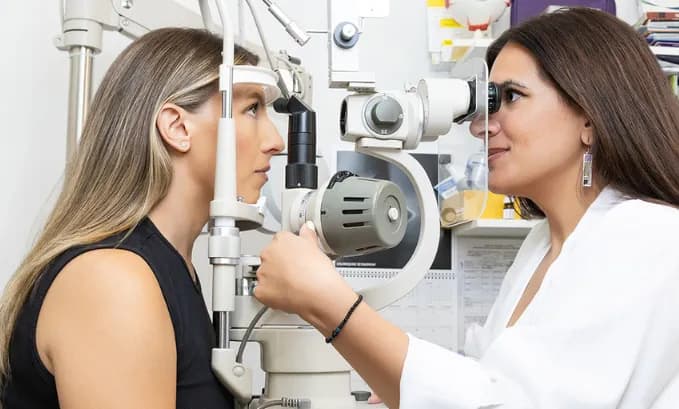
The honest answer to daily vs monthly contacts comes from a fitting, not a comparison chart. Corneal curvature, tear quality, prescription strength and how many hours you realistically wear lenses all shape the recommendation, and a trial pair of each is often the fastest way to decide.
Our optometrists fit both across all OPTYX locations, from the Upper East Side to the Hamptons. Book a contact lens exam, reorder through our contact lens service, or find your nearest OPTYX boutique and come in for a trial. You can also browse everything we offer at OPTYX New York.
Frequently Asked Questions
Are daily contacts better than monthly lenses for beginners? Often, yes. New wearers handle lenses more, and a fresh pair every morning removes cleaning technique from the learning curve. Many people start on dailies and move to monthlies once handling feels automatic.
What is the real difference between daily and monthly contacts in comfort? Most wearers notice it late in the day. A new lens has no surface deposits, so hour twelve feels much closer to hour one. Monthly lenses can feel just as comfortable when cleaned properly, particularly in the first half of their cycle.
How much do daily and monthly contacts cost over a year? Monthly lenses usually cost less in annual lens spend, but solution, cases and drops narrow the gap. We price annual supplies at the fitting so you can see both totals side by side rather than guessing from box prices.
Can you wear daily contacts for 2 days in a row? No. One wear, then discard. Wearing a daily lens a second day removes the protection that makes it a safe single-use lens.
Can I switch between daily and monthly contacts? Yes, and plenty of people do. Both need to be fitted and written into your prescription, since parameters differ between lens types even at the same power.
Do daily or monthly contacts work better for astigmatism? Both work. Daily torics are convenient and now widely available, while monthly torics often cover a wider range of cylinder powers. Fit and rotational stability decide it, which is why a trial matters.