
The practice of vision correction delivers enhanced sight and better lives to the millions of people worldwide. When it comes to selecting the right method of vision correction, a common question emerges: “Are contact prescriptions the same as glasses?” For appropriate eye treatment and selection of the optimal glasses and contact lenses, you require understanding these prescription variations is necessary. Each prescription contains different specifications because of considerations including their positioning within the eyes and curved shape as well as personalized visual needs to achieve optimal eye health.
Understanding Vision Prescriptions
An eye health professional’s written recommendation known as a vision prescription outlines the criteria required to fix your refractive errors—myopia, nearsightedness, hyperopia, farsightedness, astigmatism, or presbyopia. It converts the special qualities of your eyes into quantifiable values, thus allowing the design of exact lenses that control light entering your eye and concentrates on the retina, thus providing clear vision.
Components of a Prescription
A typical vision prescription includes several key components components that are measured in a contact lens exam, each representing specific features of your eye’s refractive needs:
Sphere (SPH): This indicates the lens power needed to correct nearsightedness or farsightedness. A negative value (-) corrects myopia, while a positive value (+) corrects hyperopia.
Cylinder (CYL): This denotes the amount of lens power required to correct astigmatism, which is caused by an irregularly shaped cornea or lens.
Axis: Applicable only if cylinder power is present, the axis specifies the orientation of astigmatism correction on a scale.

How Prescriptions Are Determined
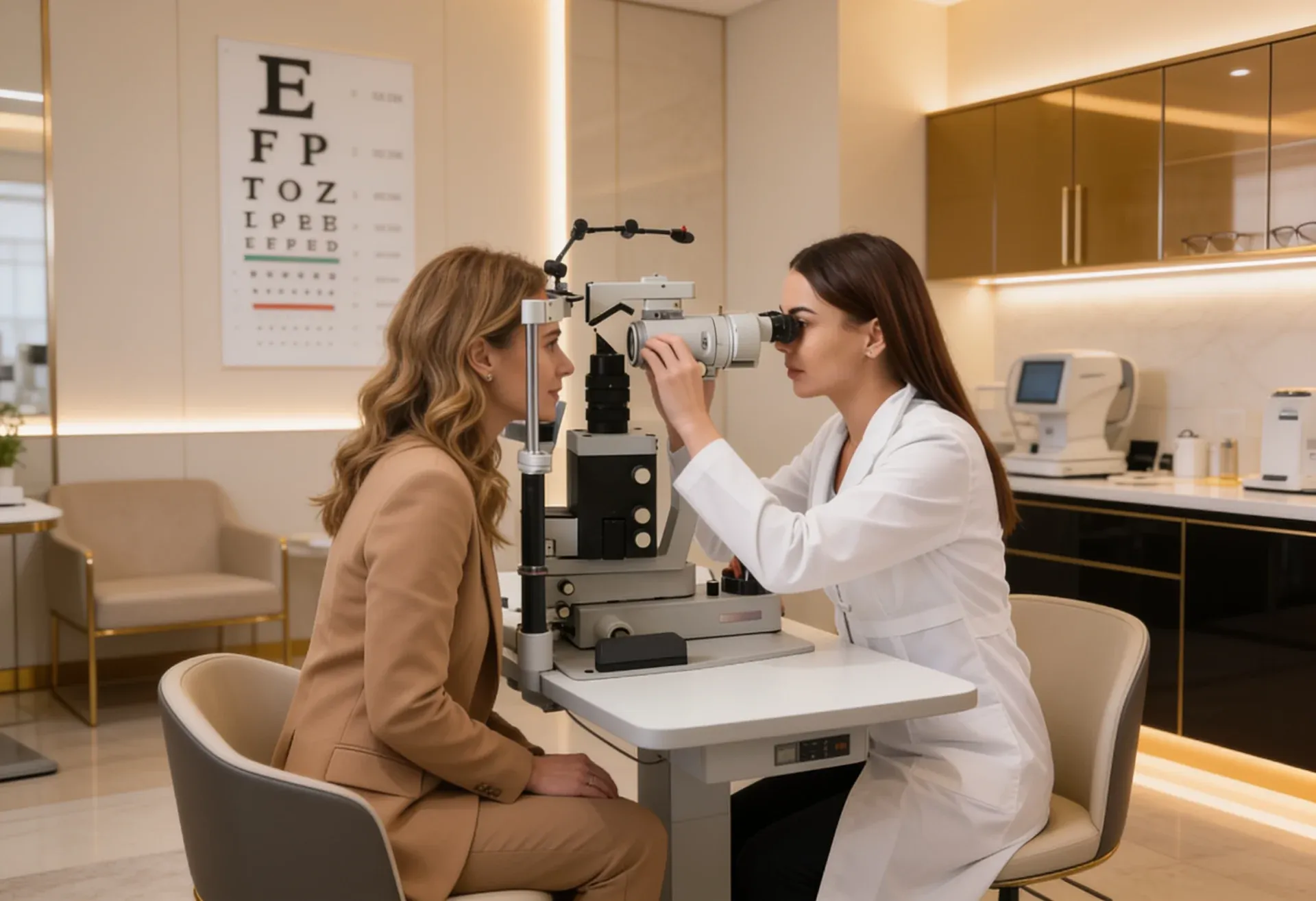
An optometrist thorough comprehensive eye exam helps decide right prescription. The procedure starts with exams to evaluate your general eye condition and gauge refractive faults. A refraction assessment—where you view an eye chart through a phoropter—is a popular test used in prescription writing.
Key Differences: Are Glasses and Contact Prescriptions the Same
Measurement Differences
Consideration of vertex distance is one important element separating contact lens prescriptions from eyeglass prescription. Vertex distance is the area separating the cornea and the corrective lens. While contact lenses lie squarely on the cornea, glasses are several millimeters away from the surface of your eyes.
This positional difference implies that, especially in cases with greater refractive faults, glasses prescription may need minor changes when converted into a contact lens prescription.
Specific Parameters Unique to Contact Lens Prescription
Prescriptions for contact lenses call for more criteria not covered by prescription for spectacles. These comprise the lens’ base curve and lens diameter. The base curve guarantees that the contact lens fits your cornea exactly, so offering ideal comfort and stability. The lens size depends on the diameter, which guarantees it covers the relevant area of your eye without interfering with natural blinking or discomfort generation.
Lens Power Adjustments
Still another important distinction is the adjusted lens power needed for contact lenses as opposed to glasses. Particularly for those with high prescriptions, contact lenses sit directly on the cornea, so there is no vertex distance to consider and may cause a minor shift in the power of the lenses. This change guarantees that, worn in their exact position on the eye, the vision correction offered by the contact lenses fits the user’s demands.
Are Contact Prescriptions the Same as Glasses? Debunking the Myth
It is a common misconception and question “Are contact and glasses prescriptions the same”. Although glasses and contact lenses kinds of prescriptions seek to improve vision, their placement on the eye and the need of particular sizing and fitting define the needs for contact lenses. Contact lenses lie squarely on the surface of the cornea, unlike spectacles, which sit a short distance from the eyes. This variation calls for different contact lens prescription parameters including base curve, diameter, and changed lens power. Beyond the numerical refractive correction given in a glasses prescription, a perfect contact lens prescription also ensures and compatibility with the wearer’s eye.
Choosing the Right Glasses and Contact Lenses for Your Lifestyle
Advantages of Glasses
Many people choose glasses because of their various useful advantages. They need little effort to put on and wear all through the day. Glasses do not come into direct touch with your eyes unlike contact lenses, lowering the risk of irritation or infection. Furthermore low maintenance are glasses since they only need sporadic cleaning and, with correct care, can endure for years.

Advantages of Contact Lens Fitting
Particularly for people with more busy and hectic lives, contact lenses provide specific benefits. Their better field of view—free from frame distortion—is one of their main advantages. This makes them especially fit for sports and outdoor activities, where glasses could be cumbersome or limited. Weather also less influences contact lenses; examples of this include fogging in chilly areas or rain splashing. For individuals wondering, “Are contact prescriptions the same as glasses?”, it is worth noting that contacts are tailored for comfort and practicality on the eye’s surface, offering mobility and aesthetic benefits.
Schedule an appointment with an Optyx professional to explore your options and find the perfect solution for your vision and lifestyle needs. By understanding the differences “Are contact prescriptions the same as glasses?”—you can make a well-informed choice that ensures both comfort and clarity.
How often should I get my prescription checked?
Most adults should have an eye checkup every two years to make sure your prescription is right and to keep an eye on your general eye condition. Annual exams are advised, nevertheless, if you have family history of eye disorders, changes in vision, or discomfort. Early detection of conditions like glaucoma or macular degeneration made possible by regular visits lets quick treatment and improved results possible. Maintaining best eyesight and general health depends on your eye care being proactive.
Conclusion
Contact lenses and glasses prescriptions share the goal of improving vision but differ significantly in their requirements and application. Eyeglass prescription account for vision correction at a distance from the eye, while contact lenses prescriptions are tailored for lenses that sit directly on the eye’s surface. This difference necessitates specialized measurements for contact lenses, such as base curve and diameter, and often involves additional considerations to ensure a proper fit and long-term comfort. Are contact prescriptions the same as glasses? The answer is no.
Plan an eye exam with an Optyx in New York professional today for tailored suggestions and to guarantee your eyes receive the treatment they need. Our professionals will assist you through the process and identify the ideal solution to fulfill your vision requirements. Don’t delay, your eyes want the finest treatment!