
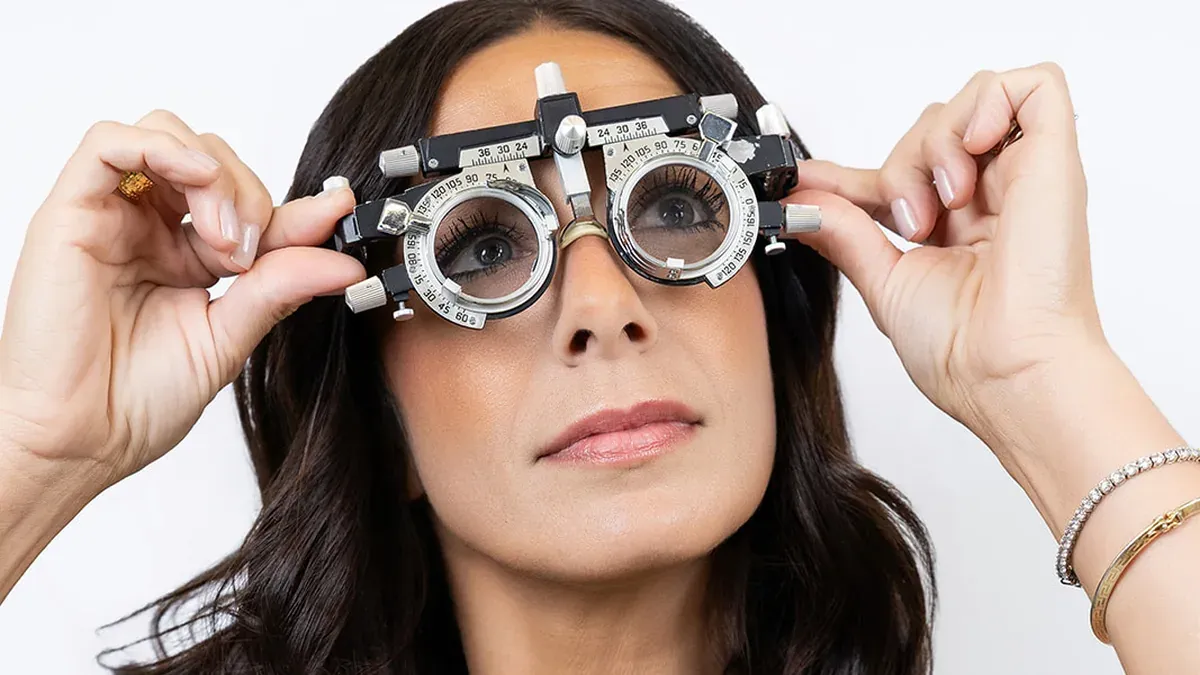
An eye exam NYC is how you find out whether your eyes are actually healthy. Some conditions show no symptoms until they are advanced. Most adults need one every one to two years; those with an existing prescription or a family history of eye disease should go annually. At OPTYX, a full eye exam checks everything from your current prescription to the health of your retina.
How Often Should You Get an Eye Exam in New York?

Adults with healthy eyes should schedule a vision exam New York at least every one to two years. Once a year is the smarter standard if you wear contact lenses, have diabetes, have elevated eye pressure, or have a first-degree relative with glaucoma or macular degeneration. Children need an annual eye health checkup too; vision problems can hold back reading and schoolwork before a child says a word about it.
Whether you have been putting off finding an eye doctor near me or want to re-establish a routine after a move, consistent appointments catch conditions early. Sudden changes are different. New floaters, flashes, or halos around headlights call for an eye exam for sudden vision symptoms sooner rather than later.
What Does a Comprehensive Eye Exam Include?

A comprehensive eye exam Manhattan covers your eyes from the front surface to the retina in a single appointment. Here is what a visit to an optometrist New York City typically includes:
- Visual acuity: sharpness of sight at distance and near
- Refraction: whether your prescription has changed and a glasses prescription update is needed
- Tonometry: intraocular pressure measurement, a primary screen for early glaucoma
- Slit-lamp exam: magnified inspection of the cornea, iris, and lens for signs of cataracts or damage
- Ophthalmoscopy or retinal imaging: a direct view of the retina, optic nerve, and blood vessels
- Visual field test: peripheral-vision mapping to identify early blind spots
Many OPTYX locations also offer widefield retinal scanning, which captures up to 200 degrees of the retina in a single frame and often requires no dilation. Together these tests give your optometrist a full picture of both your prescription and your systemic health.
How Long Does an Eye Exam NYC Take?
A routine visit runs 20 to 45 minutes. First appointments take longer since the doctor reviews your full history and builds a baseline. Dilation adds 15 to 20 minutes. Bringing your current glasses or contacts along with a quick note of any symptoms you have noticed shortens the overall time.
How Much Does an Eye Exam Cost in NYC?
For current pricing, contact your local OPTYX location.
Does Vision Insurance Cover Eye Exams in New York City?
Most vision plans cover one routine exam per year or every two years; copays and covered amounts vary by plan. Confirm your benefits before booking by contacting your local OPTYX location. FSA and HSA balances can also be applied toward the cost, which makes end-of-year a natural time to schedule your annual eye exam New York.
How to Prepare for Your Visit
Good preparation makes any eye health checkup faster and more accurate:
- Bring a valid ID and your insurance card.
- Bring your current glasses and contact lenses.
- Write down any symptoms: occasional blur, halos at night, eye strain after screen use, or persistent dryness.
- List current medications and note any family history of eye disease.
- If dilation is possible, arrange a ride home; near vision can stay blurred for a couple of hours.
Give your eyes a rest from screens on the morning of your appointment. Rested eyes make testing more reliable.
Understanding Your Glasses Prescription

After an eye exam NYC, your optometrist hands you a written prescription. The notation looks technical at first:
- Sph (Sphere): overall lens power; minus means nearsightedness, plus means farsightedness
- Cyl (Cylinder): astigmatism correction; left blank when none is present
- Axis: a number from 1 to 180 describing the angle of astigmatism correction
- OD / OS / OU: Latin abbreviations for right eye, left eye, and both eyes
- Prism / Base: corrects eye-alignment issues; the base indicates the prism direction
An Add power means the prescription also covers near vision, which is common after 40. Lens options for near-vision correction after 40 have expanded considerably, and an OPTYX optometrist can help you choose the design that fits your daily routine.
If new glasses feel off after a glasses prescription update, return before assuming the prescription itself needs changing. Fitting adjustments resolve most complaints.
Book an Eye Exam
Book an Eye Exam at any OPTYX location across Manhattan, Long Island, the North Fork, the Hamptons, and Westchester.