Children rarely complain about their vision, because they have no reference point for what clear sight is supposed to look like. A child who cannot read the board assumes everyone sees it that way. That is exactly why a pediatric eye exam matters so much: it catches what a child will never report and a parent cannot see. This guide covers when to book, what happens in the room, and how a proper exam differs from the screening your child had at school.
What Is a Pediatric Eye Exam?
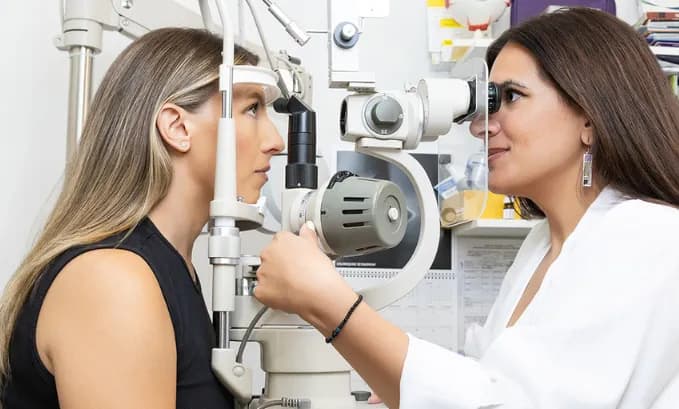
A pediatric eye exam is a full assessment of how well a child sees and how well both eyes work together, carried out by an optometrist trained to test children. It measures far more than the letters on a chart. Focusing ability, eye alignment, depth perception, colour vision and the health of the internal eye all get checked.
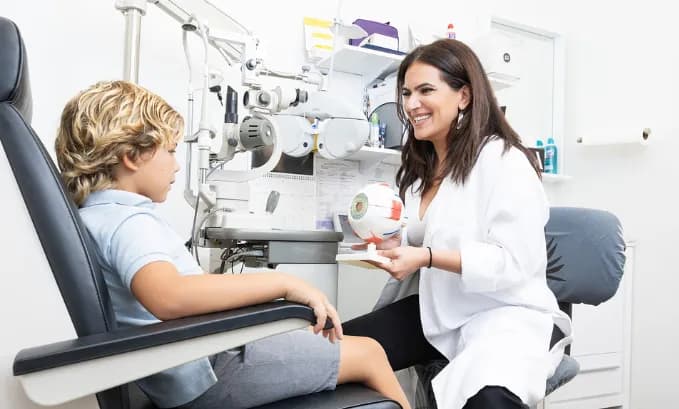
The techniques are adapted to age. An eye exam for children of four looks nothing like one for a teenager, and neither depends on the child knowing their letters.
When Should a Child Get an Eye Exam?
This is the question we field most often from parents. The answer is earlier than most people expect.
The Recommended Schedule by Age
The widely followed guidance runs like this:
- 6 to 12 months – a first baseline exam
- 3 years – a second exam before preschool
- Before first grade – a full exam at age 5 or 6
- Every one to two years thereafter – or annually if glasses or contacts are worn
So when should a child have a first eye exam? Around the first birthday, long before school begins. And when should kids get an eye exam again? Any time you notice a change, regardless of when the last one was.

Toddler Eye Exam: What Happens Before They Can Read
A toddler eye exam relies on things a small child can do naturally: following a light or a toy, reacting to patterns, matching shapes instead of naming letters. We use retinoscopy to measure the prescription objectively, which needs no verbal response at all, so a child who says nothing for the entire visit can still leave with an accurate result.
Why a School Vision Screening Is Not an Eye Exam
A school vision screening is a useful filter, not a diagnosis. It usually checks distance sight at one fixed distance and little else. A child can pass it comfortably while struggling to focus at reading distance, having one weaker eye compensated for by the stronger one, or having an eye-teaming problem that makes sustained reading exhausting.
Plenty of the children we see arrive after passing a screening. If you want the full picture of what each one covers, our comparison of vision screening versus a comprehensive eye exam breaks it down properly.
What Does a Pediatric Eye Exam Consist Of?
An eye exam for kids at OPTYX typically includes:
- a developmental and family eye-health history
- visual acuity at distance and near, matched to your child’s age
- an objective prescription measurement
- eye alignment and eye-movement testing
- focusing and eye-teaming assessment
- depth perception and colour vision
- an examination of the internal eye and retina
Most visits take 30 to 45 minutes. We keep the pace relaxed, because a rushed child stops cooperating and the results suffer for it.
Signs Your Child Needs Glasses
Children adapt around poor vision rather than reporting it, so the signs are behavioural more often than verbal. Watch for:
- sitting very close to screens or holding books unusually near
- squinting, or tilting and turning the head to look at something
- rubbing eyes frequently when not tired
- covering or closing one eye to focus
- complaints of headaches late in the school day
- losing place while reading, or avoiding reading altogether
- an eye that drifts inward or outward
- schoolwork that slipped without an obvious reason
One of these on its own may mean nothing. Several together are worth a child eye exam.
Myopia in Children Is Rising, and Early Detection Matters
Short-sightedness is appearing earlier and progressing faster than it did a generation ago, and time spent on near work indoors is a significant part of why. Myopia in children is not simply a matter of stronger lenses each year. It changes the shape of the growing eye, and higher levels carry long-term risks to eye health in adulthood.
The value of catching it early is that progression can be slowed. Our guide to myopia management explains the approaches available, and all of them work better the sooner they start.
Can a Pediatrician Do the Eye Exam Instead?
A pediatrician performs a valuable screening as part of routine well-child care, and they will refer onward when something looks wrong. What they do not have is the equipment for a full eye examination, or the time within a general appointment to assess focusing and binocular vision in depth. The two are complementary rather than interchangeable — the paediatric check flags problems, the eye exam pediatric specialists perform diagnoses and corrects them.
Is There a Free Eye Exam for Kids? Coverage and Insurance
Many parents searching for a free eye exam for kids are closer to it than they realise. Children’s vision care is treated as an essential health benefit under most plans, which means a pediatric eye exam is frequently covered in full, or close to it, for children under 19. Vision plans commonly add an allowance toward frames and lenses on top.
We check coverage before the appointment so there are no surprises – see our insurance information or ask when you book. OPTYX also runs Gift of Sight initiatives with local schools, providing eyewear to children in our communities who need it.
How to Prepare Your Child for Their Eye Exam
Book for a time when your child is rested rather than at the end of a long day. A back-to-school eye exam is best scheduled before term gets busy, not after the first parents’ evening raises a concern. Explain that nothing will hurt and that there are no wrong answers, which removes the pressure of feeling tested. Bring any current glasses, a note of what you have noticed at home, and any school screening results you were given. If dilating drops are used, vision stays blurry and light-sensitive for a few hours, so sunglasses and a quiet afternoon help.

Choosing Frames Kids Will Actually Wear
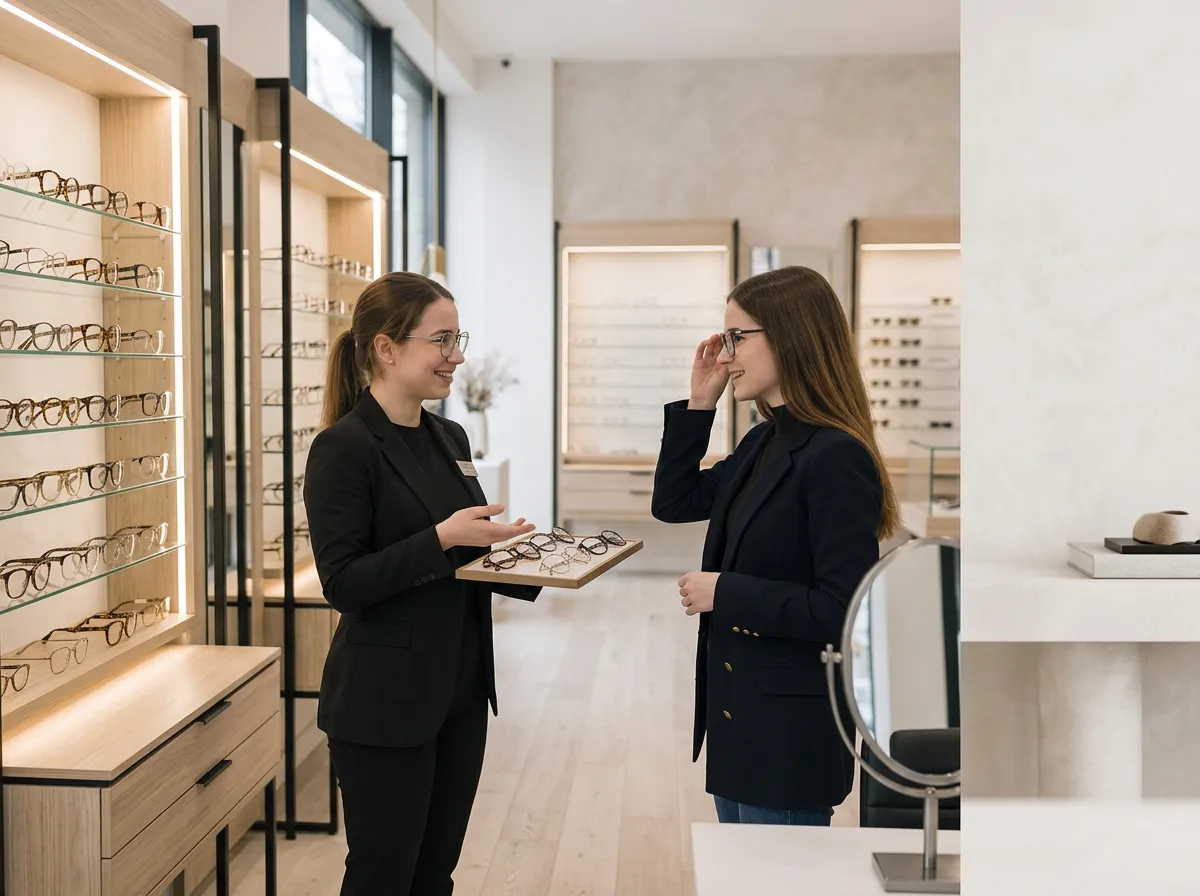
A prescription only works if the glasses stay on, and that comes down to whether your child likes them. Fit matters just as much: proper bridge width, temples that sit correctly behind the ear, and lens material suited to an active child. Our advice on choosing the right glasses for a child covers what to look for, and our opticians adjust every pair in person.
Book a Pediatric Eye Exam at OPTYX in New York
If your child has never had a full exam, or it has been more than two years, now is the time. Parents searching for a pediatric eye exam near me, a kids eye exam near me or an eye exam for kids near me turn up plenty of options, but children’s testing depends on an optometrist who is patient and properly equipped for it.
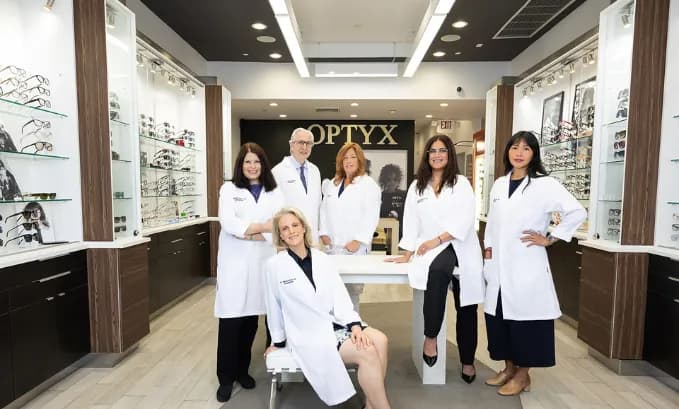
Our optometrists see children across every OPTYX location, from the Upper East Side and Upper West Side through Long Island to the Hamptons. Book a comprehensive eye exam, find your nearest OPTYX boutique, or explore everything we offer at OPTYX New York.
Frequently Asked Questions
At what age should a child have their first eye exam? Between six and 12 months. A baseline exam at that age checks eye health and development, and picks up conditions that are far easier to treat early than later.
My child passed the school screening. Do they still need a pediatric eye exam? Yes. A screening tests distance vision at a single distance and misses focusing problems, eye-teaming issues and one-sided weakness. Passing it is not the same as having healthy vision.
How long does an eye exam for kids take? Usually 30 to 45 minutes, a little longer for a first visit or if dilating drops are needed.
What if my child cannot read letters yet? Not a problem. Shape and picture charts, light-following tests and objective prescription measurement all work without reading, which is how we examine babies and toddlers.
How often should children have an eye exam? Every one to two years once school has started, and annually for children who wear glasses or contact lenses, or who have a family history of eye conditions.
Will my child need drops during the exam? Sometimes. Dilating drops give a clear view of the retina and a more accurate prescription in young children. We always explain in advance if they are needed.