If you have ever read a glasses prescription or talked with an optometrist, you have probably heard the terms nearsighted and farsighted. They sound like opposites, and in many ways they are, but they are also easy to mix up. Nearsightedness, also known as myopia, is one of the most common vision problems in the world, and farsightedness affects millions of adults and children too. Here is a clear guide to nearsightedness vs. farsightedness, how to tell which one you might have, and how each is corrected.
Nearsighted vs Farsighted: The Short Answer
- Nearsighted: you see near objects clearly, but distant objects look blurry.
- Farsighted: distant objects are often clearer, but near objects look blurry or take effort to focus on.
A simple way to remember it: the word describes what you can see well. Nearsighted people see near things clearly, and farsighted people see far things more easily.
Nearsighted Meaning: What Is Myopia?
In simple terms, the nearsighted meaning is this: your eyes focus light in front of the retina instead of directly on it. This usually happens because the eyeball is slightly too long or the cornea is curved too steeply. The result is blurry distance vision, such as road signs, whiteboards or a TV across the room, while reading and phone use stay comfortable.
Myopia usually starts in childhood and often progresses through the teenage years. Long hours of close-up work and less time outdoors are both linked to its rise. For children, lenses such as Essilor Stellest are designed to help slow myopia progression, not just correct it.
Farsighted Meaning: What Is Hyperopia?
The farsighted meaning is the reverse. Light focuses behind the retina, usually because the eyeball is slightly short or the cornea is flatter than usual. So, what is farsighted in practical terms? Your eyes have to work harder to bring close objects into focus, and with higher levels of hyperopia, distance vision can become blurry too.
What Is Farsighted Vision Like?
Mild hyperopia can go unnoticed day to day, especially in children and young adults, because the eye’s focusing muscles compensate. The extra effort often shows up as tired eyes, headaches after reading, squinting or trouble concentrating on close work. Many adults with mild hyperopia notice it more after 40, which is why so many people start asking “what does farsighted mean?” once reading begins to feel harder.

What Is the Difference Between Nearsighted and Farsighted?
What is the difference between nearsighted and farsighted at its core? It comes down to where light lands inside the eye. When you compare farsighted vs nearsighted vision, the blur appears at opposite distances, and the lenses that correct each one work in opposite ways.
Myopia vs Hyperopia: What Happens Inside the Eye
In myopia vs hyperopia, the shape of the eye is the key difference:
- Myopia: a longer eye focuses light in front of the retina, so distance vision is blurry. It is corrected with minus (concave) lenses.
- Hyperopia: a shorter eye focuses light behind the retina, so near vision takes more effort. It is corrected with plus (convex) lenses.
That is why a minus sign on a prescription means nearsighted, and a plus sign usually means farsighted.
Am I Nearsighted or Farsighted? Signs to Watch For
If you are asking yourself “am I nearsighted or farsighted?”, these signs can offer a clue:
- Likely nearsighted: squinting to read signs, sitting close to the TV, or blurry vision when driving, especially at night.
- Likely farsighted: tired or aching eyes after reading, headaches after screen work, or words that blur the longer you read.
These are only hints. Some people have blurred vision at both distances, and children rarely complain at all. The only reliable answer comes from a professional eye exam, which measures exactly how your eyes focus.

Nearsighted vs Farsighted vs Astigmatism
Astigmatism often enters the comparison of nearsighted vs farsighted vs astigmatism. Unlike myopia and hyperopia, astigmatism is caused by an unevenly curved cornea or lens. Instead of focusing to a single point, light focuses in more than one place. This causes blurry or stretched vision at all distances, along with glare and eye strain. Astigmatism often occurs alongside nearsightedness or farsightedness and is corrected with the same glasses or with toric contact lenses.
Myopia vs Hyperopia vs Presbyopia
Comparing myopia vs hyperopia vs presbyopia causes the most confusion, because presbyopia and farsightedness feel similar. Presbyopia is not a focusing error caused by eye shape. It is the natural, age-related stiffening of the eye’s lens, which usually becomes noticeable after 40 and makes close-up tasks harder for everyone, including people who have been nearsighted all their lives.
That is why needing readers does not automatically mean you are farsighted. Our article on reading glasses for nearsighted or farsighted vision explains this in more detail, and our guide to reading glasses by age shows how near vision changes over time.
Is One Worse Than the Other?
Neither condition is “worse” in everyday terms, as both are easy to correct. They do carry different long-term considerations. High myopia increases the risk of retinal detachment, glaucoma and macular problems later in life, which is why regular retinal checks matter. Significant hyperopia in children can lead to eye strain, crossed eyes or a lazy eye if it is not corrected early.
How Nearsighted and Farsighted Vision Is Corrected
The good news about near vs farsighted vision is that both are very treatable:
- Prescription glasses: the most common choice, with minus lenses for myopia and plus lenses for hyperopia.
- Contact lenses: a convenient option for sports or daily wear, available through OPTYX contact lenses.
- Myopia management for children: specialized lenses that help slow progression.
- Refractive surgery: an option for some adults once their prescription is stable.
If you also need help with close-up tasks after 40, our guide to progressive reading glasses explains how one pair can cover both distance and near vision.
Get Your Vision Checked at OPTYX
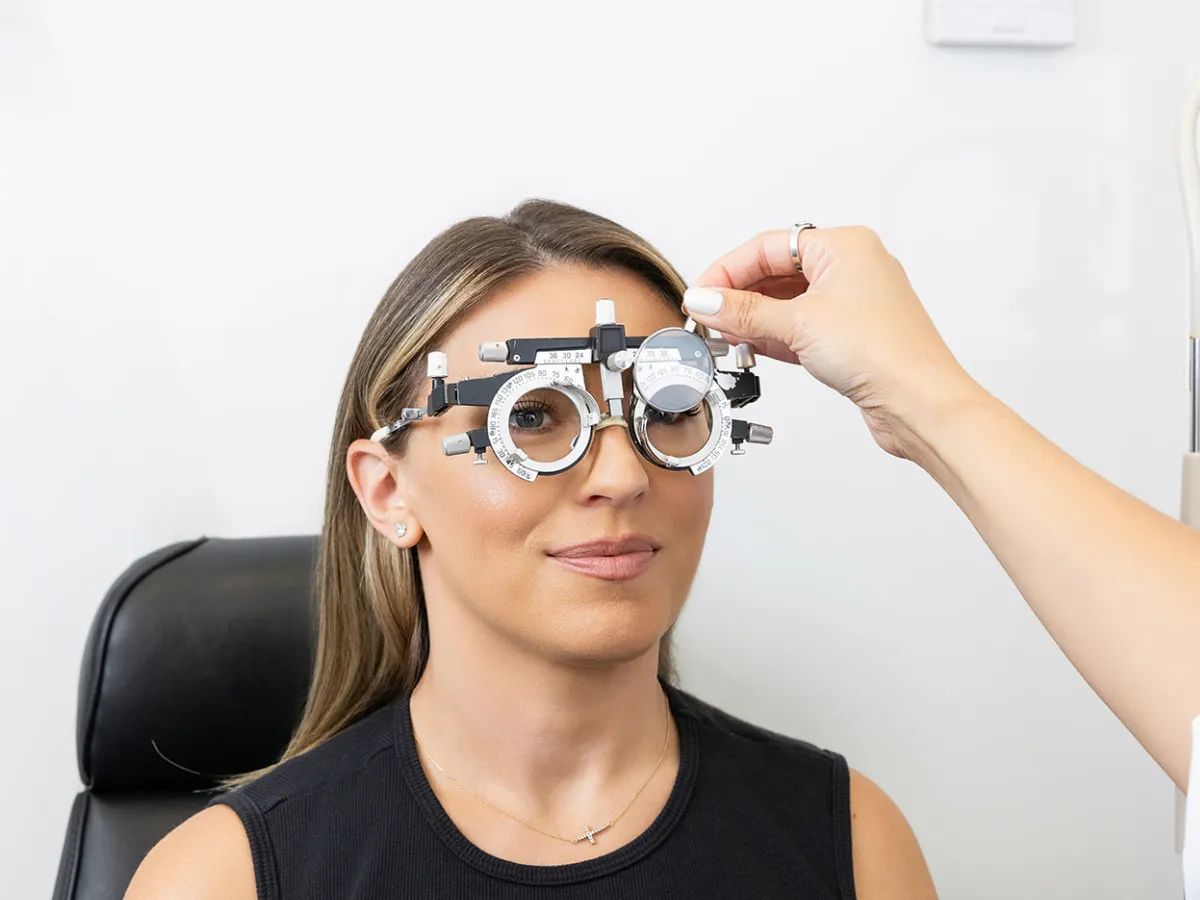
Whether distance signs have started to blur or reading has become tiring, a comprehensive eye exam will show exactly what is going on and which correction fits your lifestyle. Our optometrists then help you choose frames and lenses from a curated selection of designer and luxury eyewear.
Book your visit at one of our OPTYX locations across Manhattan, Long Island and Westchester, and learn more about our approach to eye care at OPTYX.