If you’re concerned about glaucoma, you’re probably wondering what is the most accurate test for glaucoma and how you can catch it early. At OPTYX New York, we use advanced diagnostic technology to detect glaucoma before it affects your vision. The short answer? There’s no single perfect test, but optical coherence tomography (OCT) currently leads the way in early detection.
Why There’s No Single “Most Accurate” Test
Glaucoma is tricky to diagnose because it develops slowly and often shows no symptoms until significant vision loss has occurred. That’s why optometrists rely on multiple tests working together rather than just one.
Here’s the challenge: about half of people with glaucoma have normal eye pressure. So while pressure tests are important, they can’t tell the whole story. Research shows that combining several diagnostic approaches gives the most reliable results for catching glaucoma early.
Think of it like putting together a puzzle. Each test reveals a different piece, and together they create a complete picture of your eye health.
OCT: The Leading Test for Early Detection
When it comes to the most accurate test for glaucoma, optical coherence tomography (OCT) stands out. This imaging technology measures the thickness of your retinal nerve fiber layer with remarkable precision.
Why does this matter? Studies show OCT can detect nerve fiber damage up to six years before you’d notice any vision changes. That’s a significant head start on treatment.
OCT works by using light waves to create detailed cross-sectional images of your retina. It’s quick, painless, and doesn’t require any eye drops. Research indicates OCT has about 84% sensitivity and 75% specificity for detecting glaucoma, making it one of the most reliable screening tools available.
At OPTYX New York, our Optos technology takes retinal imaging even further. While traditional methods capture only 10-15% of your retina, Optos ultra-widefield imaging captures up to 82% in a single image. This means we can spot changes in areas that standard exams might miss entirely.

Other Essential Glaucoma Tests
While OCT leads in early detection, a thorough glaucoma evaluation includes several other important tests.
Tonometry (Eye Pressure Test)
This test measures the pressure inside your eye. Goldmann applanation tonometry is considered the gold standard for accuracy. While elevated pressure doesn’t always mean glaucoma, it’s still an important risk factor to monitor.
Visual Field Testing
Also called perimetry, this test maps your peripheral vision. Glaucoma typically affects side vision first, so this test helps detect and track vision loss over time. You’ll focus on a central point while lights flash in your peripheral vision.
Gonioscopy
This examination looks at the drainage angle where fluid exits your eye. A special lens placed on your eye lets the optometrist see if the angle is open or narrow, which helps determine your glaucoma type.
Pachymetry
Corneal thickness affects how eye pressure readings are interpreted. Thinner corneas may give falsely low pressure readings, while thicker corneas may show higher readings. This quick, painless test takes just seconds.
Dilated Eye Exam
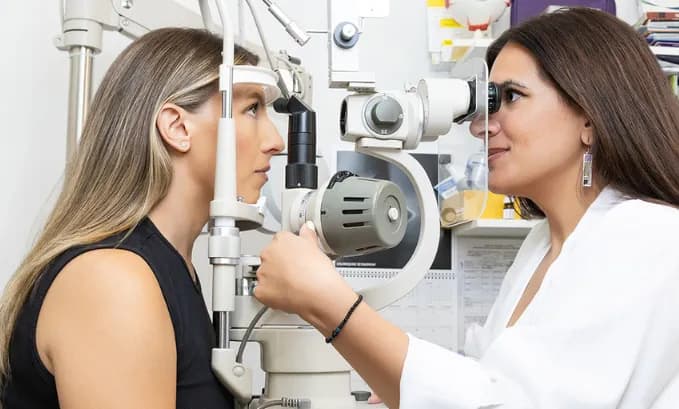
By widening your pupils, the optometrist can directly examine your optic nerve for signs of damage. This hands-on assessment remains a crucial part of any glaucoma test.
How OPTYX New York Tests for Glaucoma
During your comprehensive eye exam at OPTYX New York, our experienced optometrists use a combination of these diagnostic tools to evaluate your glaucoma risk thoroughly.
Our advanced Optos imaging technology is a key part of this process. The ultra-widefield view helps detect subtle changes in your retina and optic nerve that could indicate early glaucoma. Best of all, it’s comfortable and usually doesn’t require dilating drops.
If any test suggests possible glaucoma, we’ll recommend follow-up evaluations and discuss next steps. Early detection gives you the best chance of preserving your vision through treatment.

When to Get Tested
The American Academy of Ophthalmology recommends baseline glaucoma screening at age 40 for most adults. However, you may need earlier or more frequent testing if you have risk factors such as:
- Family history of glaucoma
- African, Hispanic, or Asian ancestry
- Previous eye injuries
- High eye pressure
- Thin corneas
- Diabetes or high blood pressure
Even without risk factors, regular eye exams are your best defense. Glaucoma testing is quick and painless, and catching it early can save your sight.
Protect Your Vision with Regular Eye Exams
So what is the most accurate test for glaucoma? The answer is a comprehensive approach that combines OCT imaging with tonometry, visual field testing, and a thorough eye examination. No single test catches everything, but together they provide the complete picture needed for accurate diagnosis.
Ready to protect your eye health? Schedule your comprehensive eye exam at your nearest OPTYX New York location today. With 14 convenient locations across New York and advanced Optos technology, we’re here to help you see clearly for years to come.