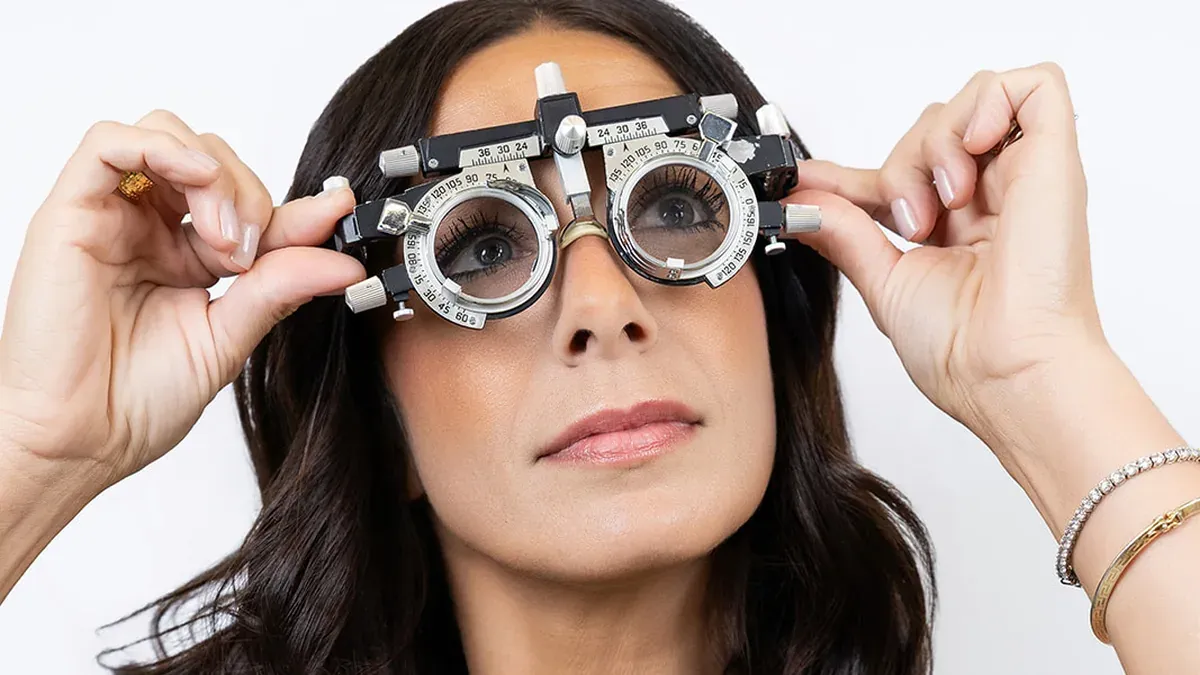

The eye exam process covers more than reading letters off a chart. Your optometrist evaluates visual acuity, eye coordination, and the health of internal structures, and can detect early signs of conditions like glaucoma well before any symptoms appear. A full visit typically runs 45 to 90 minutes and is non-invasive throughout. Knowing each step in advance makes the experience straightforward, whether you are coming in for a routine annual visit or preparing for a first-time eye exam.
What Happens During an Eye Exam?

The eye exam process starts with your history. Your optometrist reviews your current prescription, any medications you take, and recent changes in vision or symptoms. That context shapes what the clinical portion focuses on.
The intake matters more than it looks. Family history of glaucoma, diabetes, or macular degeneration changes what the optometrist prioritizes during the retinal evaluation, and a current medication list can explain findings that might otherwise seem puzzling.
Then the structured sequence begins. Here are the core eye exam steps, in order:
- Pre-testing. Automated instruments record baseline measurements: intraocular pressure, pupil response, and in many cases the shape of the cornea.
- Visual acuity. You read a letter chart at distance and, for most patients, at near range.
- Refraction. The optometrist works through lens combinations in a phoropter until the sharpest prescription is identified.
- Eye muscle and alignment testing. Both eyes are checked for how well they track together and converge on a fixed point.
- Slit-lamp examination. A microscope delivers a magnified view of the cornea, iris, and lens.
- Retinal and optic nerve evaluation. The back of the eye is examined using an ophthalmoscope or digital retinal imaging.
- Intraocular pressure confirmation. A final check for glaucoma risk, typically with a contact-free tonometry device.
The visit ends with a full review. Prescription changes get explained, structural observations get noted, and anything that needs follow-up is discussed clearly before you leave.
What Tests Are Included in a Full Eye Exam?

A full eye exam includes visual acuity and refraction to establish your prescription, plus intraocular pressure testing, slit-lamp examination, and retinal imaging to evaluate eye health. This vision test procedure examines both how clearly you see and the structural health of your eyes. Some tests run in under a minute. Others, like the retinal evaluation, merit more time. Additional tests are added based on age, history, and individual risk factors.
Visual acuity establishes your uncorrected and corrected clarity. Reading progressively smaller letter rows at standard distances tells the optometrist exactly where your vision stands before any lens is applied.
Refraction produces your prescription. The optometrist works through lens pairs in a phoropter, asking which option looks clearer. For contact lens patients, additional measurements of corneal curvature ensure a precise fit.
Intraocular pressure testing screens for glaucoma risk at every visit. Elevated pressure can damage the optic nerve silently for years. This test takes only seconds.
Slit-lamp examination provides a three-dimensional, magnified view of the anterior eye. Early cataracts, corneal irregularities, and signs of dry eye become visible at this level of detail.
Retinal imaging examines the optic nerve, macula, and peripheral retina. At OPTYX, Optos ultra-widefield imaging captures up to 200 degrees of the retina in a single scan, without requiring pupil dilation in most cases.
Peripheral vision mapping may be ordered based on individual risk factors. A visual field test maps the full extent of side vision and can help track progressive changes over time.
For first-time eye exam patients, the optometrist often adds color vision and depth perception assessments to build a complete baseline. Contact lens fittings extend the standard exam with corneal topography.
How Long Does an Eye Exam Take?
Most patients complete the full eye exam process in 45 to 90 minutes from check-in to checkout. A routine annual visit for a patient with a stable prescription and no new concerns typically runs 45 to 60 minutes.
Expect more time in a few situations:
- First visits take longer because the optometrist establishes a full baseline with no prior records to compare.
- New or complex symptoms require more thorough evaluation of specific test areas.
- Dilation adds 20 to 30 minutes for drops to take effect, plus several hours of light sensitivity afterward.
Patients managing presbyopia or other age-related vision changes often need additional time to work through near-vision correction options.
Plan time at the end for the debrief. Your optometrist will walk through findings and answer questions. That part of the visit matters, and the 45-to-90-minute range should accommodate it.
If your exam includes dilation, bring sunglasses. Many patients prefer to arrange a ride home rather than drive with dilated pupils.
What Should I Bring to My First Eye Exam?
Advance optometrist visit preparation is straightforward. Bring your current glasses or contact lens prescription, a list of all medications you take, your insurance card, and notes on any recent vision changes. These items give your optometrist accurate context from the first minute of the visit.
Here is what each item covers:
- Current glasses or contact lens information. Your optometrist compares your existing correction against new exam findings to identify any change.
- A medication list. Certain drugs affect pupil size, intraocular pressure, and tear production. Without this, some findings can be misleading.
- Insurance card and photo ID. Having these ready at check-in prevents paperwork delays.
- Notes on recent symptoms. Blurry distance vision, nighttime glare or halos, eye dryness or irritation, and headaches after screen time are all worth mentioning. Symptoms you have dismissed as minor often point to conditions worth addressing.
For a contact lens appointment, wear glasses to the visit rather than your contacts. The optometrist measures your corneal shape precisely, and lenses worn that morning can temporarily affect that measurement.
If you have been dealing with digital eye strain from extended screen work, note when symptoms started and what tends to worsen or relieve them. That history directs the exam toward the most relevant tests.
What the Eye Exam Process Reveals

A comprehensive eye health checkup delivers more than a glasses prescription. The inside of the eye is the only location in the body where blood vessels and nerve tissue can be evaluated directly without surgery or additional imaging equipment.
The retinal blood vessels reflect what is happening in circulation elsewhere. Changes consistent with high blood pressure or uncontrolled diabetes often appear here before symptoms become noticeable anywhere else. That is why retinal evaluation is a standard part of every comprehensive exam.
Conditions routinely identified during eye exams include:
- Elevated intraocular pressure and early glaucoma, often before any change in vision is noticeable
- Early cataracts forming on the lens, identified before they affect daily visual clarity
- Vascular changes consistent with diabetic retinopathy or high blood pressure
- Early-stage age-related macular degeneration, detectable when intervention options are broadest
The standard exam finds most of these because the tests are designed to look for them, not because you arrived with symptoms. That is what distinguishes a comprehensive exam from a quick vision screening. Regular eye health checkups are about more than whether your prescription needs updating.
Book an Eye Exam
Schedule your exam with OPTYX and let an optometrist walk you through every step of the eye exam process. Book an Eye Exam at any of our 13 locations across Manhattan, Long Island, the North Fork, the Hamptons, and Westchester.