May is Women’s Eye Health and Safety Month, and the numbers behind it are striking. Women make up nearly two-thirds of all visual impairment and blindness worldwide, yet many of the conditions driving that figure are preventable or highly treatable when caught early. If your last eye exam was more than a year ago, women’s Eye Health Month is the right prompt to book one.
At OPTYX, our optometrists see the impact of these conditions regularly. Here is what every woman should understand about her eye health this May.
What Is Women’s Eye Health and Safety Month?
Women’s Eye Health and Safety Month is observed every May across the United States. It was created to raise awareness of the eye conditions that affect women at higher rates, and to encourage routine eye exams as the first line of defense.
It runs alongside Healthy Vision Month, also in May, making this the busiest month for eye health awareness on the calendar. If you have been putting off a check-up, this is the month to act.
Why Women Are at Higher Risk for Vision Loss
Women account for around 65 percent of all visual impairment in the United States. That gap has several causes.
Longer lifespan. Most serious eye conditions get more common with age. Women live longer on average, which means more years of exposure to conditions like cataracts, macular degeneration, and glaucoma.
Hormonal shifts. Estrogen and progesterone affect tear production, eye tissue quality, and even how well contact lenses fit. These hormones change significantly during pregnancy, perimenopause, and menopause, and those changes show up in your eyes.
Autoimmune conditions. Sjögren’s syndrome, lupus, rheumatoid arthritis, and thyroid disease all affect the eyes, and all occur at much higher rates in women.
Understanding these factors is the first step toward getting ahead of them. Women’s Eye Health and Safety Month exists precisely because these risks are real and worth acting on.

The Eye Conditions Women Face Most
Dry Eye Syndrome
Dry eye is one of the most common reasons women visit our optometrists, particularly after 50. When estrogen levels fall during perimenopause and menopause, tear production slows down and tear quality drops. You may notice burning, grittiness, fluctuating vision, or light sensitivity that gets worse throughout the day.
Contact lens wearers often feel the change first. If your lenses have become less comfortable than they used to be, or you are reaching for eye drops far more often, it is worth having your tear film assessed.
For a full breakdown of the hormonal connection, see our guide on menopause and dry eyes.
Cataracts
Women develop cataracts at higher rates than men. A longer lifespan accounts for part of that difference, but research also points to greater sensitivity to UV damage in the lens over time. Wearing UV-protective sunglasses every day is one of the simplest steps you can take to reduce that risk.
Age-Related Macular Degeneration
Macular degeneration affects central vision and is one of the leading causes of vision loss in adults over 60. Women make up the majority of those affected. Smoking is the most significant controllable risk factor. Eating plenty of leafy greens and omega-3 fatty acids is associated with lower risk.
Thyroid Eye Disease
Thyroid eye disease is strongly linked to Graves’ disease and affects women far more than men. It can cause the eyes to protrude, produce double vision, and in serious cases lead to vision loss. If you have any thyroid condition, tell your optometrist at each exam so they can check for early signs.
How Your Hormones Affect Your Vision
Your vision can change at different stages of life, and hormones are often the reason behind it.
During pregnancy, your corneal shape can shift slightly, making your glasses or contact lens prescription feel off. Women with gestational diabetes also need their retinas monitored more closely.
During perimenopause and menopause, falling estrogen directly triggers dry eye or makes it worse for women who already have symptoms. Some women also experience short spells of blurry vision as hormones fluctuate. These are real symptoms and worth raising with your optometrist.
For contact lens wearers, changes in comfort at different hormonal phases are common. If something feels different than it used to, a contact lens check-up will help identify whether your prescription or lens type needs adjusting.
What to Do This Women’s Eye Health Month
Women’s Eye Health and Safety Month is not just about awareness. It is a practical reminder to take action.
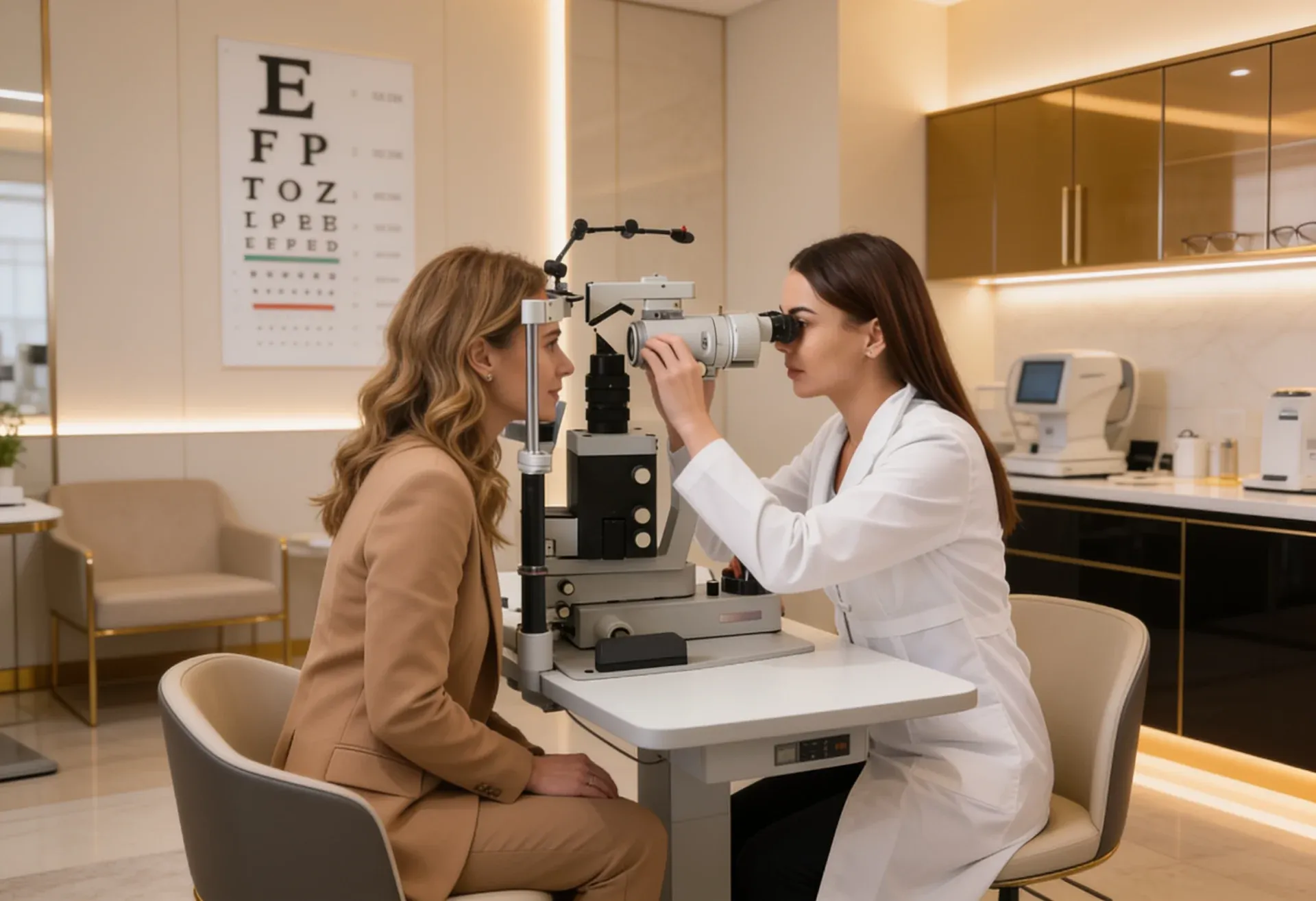
Get a comprehensive eye exam. A comprehensive eye exam covers far more than your prescription. It checks your optic nerve, eye pressure, retinal health, and tear film. Many conditions show no symptoms in their early stages, which is exactly why routine exams matter.
Talk openly with your optometrist. Mention any hormonal changes, thyroid conditions, autoimmune diagnoses, or medications you are taking. They all affect your eyes in ways that are worth knowing about.
Check your UV protection. UV exposure over time increases your risk of cataracts and macular degeneration. If your everyday glasses or sunglasses do not offer UV400 protection, now is a good time to ask about upgrading.
Do not put up with dry eye. Many women manage dry eye discomfort for years without getting proper help. Effective treatments are available, and your optometrist can find the right approach for you.

Book Your Eye Exam at OPTYX This May
Women’s Eye Health Month is the right time to put your vision at the top of the list. OPTYX has 13+ locations across NYC and Long Island, and our optometrists offer comprehensive eye exams that cover your full eye health, not just your prescription.
Book your eye exam at OPTYX this May.
Frequently Asked Questions
What is Women’s Eye Health and Safety Month?
Women’s Eye Health and Safety Month is observed every May in the United States. It raises awareness of the higher rates of visual impairment that affect women and encourages routine eye exams and proactive eye care.
Why are women more at risk for vision problems?
Women face higher rates of vision loss due to a longer average lifespan, hormonal changes during pregnancy and menopause, and a higher prevalence of autoimmune conditions that directly affect the eyes.
What eye conditions are most common in women?
Dry eye syndrome, cataracts, age-related macular degeneration, and thyroid eye disease all occur at higher rates in women than men.
How does menopause affect eye health?
Falling estrogen levels reduce tear production and affect tear film quality, making dry eye one of the most common complaints during and after menopause. Some women also notice temporary blurry vision as their hormones fluctuate.
How often should women get eye exams?
Most adults should have a comprehensive eye exam every one to two years. If you have a family history of eye disease, an autoimmune condition, or hormonal changes affecting your vision, ask your optometrist about the right schedule for you.
Where can I get an eye exam in New York?
OPTYX has 13+ locations across New York City and Long Island. Find your nearest store or book online at optyx.com/locations.