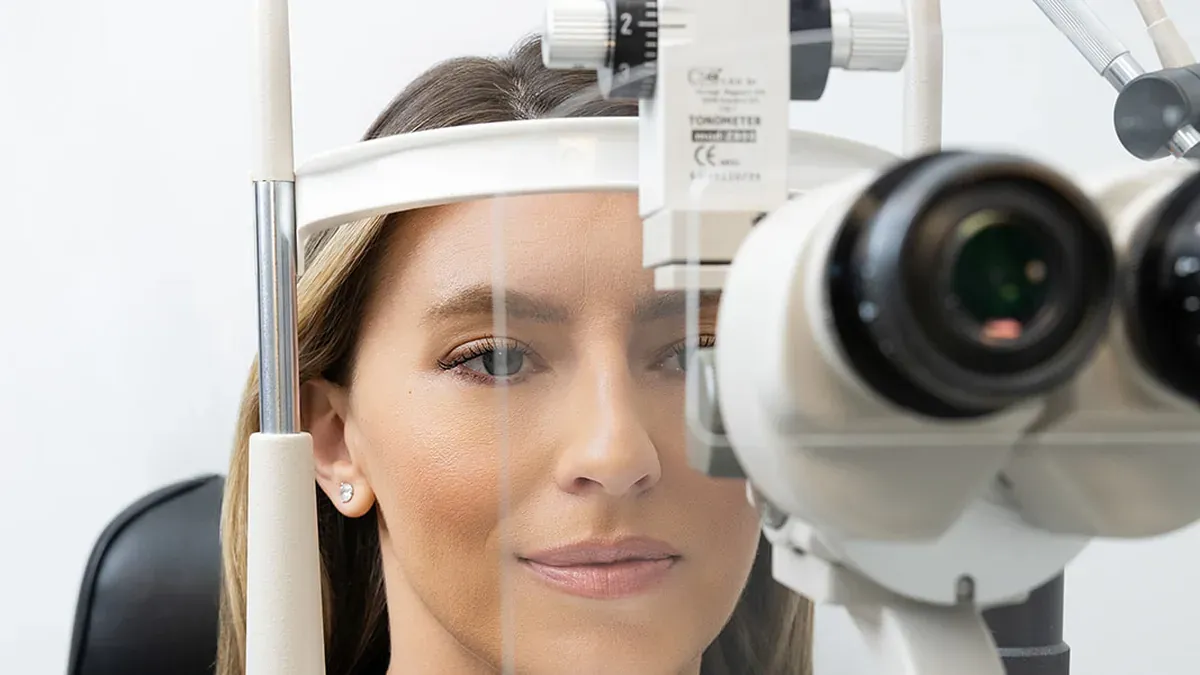

Good eye care tips come down to a few repeatable habits: limit digital eye strain from screens, wear UV protection sunglasses outside, keep your prescription current, and schedule a comprehensive eye exam at least once a year. Most vision problems build slowly, without obvious symptoms. Catching them through routine care is far easier than managing them once they affect daily function.
Core Eye Care Tips at a Glance

These four habits address the most common preventable causes of visual discomfort and long-term vision loss in adults.
| Habit | Primary Benefit | What to Do |
|---|---|---|
| Manage screen time | Reduces eye strain and headaches | Use the 20-20-20 rule; calibrate screen brightness to room light |
| Wear UV protection sunglasses | Lowers long-term risk of cataracts and macular degeneration | Choose lenses labeled UV400, blocking 99-100% of UV |
| Keep your prescription current | Prevents strain from a wrong or outdated Rx | Schedule an annual visit with your optometrist |
| Get regular eye exams | Detects silent conditions before they progress | Book a visit even when vision feels fine |
How Often Should You Get a Comprehensive Eye Exam?
Most adults should schedule a comprehensive eye exam at least once a year. Annual visits give an optometrist the chance to track small prescription changes, catch conditions that carry no early symptoms, and update your correction to match how your vision has shifted. These are the eye care tips that require scheduling, not just a habit change.
People with diabetes, high blood pressure, or a family history of glaucoma often need more frequent visits. Your optometrist sets that interval based on your individual risk history. Optos retinal imaging captures an ultra-widefield view of the retina in a single scan, often without dilation. An optometrist at OPTYX evaluates each of these factors in a single comprehensive visit.
Can Too Much Screen Time Damage Your Vision Permanently?
Screen use at typical adult levels does not cause permanent structural damage to the eye. What it reliably causes is digital eye strain. Symptoms include blurred vision after extended near work, persistent headaches, and eye fatigue that builds through the day.
A 2024 systematic review found computer vision syndrome prevalence at 69.0% across the general population, reaching 76.1% in university students, with women showing higher rates than men (Ccami-Bernal et al., 2024). A separate 2024 systematic review of pandemic-era studies estimated combined CVS prevalence at 74% across 12 countries (León-Figueroa et al., 2024).
These eye care tips for screen users are low-cost and immediate: apply the 20-20-20 rule every 20 minutes, calibrate screen brightness to room lighting, position your monitor so the top edge sits at or slightly below eye level, and take a real break for any task exceeding two hours. When those adjustments do not resolve symptoms, an optometrist can assess whether your prescription handles your screen distance well.
In children, prolonged near work is associated with faster myopia progression, a structural change requiring ongoing correction. If a child's prescription strengthens noticeably year over year, discuss myopia management at the next exam. Protecting your eyesight at every age covers what to watch for at each life stage.
Do Blue Light Glasses Actually Protect Your Eyes?

Blue light blocking glasses do not prevent digital eye strain. Current evidence does not support blue light as a significant cause of retinal damage or eye fatigue. Where they show genuine value is sleep: a 2021 systematic review found substantial evidence that evening wear reduces sleep onset latency, through reduced activation of light-sensitive retinal ganglion cells that regulate circadian timing, in people with sleep disorders, jet lag, or shift work (Hester et al., 2021).
Two distinct eye care tips come up in discussions about screen use: the 20-20-20 rule and blue light blocking glasses. They solve different problems. Evening wear before bed has a clear research basis. Wearing them at a desk during the day to prevent eye fatigue is less supported by current evidence. If screen discomfort is the concern, the right prescription and a consistent 20-20-20 routine are more likely to help than lens tint alone.
What UV Protection Level Should Sunglasses Have?

UV protection sunglasses should block 99% to 100% of both UVA and UVB rays. Look for the UV400 label, which covers wavelengths up to 400 nanometers. That range captures the full UV spectrum harmful to eye tissue over time. Long-term UV exposure is a recognized factor in cataracts, macular degeneration, and tissue changes around the eye. Wearing UV protection sunglasses every time you go outside is among the eye care tips with the clearest long-term benefit and one of the most effective ways to protect eyesight naturally.
Lens color does not determine UV protection. A dark tint cuts visible glare but confirms nothing about UV filtering. Standard clear prescription lenses do not always include a UV-blocking treatment, and if you wear glasses daily it is worth asking your optician whether UV protection is included. Prescription lenses with UV-blocking treatment can be added at any prescription update without a separate appointment.
Polarized lenses reduce reflected glare from water, pavement, and glass. Polarization and UV400 protection are separate features that can be combined in the same lens.
How Do You Know If Your Glasses Prescription Is Out of Date?
Blurry vision at your normal reading or screen distance is the clearest sign. Headaches after focused work, squinting at road signs, and afternoon eye fatigue are equally reliable indicators. The subtler version: things look acceptable but never quite sharp, or near work feels more effortful than it used to.
Prescription needs shift with age. Adults with stable vision in their 20s often notice changes starting in their 30s, and presbyopia is common by the mid-40s. Among all eye care tips, the annual exam is the one that validates whether your other vision health habits are backed by the right correction. What a complete eye evaluation covers explains what an optometrist checks at each visit.
Book an Eye Exam
Book an Eye Exam to put these habits to work with a prescription that reflects your current vision.
Sources
- Ccami-Bernal F et al. (2024). Prevalence of computer vision syndrome: A systematic review and meta-analysis. Journal of optometry. PubMed
- Hester L et al. (2021). Evening wear of blue-blocking glasses for sleep and mood disorders: a systematic review. Chronobiology international. PubMed
- León-Figueroa DA et al. (2024). Prevalence of computer vision syndrome during the COVID-19 pandemic: a systematic review and meta-analysis. BMC public health. PubMed