
Can eye strain cause migraines? The short answer is yes. Eye strain is a well-recognised trigger for headaches and migraines, and it is one of the more common reasons people visit an optometrist without realising their eyes are behind the problem. If you regularly get headaches after screen time, reading, or driving, your eyes may be working harder than they should.
At OPTYX, our optometrists assess the connection between eye strain and migraines regularly. Here is what you need to understand.
How Eye Strain Triggers Migraines
Eye strain happens when your eyes are overworked. This can come from an outdated prescription, prolonged screen use, poor lighting, or an uncorrected vision problem. When your eyes struggle to focus, the muscles around them tense up and stay tense for extended periods.
That sustained muscle tension does not stay contained to your eyes. It radiates to the forehead, temples, and the back of the head, triggering headaches that in susceptible people can escalate into full migraines. So can eye strain cause migraines? Yes, particularly in people who already have a tendency toward migraines, where almost any form of physical tension can act as a trigger.
The key distinction is that eye strain headaches usually start after a period of visual effort and tend to improve with rest. Migraines triggered by eye strain can be harder to shake and are often accompanied by light sensitivity, which makes prolonged screen use particularly problematic.
Can Eye Problems Cause Migraines?
Can eye problems cause migraines beyond simple screen fatigue? Yes. Several specific eye conditions are linked to recurring headaches and migraines.
Uncorrected or outdated prescriptions. If your glasses or contact lens prescription is no longer accurate, your eyes compensate by straining constantly. Even a small change in prescription can be enough to cause daily headaches.
Eye muscle imbalance. When the muscles controlling eye movement are not perfectly coordinated, your brain works overtime to merge two slightly misaligned images into one. This is called binocular vision dysfunction, and it is a common but frequently missed cause of chronic headaches and migraines. Neurolens technology at OPTYX is specifically designed to address this type of imbalance.
Glaucoma. Elevated intraocular pressure, particularly in acute angle-closure glaucoma, can trigger severe headaches alongside eye pain and vision changes. This is a medical emergency and needs immediate attention.
Convergence insufficiency. This is a condition where the eyes have difficulty working together for close tasks like reading. It causes eye strain, double vision, and headaches that are often mistaken for tension headaches.

Do Migraines Cause Eye Pain?
Do migraines cause eye pain, or does it always work the other way? Migraines can absolutely cause eye pain and visual disturbances, which is why the relationship between the two goes in both directions.
During a migraine, many people experience:
- Pain around or behind one eye
- Visual aura, including zigzag lines, blind spots, or flashing lights
- Extreme sensitivity to light
- Blurred vision during or after the migraine
Ocular migraines are a specific subtype where visual symptoms occur with little or no head pain. They produce temporary visual disturbances in one eye, including flickering lights, blind spots, or a partial loss of vision, typically lasting 20 to 30 minutes. While usually harmless, they should always be assessed by an optometrist to rule out other causes of sudden vision change.
Do migraines cause eye pain? Yes, and the pain can sometimes feel like it is coming from inside the eye itself rather than from the surrounding muscles or head.
Can Dry Eye Cause Migraines?
Can dry eye cause migraines? There is a real connection, though it is not always straightforward. Dry eye causes chronic discomfort, light sensitivity, and visual fluctuation. All of these places additional strain on an already stressed visual system.
In people who are prone to migraines, the persistent irritation and squinting associated with dry eye can be enough to act as a trigger. The light sensitivity that comes with dry eye is particularly relevant because photophobia, sensitivity to light, is both a dry eye symptom and a classic migraine trigger.
If you have both dry eye and regular migraines, treating the dry eye effectively can reduce the frequency of headaches. Your optometrist can assess whether dry eye is contributing to your migraine pattern and recommend the appropriate treatment.
Neurolens: Addressing Migraines From Eye Misalignment
For people whose migraines are linked to eye muscle imbalance rather than a simple prescription issue, standard glasses may not provide enough relief. Neurolens is a contoured prism lens technology that corrects the slight misalignment between the two eyes, reducing the demand on the eye muscles and the trigeminal nerve.
Many patients with chronic headaches and migraines have seen significant improvement after switching to Neurolens.
When to See an Optometrist About Eye Strain and Migraines
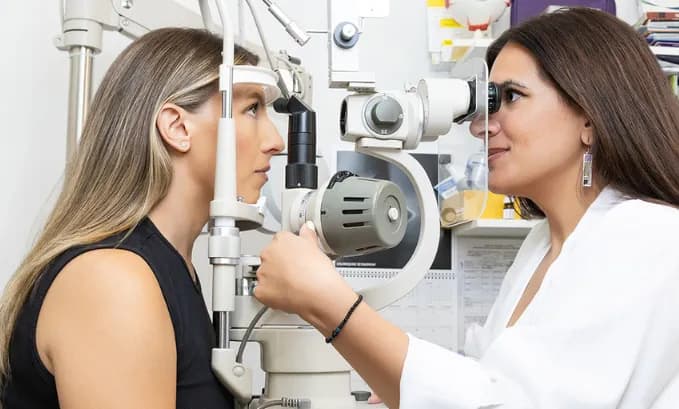
If you are getting regular headaches or migraines, an up-to-date comprehensive eye exam should be one of your first steps, not an afterthought. Your optometrist can check your prescription accuracy, assess how well your eyes work together, evaluate your tear film, and measure your eye pressure.
These are all things that cannot be checked in a GP appointment and are all potential contributors to a headache or migraine pattern.

Book an Eye Exam at OPTYX New York
Can eye strain cause migraines? Yes, and so can a range of other eye-related issues that are easy to identify and treat. If headaches are a regular part of your life, let our optometrists at OPTYX rule out your eyes as the cause or find the right solution.
Book a comprehensive eye exam at any of our 13+ locations across NYC and Long Island.
Frequently Asked Questions
Can eye strain cause migraines?
Yes. When your eyes work harder than they should, due to an outdated prescription, screen overuse, or an eye muscle imbalance, the sustained tension can trigger headaches and migraines, particularly in people who are already prone to them.
Can eye problems cause migraines?
Yes. Uncorrected prescriptions, binocular vision dysfunction, convergence insufficiency, and elevated eye pressure are all eye-related causes of recurring headaches and migraines.
Do migraines cause eye pain?
Yes. Migraines frequently cause pain around or behind one eye, light sensitivity, and visual disturbances such as aura. Ocular migraines produce visual symptoms with little or no head pain and should be evaluated by an optometrist.
Can dry eye cause migraines?
Dry eye can contribute to migraines by causing chronic light sensitivity and visual irritation that act as triggers. Treating dry eye effectively can reduce the frequency of headaches in people who are prone to migraines.
What is Neurolens and how does it help with migraines?
Neurolens is a contoured prism lens that corrects small misalignments between the eyes, reducing strain on the eye muscles and the trigeminal nerve. It is designed for people whose headaches and migraines are linked to binocular vision imbalance.
When should I see an optometrist about my headaches?
If you get regular headaches, especially after screen time, reading, or close work, an eye exam is a good first step. Your optometrist can identify whether an outdated prescription, dry eye, or eye muscle imbalance is contributing.