Contact lens safety is not complicated, but the consequences of getting it wrong are serious. An estimated 45 million Americans wear contact lenses, and the FDA classifies them as regulated medical devices, not simple accessories, according to a 2022 review by Rhee et al. in Eye & Contact Lens. Most complications are preventable. If your lens habits are overdue for a review, a contact lens exam at OPTYX is the right starting point.
Six Contact Lens Safety Habits at a Glance

Every habit below has a consequence. Here is the quick reference before the full explanation.
| Habit | The Risk If You Skip It |
|---|---|
| Remove lenses before sleep | Oxygen deprivation stresses the cornea and raises the risk of corneal infection |
| Keep lenses out of water | Water carries bacteria and Acanthamoeba that become trapped against the eye |
| Check expiration dates | Expired solution degrades and can harbor bacteria, fungi, and amoebae |
| Buy from a licensed provider | Unlicensed lenses may not fit correctly, causing corneal abrasions and infection |
| Wash and dry hands before handling | Fingertip microbes transfer directly to the corneal surface |
| Replace your storage case every few months | Contaminated cases are a leading cause of preventable lens-related infections |
Is It Safe to Sleep in Contact Lenses?
No. Sleeping with contacts in is one of the highest-risk habits a lens wearer can develop, and the harm compounds over time. According to Stapleton (2020) in Clinical & Experimental Optometry, overnight wear is among the modifiable behaviors with high attributable risk for microbial keratitis, a rare but potentially sight-threatening corneal infection.
The cornea has no blood vessels. It draws oxygen directly from the atmosphere. When your eyes close during sleep, atmospheric oxygen at the corneal surface drops significantly. A contact lens on top restricts it further.
Sustained oxygen deprivation triggers a chain of problems. Corneal cells become less viable, micro-edema develops, and over time blood vessels grow inward from the limbus, a process called corneal neovascularization that permanently alters corneal clarity.
Oxygen deprivation also creates conditions favorable to bacterial growth. The warm, moist, low-oxygen environment under a lens held against the eye overnight significantly raises the risk of corneal ulcers. These are open lesions on the corneal surface. They can cause acute vision loss, and in severe cases they require a corneal transplant.
Some lenses are approved for extended overnight use. That approval lowers the risk but does not eliminate it. Stapleton (2020) identifies overnight wear as one of the risk factors with high attributable risk for microbial keratitis. Daily disposable and rigid gas-permeable lenses carry lower risks.
For most wearers on reusable soft lenses, sleeping with contacts in is the highest-risk contact lens safety choice they routinely make.
One forgotten night is not a crisis. Making it a habit is.
For a deeper look at what the evidence says about overnight wear and water exposure, see our guide on sleeping and swimming with contact lenses.
Can You Swim While Wearing Contact Lenses?

No. Swimming with contact lenses is a direct contact lens safety risk, and the danger comes not from the water itself but from what it carries.
Contact lenses are porous. They absorb whatever they contact, including pool water, ocean water, lake water, rivers, and tap water. All of these carry bacteria, viruses, and microscopic parasites. One of the most dangerous is Acanthamoeba, a single-celled organism found in both natural and treated water sources worldwide.
When Acanthamoeba becomes trapped between a lens and the cornea, it can cause Acanthamoeba keratitis. This infection is notoriously resistant to treatment and can result in permanent vision loss if not identified early.
Other waterborne pathogens cause dry eye syndrome, corneal abrasion from contacts, and uveitis, which is inflammation inside the eye. Even brief water contact carries meaningful risk.
If you do swim with lenses in, remove and discard them immediately afterward. If redness, irritation, or a foreign-body sensation develops in the hours that follow, contact your eye care provider the same day rather than waiting.
If you need to wear lenses near water regularly, these approaches reduce the risk:
- Use daily disposable lenses and discard them immediately after any water exposure.
- Wear well-sealed goggles over your lenses in pools.
- Apply rewetting drops before and after water exposure to flush the lens surface.
- For regular lap swimming, consider prescription goggles as a permanent alternative.
Keeping lenses out of water entirely is the only fully safe option.
What Happens If You Wear Expired Contact Lenses?
When contact lenses expire, the protective solution in the sealed blister pack begins to degrade, and the expired contacts risks that follow are real and well-documented. The expiration date refers primarily to the integrity of that sealed solution, not just the lens material itself.
Each blister pack contains a solution formulated to maintain a specific pH that keeps the lens stable and the environment sterile. Once the expiration date passes, that pH balance breaks down. The conditions inside the pack become favorable to bacterial, amoebic, and fungal contamination. Using an expired lens means placing a device with a degraded sterility barrier directly on your cornea.
Physical deterioration is a separate risk. Expired lens material can develop micro-tears and surface changes invisible to the naked eye. These rough patches increase friction with every blink and can cause corneal abrasion from contacts. Abrasions are both painful and entry points for infection.
The expiration date appears on both the outer box and the individual foil blister pack. Before inserting any lens, verify the complete specifications: cylinder, power, diameter, base curve, lens type, and expiration date. If the date has passed, discard the lens.
Are Colored Contacts From Costume Shops Safe to Wear?
No. The colored contacts danger at costume shops and party stores is not a cosmetic quality problem alone. It is a regulatory and fitting failure that puts your cornea at direct risk.
In the United States, all contact lenses, including decorative ones, are FDA-regulated medical devices. Federal law requires a valid prescription and a proper fitting by a licensed eye care professional before any lens is dispensed. Vendors who sell colored lenses without prescriptions are operating outside federal law, and their products have not been matched to the individual dimensions of your eye.
An ill-fitting lens creates friction with every blink. That movement causes corneal abrasion from contacts, and those abrasions are open entry points for infection. A corneal abrasion left untreated can scar the cornea permanently.
The pigment layers in colored lenses add a second problem. Those layers reduce the oxygen permeability of the lens material. Your cornea, which already has no blood supply of its own, is further restricted from the atmospheric oxygen it needs. The result is the same hypoxic stress that makes sleeping with contacts in dangerous, except it starts from the first hour of wear.
Colored lenses are not inherently dangerous. Going through a licensed provider who fits the lens properly and dispenses through a regulated supply chain makes them a reasonable choice for cosmetic wear.
How Can You Tell If Contact Lenses Are Causing an Eye Infection?
Early signs of contact lens eye infection include redness that persists after removing the lens, pain, sensitivity to light, discharge, and blurred vision. Recognizing these symptoms early is the difference between catching a problem before it progresses and waiting until the cornea has already been damaged.
Most guides to contact lens safety explain what to avoid. Fewer explain how to read the warning signs once something goes wrong. That gap matters. Stapleton (2020) notes that contact lens-related microbial keratitis is more often caused by Pseudomonas aeruginosa and Acanthamoeba compared with microbial keratitis without lens wear.
Signs That Warrant Removing Your Lenses Immediately
The following symptoms should prompt immediate lens removal and same-day contact with your eye care provider:
- Redness that does not clear within a few minutes of taking the lens out
- Burning or pain that persists after the lens is removed
- Sudden or worsening sensitivity to light
- Discharge, lid crusting, or unexpected blurred vision
- A foreign-body sensation that persists through blinking and rewetting drops
Any two of these together, especially redness, pain, and light sensitivity in combination, should be treated as a potential corneal infection until an eye care professional says otherwise.
When to Seek Same-Day or Emergency Care
Mild dryness, end-of-day fatigue, and minor irritation that clears with a rewetting drop are typically fitting or dryness issues. These warrant a routine appointment, not urgent care.
But if pain is worsening after you have removed the lenses, or if your vision has changed and is not returning to baseline, treat that as a same-day situation. Do not wait overnight. Contact lens-related microbial keratitis can permanently scar the cornea within days if left untreated.
What Routine Exams Catch That Symptoms Miss
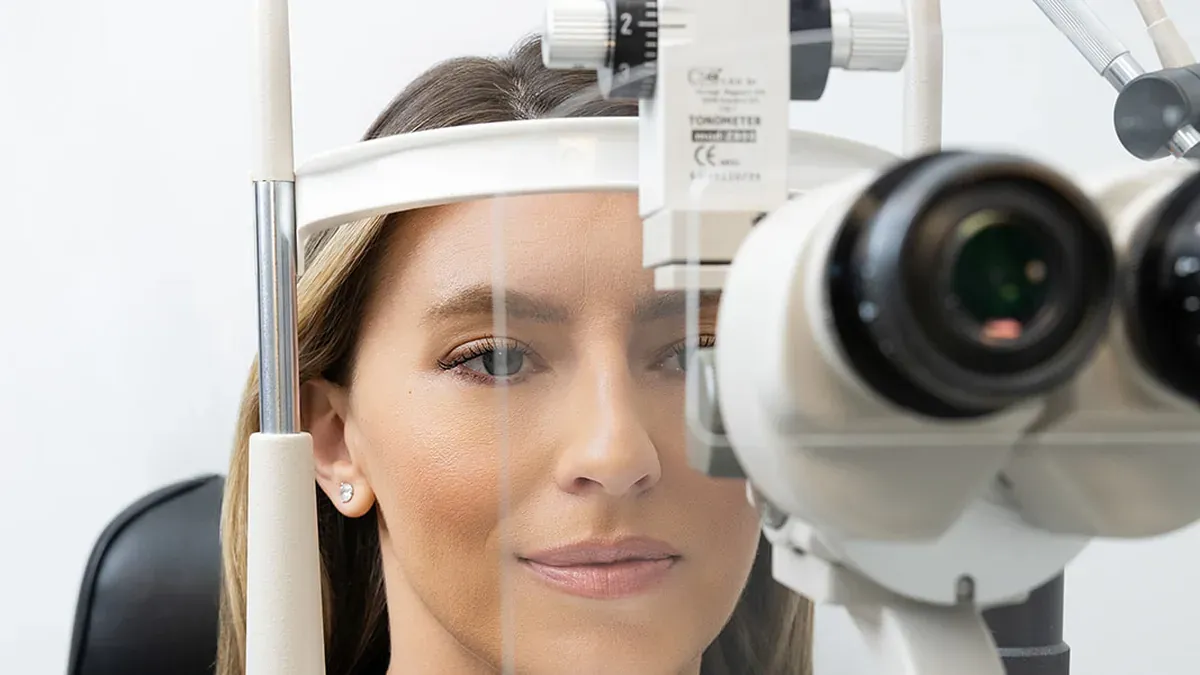
Some serious contact lens-related complications develop without any discomfort at all. Corneal neovascularization, the growth of blood vessels into an oxygen-deprived cornea, is typically silent in its early stages. Your optometrist can detect it during a slit-lamp examination. That is one reason why regular contact lens exams matter beyond simply renewing a prescription.
Hands, Cases, and the Habits That Actually Protect You

Most conversation about contact lens safety focuses on dramatic failures: sleeping in lenses, swimming without removing them first. Less attention goes to the two daily habits with the highest evidence base for infection prevention: hand washing and storage case hygiene.
Stapleton (2020) identifies failure to wash and dry hands before handling lenses as one of the high-attributable-risk behaviors for contact lens-related microbial keratitis. Poor storage case hygiene carries a comparable risk. Both are modifiable, and both are underestimated by most wearers.
Think about what your hands touch before they touch your lenses. Phone screens, keyboards, door handles, and countertops carry bacteria that transfer efficiently to fingertips. From fingertips, they reach your lens surface and then the surface of your eye. Thorough washing and complete drying before every lens insertion removes that pathway.
Case contamination is less obvious but equally significant. Cases stored in bathroom humidity accumulate microbes quickly. Topping up old solution leaves contaminated fluid in contact with your lens overnight. Rinsing the case with tap water introduces additional pathogens. These habits compound over months.
For storage case hygiene:
- Rinse the case with fresh contact lens solution after each use. Never use tap water.
- Leave it face-down on a clean tissue to air dry completely between uses.
- Replace the case every one to three months, or with each new bottle of solution.
- Empty the case fully before refilling. Never add fresh solution on top of old.
These steps take under a minute each day and remove some of the most common infection pathways before they become a problem.
Contact Lens Safety and Your Prescription
An outdated prescription is a contact lens safety concern, not just a visual acuity issue. Contact lens prescriptions include more than corrective power. They specify base curve, diameter, and lens type, all of which determine how the lens fits on the cornea. A prescription written two or three years ago may no longer match the current shape of your eye, especially if your vision has changed since then.
When a lens does not sit correctly, it shifts with each blink rather than staying centered. That movement creates friction and can cause corneal abrasion from contacts. It also reduces the fluid exchange beneath the lens that maintains adequate corneal oxygenation during wear.
At OPTYX, contact lens fittings are part of a comprehensive eye exam. The optometrist evaluates corneal health and lens fit alongside visual acuity, and confirms whether the current lens type and replacement schedule still suit your eyes and lifestyle. To understand what that appointment covers in practice, see our guide on what to expect during a contact lens exam at OPTYX.
Unsure whether you need a contact lens exam, a standard exam, or both? Our overview of how a contact lens exam differs from a standard eye exam explains what each covers and when each is appropriate.
OPTYX New York has been fitting contact lenses for patients across Manhattan, Long Island, the North Fork, the Hamptons, and Westchester since 1971.
See an Optometrist at OPTYX
If any of these contact lens safety habits are overdue for a reset, Book an Eye Exam at your nearest OPTYX location and have an optometrist review your lens fit, corneal health, and current prescription.