You wear contact lenses, or you're thinking about starting. Your optometrist tells you that you need a contact lens exam in addition to your regular checkup. The distinction is real. The exam measures corneal curvature, tear film health, and how a trial lens physically rests on your eye, none of which appear on a glasses prescription.
What This Exam Covers

A contact lens evaluation typically includes six steps, in this order:
- Visual acuity and refraction: the optometrist determines your distance and near vision and identifies any refractive error, including nearsightedness, farsightedness, astigmatism, or presbyopia.
- Corneal curvature measurement: keratometry captures the exact shape of your cornea to determine the correct base curve and lens diameter. Pupil distance is recorded here as well.
- Tear film assessment: the optometrist evaluates whether your eyes produce enough moisture to keep lenses comfortable through a full day.
- Corneal health check: a slit-lamp examination of the front surface detects irregularities or early signs of compromise before lens wear can worsen them.
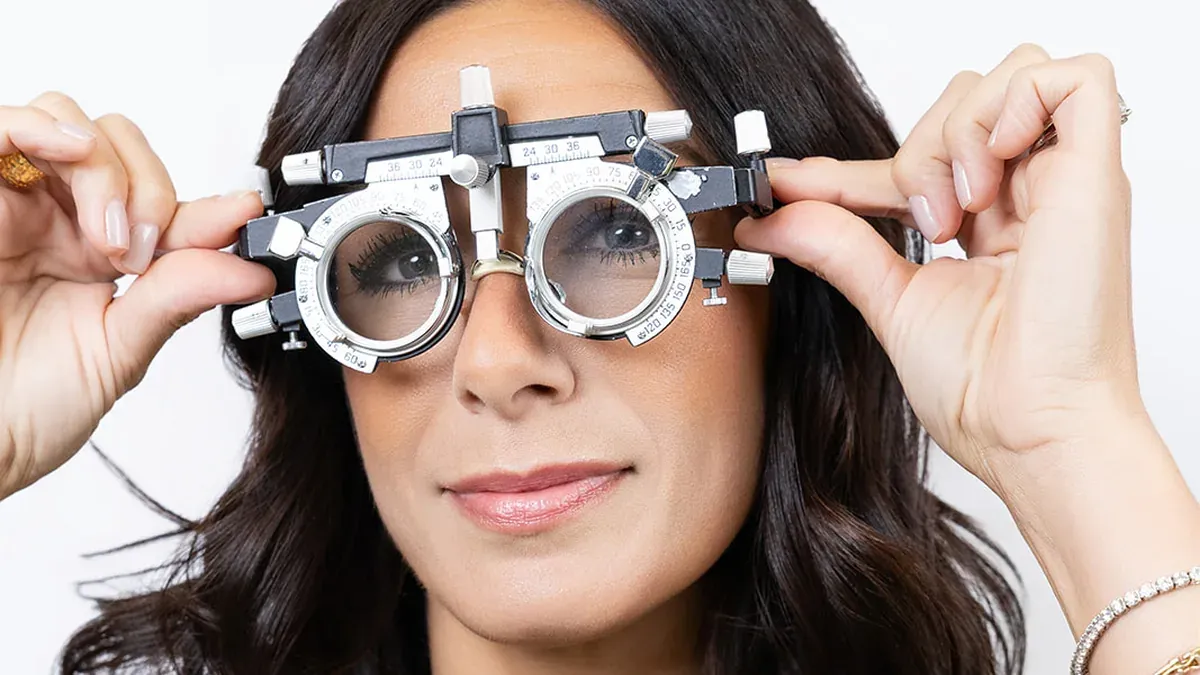
- Trial lens fitting: a sample lens goes on your eye so the optometrist can observe movement with each blink, centration over the pupil, and corneal coverage.
- Prescription issuance: once fit is confirmed, your optometrist issues a prescription that adds base curve and diameter to the standard sphere, cylinder, and axis values.
How Is a Contact Lens Exam Different from a Regular Eye Exam?
A regular eye exam checks visual acuity and overall ocular health. That is its purpose. It does not produce a contact lens prescription, and it does not test how a lens interacts with your corneal surface. It builds on that foundation and adds corneal curvature measurement, tear film analysis, and a live trial lens evaluation.
The practical outcome differs. You leave a standard exam with a glasses prescription. You leave a contact lens exam with a prescription that specifies base curve and diameter, two values unique to your cornea that cannot be inferred from a glasses Rx. For a detailed comparison, see the differences between these two exam types.
Can I Use My Glasses Prescription for Contact Lenses?
No. A glasses prescription does not include the base curve or lens diameter values that contacts require. Many retailers legally require a valid, current contact lens prescription at the time of order. Your optometrist determines those measurements during this exam.
What Does This Exam Check For?

A contact lens exam checks three things: optical correction, corneal geometry, and ocular surface health. Getting all three right matters. That combination separates a well-fitting lens from one that corrects vision but irritates or stresses the eye over time.
Corneal geometry is more variable than most wearers expect. A 2023 review found that only about 6% of scleras are symmetric, while the rest are toric, quad-specific, or irregular (Rojas-Viñuela et al., 2023). That variability directly affects how a contact lens positions on the eye, which is why a contact lens fitting cannot rely on generic sizing.
The tear film is equally important. A 2021 review found that the interaction between a lens and the ocular surface triggers vascular responses, impacting lens fitting and contact lens-related discomfort. If an appropriate lens fit is achieved, lens fitting characteristics may not play a critical role in contact lens-related discomfort (Fang et al., 2021).
What Happens During the Fitting?
During a contact lens fitting, the optometrist places a trial lens on your eye and observes how it moves with each blink, centers over the pupil, and covers the cornea. Plan for 30 to 60 minutes at a first appointment.
If the trial lens fits well, you wear it briefly in the office while your vision stabilizes. The optometrist then checks your acuity with the lens in place. If the fit or acuity is off, a different base curve or diameter is selected and re-evaluated.
For a step-by-step look at that appointment, see your first contact lens appointment: what to expect.
How Often Should Contact Lens Wearers Get an Eye Exam?
Annual contact lens exams are the standard. Even when vision feels stable, the corneal surface and tear film can shift over time, and your prescription may need an adjustment you would not notice otherwise. Wearing an outdated prescription puts unnecessary stress on your eyes.
Extended-wear or specialty lenses typically require more frequent follow-ups. Whether you are scheduling a routine contact eye exam or a first-time fitting, your optometrist sets the schedule during the contact lens evaluation based on your lens type and ocular health history.
Choosing the Right Lenses After Your Eye Exam for Contacts
At OPTYX, optometrists factor in your prescription, corneal shape, tear film health, and daily routine when recommending lenses. The choice involves more than personal preference. Someone with moderate astigmatism needs a toric lens design, not a standard spherical one. A wearer with dry eye tendencies may tolerate daily disposables better than monthly lenses that accumulate protein deposits over time.
Understanding the tradeoffs between formats helps you have a more productive conversation with your optometrist. The guide to daily vs. monthly contact lenses covers the main decision factors.
Caring for Your Contacts After the Exam

Proper aftercare preserves the results of this exam. A few consistent habits make a real difference.
Always use the lens solution your optometrist recommends. Water and saliva introduce microbial contamination and are not substitutes for a proper cleaning solution. Replace your lens case every three months and rinse it only with fresh solution, never tap water. Remove lenses before sleep unless your optometrist specifically prescribed overnight wear and confirmed your eyes tolerate extended use.
For a full guide to safe lens habits, review contact lens safety: what every wearer needs to know.
Book an Eye Exam
If you wear contacts or are considering them for the first time, Book an Eye Exam at OPTYX to get a thorough evaluation from an optometrist.
Sources
- Rojas-Viñuela J et al. (2023). What we know about the scleral profile and its impact on contact lens fitting. Clinical & Experimental Optometry. PubMed
- Fang M et al. (2021). Ocular surface microvascular response and its relation to contact lens fitting and ocular comfort: an update of recent research. Clinical & Experimental Optometry. PubMed