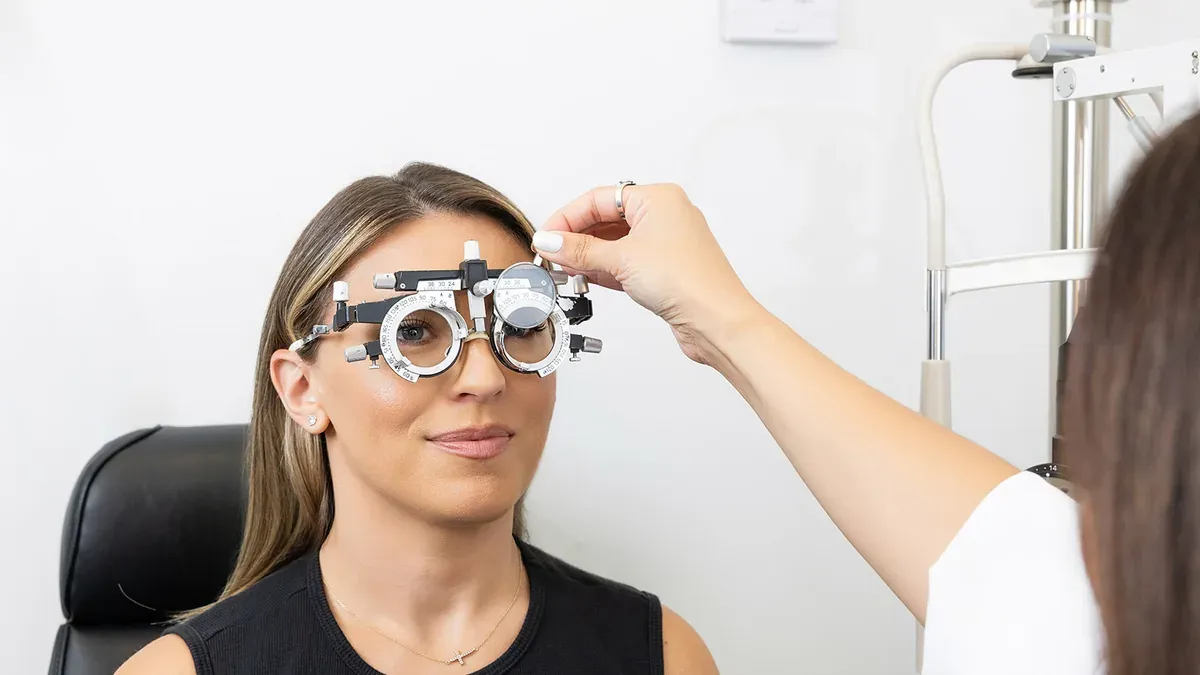

A new glasses headache is common. Your eyes and brain are recalibrating to a changed prescription or lens design, which forces the visual system to work harder and often triggers mild, temporary head pain. Most people find it fades within days. If pain persists, a thorough eye exam at OPTYX can confirm whether the prescription, frame fit, or lens optics need attention.
What Triggers a New Glasses Headache?

Headaches from new eyewear fall into two groups: those that belong to a normal adjustment period and those that signal a problem requiring correction. Here is a quick map of the main causes:
| Cause | What Happens | Typical Resolution |
|---|---|---|
| Prescription change | Eyes strain to process new focal power | Two days to two weeks |
| Wrong prescription | Lenses are inaccurate for your vision | Requires lens replacement |
| Glasses fit too tight | Temple or nose-pad pressure builds | Frame adjustment by optician |
| Pupillary distance error | Optical centers misalign with pupils | Remeasurement and recut |
| Progressive lens adjustment | Eyes learning distinct gaze zones | Up to two weeks |
| Digital screen exposure | Eye muscle fatigue accumulates | Anti-reflective coating plus screen breaks |
Each row points to a different fix. An adjustment headache resolves with patience. A headache from a wrong prescription does not.
How Long Do Headaches Last When Adjusting to New Glasses?
Adjustment headaches typically fade within two to seven days. That is the normal eye adjustment period for most single-vision lens wearers. For strong glasses prescription adjustment or for anyone starting with progressive lenses, the window can stretch to two weeks.
The key signal is direction of change. Pain should be mild and improve each day. If intensity stays flat or worsens, that is not normal adaptation. Blurred vision, dizziness, and nausea alongside a new glasses headache are wrong prescription symptoms that call for a prompt follow-up, not more waiting.
Wearing your new glasses consistently through this period matters. Swapping back to an older pair resets the adaptation clock and extends discomfort.
Why Do My New Glasses Make My Eyes Hurt?
Your eyes work through six external muscles that adjust pointing angle and focus continuously. When a new prescription shifts that balance, those muscles work harder, producing glasses eye strain and the frontal or temple pain that follows.
Three factors drive most of that strain.
Prescription power. Even a quarter-diopter change forces the ciliary muscle to refocus. A larger change amplifies that workload considerably.
Lens optics. Progressive lenses contain distinct near, intermediate, and far zones. The peripheral regions have natural blur, and your eyes must learn not to look through them for clear vision. That relearning creates temporary strain and mild head pain.
Reflections and glare. Bare lenses bounce light back at your eyes. An anti-reflective coating reduces that glare, cuts muscle fatigue, and shortens the adaptation window, particularly for people who spend long hours at screens.
For a broader look at how eye muscle fatigue connects to head pain, see our piece on the eye-to-head link in glasses eye strain and migraines.
Can the Wrong Glasses Prescription Cause Headaches?

Yes. Wrong prescription symptoms include persistent frontal headaches, blurred or doubled vision at a consistent distance, and difficulty shifting focus between near and far. They do not resolve with time.
A prescription error can enter the process at several points: inaccurate measurement during the exam, a lab cutting error, or frame positioning that shifts the optical axis. Even a technically correct prescription produces wrong prescription symptoms when the pupillary distance (PD) measurement is off. PD is the distance between your pupils. When the optical centers of the lenses do not align with your pupils, your eye muscles compensate constantly, generating steady pressure across the brow or temples.
Ask your eye doctor to verify both the lens power and the PD if you suspect the prescription is the source. Repeating a refraction takes only a few minutes and removes guesswork.
How Do I Know If My Glasses Do Not Fit Properly?
Frame fit problems produce consistent, localized pain. Glasses fit too tight shows up as glasses temple pressure where the arms press against your head, or as sore spots behind your ears from narrow earpieces. When frames sit too low, the optical centers shift out of alignment with your pupils, adding to muscle strain.
Signs the fit is off:
- Red marks or grooves on your temples or nose bridge after an hour of wear
- Glasses sliding down without tension from the nose bridge
- Uneven pressure, with one side noticeably tighter than the other
- Head pain that arrives at a consistent spot on one side only
A certified optician can adjust most frames at no cost. Glasses temple pressure from rigid arms often resolves in a single fitting appointment. Repositioning adjustable nose pads changes the resting height and can relieve bridge discomfort immediately.
For guidance on frames that naturally sit well, our bold glasses frames fit guide covers key measurements and proportions.
Progressive Lens Adjustment and Headaches
Progressive lens adjustment is its own category of new glasses headache. Because progressive lenses pack three prescriptions into a single lens, the gaze angle now matters for every task. Reading requires a downward look through the near zone; distance vision uses the upper segment. Your brain must learn these zones without conscious thought, and that process creates temporary peripheral blur and mild head pain while the mapping solidifies.
Most people complete progressive lens adjustment within one to two weeks. Walk carefully on stairs during that period; the near zone can make floors appear closer than they are. These habits speed the process:
- Wear progressives all day rather than alternating with single-vision glasses
- Point your nose, not just your eyes, toward what you are reading
- Ask your optician whether the corridor length matches your typical reading habits
If peripheral distortion does not fade after two weeks, ask about a freeform progressive design. These lenses are ground individually and offer wider intermediate corridors than standard designs. Our overview of how progressive lenses work and what to expect from them covers the design range in detail.
When Should I See an Eye Doctor About Glasses Headaches?

A new glasses headache that improves each day is part of normal adaptation. One that plateaus or worsens calls for professional review. See your eye doctor promptly if any of these apply:
- Head pain has not improved after two weeks of consistent wear
- Blurred vision does not clear when you orient your gaze directly at an object
- Dizziness, nausea, or difficulty judging distances accompany the headaches
- Pain is severe or concentrated behind one eye
- You have switched to progressive lenses and cannot read comfortably at close range
Severe pain behind one eye, or head pain paired with eye redness and light sensitivity, can signal conditions unrelated to your prescription. Those symptoms warrant same-day evaluation, not a scheduled follow-up.
Dry eyes can also compound a new glasses headache by adding surface discomfort the brain registers alongside muscle strain. If your eyes feel gritty or water unexpectedly, mention it at your appointment. Our article on why dry eyes and head pain often occur together explains the connection. You can find OPTYX locations and book your visit at our locations page.
Book an Eye Exam
If your new glasses headache is not improving, Book an Eye Exam with an OPTYX optometrist to verify your prescription and check your frame fit.