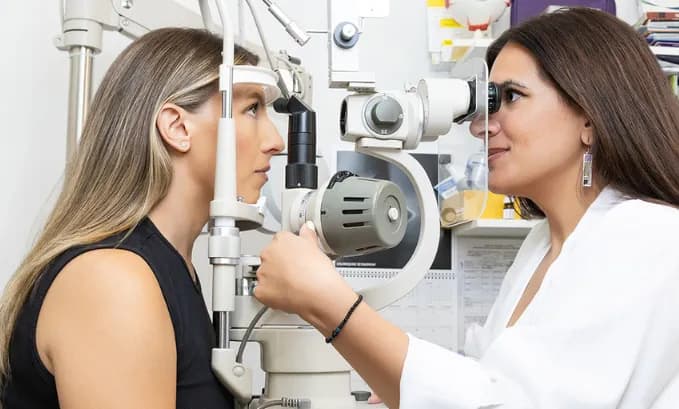

A headache after an eye exam surprises a lot of people. You go in for a routine checkup, spend 45 minutes concentrating on charts and lenses, and walk out with a dull ache behind your eyes or a tension band across your forehead. It feels counterintuitive to leave an eye appointment feeling worse than when you arrived.
At OPTYX, our optometrists hear about headaches after eye exams regularly. In most cases they are mild, predictable, and resolve on their own. But the cause matters, and some patterns are worth paying closer attention to.
Here is what drives post-exam headaches, how to get relief, and when to follow up with your optometrist.
Why Do You Get a Headache After an Eye Exam?
Headaches after eye exams usually trace back to one of three causes: pupil dilation, sustained eye muscle effort during testing, or adjusting to a new prescription.
Pupil Dilation and Light Sensitivity
If your optometrist used dilating drops, this is the most common source of a post-exam headache. Dilation widens the pupils to allow a thorough view of the retina and optic nerve. Wider pupils take in far more light than usual, and for many people that increase in light exposure triggers throbbing pain or a migraine-like headache that builds in the first hour or two after the drops are applied.
A headache after eye exam dilation usually peaks while the drops are still active and fades once the pupils return to their normal size, which typically takes four to six hours. Bright rooms, screens, and driving all intensify the discomfort during this window.
Sustained Eye Muscle Effort
An eye exam demands more from your eye muscles in one sitting than most daily activities do. Rapid switching between lens options, holding focus at fixed distances, tracking small targets, and reading at the limits of your vision all engage the ciliary muscles that control how your lens flexes. Sustained effort over 30 to 60 minutes can fatigue those muscles, producing a dull tension headache behind the eyes or at the base of the skull.
This type of headache after eye exam typically eases within a few hours once your eyes have had a chance to rest.
Adjusting to a New Prescription
If your prescription changed during the exam, your visual system needs time to adapt. This is especially true when astigmatism correction is adjusted, when you are transitioning to progressive lenses, or when both eyes change significantly in the same visit.
Prescription adjustment headaches after eye exam tend to come and go for one to two weeks. Most are mild. If they are severe or show no sign of easing after two weeks, the prescription is worth a recheck.
How Long Does a Headache After an Eye Exam Last?
The duration depends on what caused it.
Dilation headaches resolve as the drops wear off, typically within four to six hours. Muscle fatigue headaches ease within a few hours of rest. Prescription adjustment headaches can come and go intermittently for up to two weeks after a significant change.
If a headache is still worsening 24 hours after the appointment, that goes beyond the expected pattern and is a reason to call your optometrist.

How to Relieve a Headache After an Eye Exam
If you have already developed a headache after your eye exam, these steps can help shorten it:
- Rest in a dim or dark room. Reducing light exposure is the single most effective step for dilation-related headaches, where excess light intake is the main driver.
- Apply a cool compress to your forehead or over your closed eyes. The cooling effect helps ease the tension and pressure that often build around the eyes after a long exam.
- Take an over-the-counter pain reliever such as ibuprofen or acetaminophen if needed. Follow the standard dosage and check that it does not interact with any other medications you are taking.
- Drink water. Dehydration amplifies headache intensity, and mild dehydration that builds up over a busy day can make recovery slower than it needs to be.
- Avoid screens for two to three hours after dilation. If you need to use a screen, try the 20-20-20 rule: every 20 minutes, look at something at least 20 feet away for 20 seconds to give your focusing muscles a brief reset.
When Is a Headache After an Eye Exam a Concern?
Most headaches after eye exams are mild and self-limiting. The following symptoms alongside a headache are reasons to contact your optometrist the same day rather than waiting it out:
- Severe headache combined with significant eye pain, halos around lights, nausea, and rapidly worsening vision. This pattern can indicate acute angle-closure glaucoma, which requires emergency care. A same-day exam, including a <a href=”https://optyx.com/what-is-the-most-accurate-test-for-glaucoma/”>glaucoma pressure test</a>, can rule this out quickly.
- A headache that worsens steadily in the hours after the exam instead of gradually easing.
- New visual symptoms such as double vision, sudden blurring, or flashes of light that were not present before the exam.
- Any headache that has not improved at all within 48 hours of the appointment.
How to Prevent Headaches at Future Eye Exams
A few practical adjustments can reduce the likelihood of headaches after eye exams at your next visit:
- Bring sunglasses for after dilation. Even on overcast days, outdoor light can be enough to trigger discomfort while your pupils are still wide.
- Schedule the exam at a time when you can rest afterward, rather than going straight back to a screen-heavy work environment.
- Stay hydrated before the appointment. A full glass of water before you arrive is a simple step that is easy to overlook.
- Let your optometrist know in advance if you are prone to migraines or have had significant post-exam headaches before. They can review whether dilation is essential for your visit and advise on what to expect.
What to Tell Your Optometrist
If you consistently leave eye exams with a headache, raise it at your next appointment. Recurring post-exam discomfort can point to eye muscle imbalance, convergence insufficiency, or uncorrected refractive error, all of which are identifiable through a comprehensive eye exam.
It is also worth mentioning chronic headaches that seem connected to screen time or extended close-up work. In some patients, these are driven by binocular vision stress that neurolens technology is designed to address. Our guide to migraine relief with Neurolens at OPTYX explains how it works and who tends to benefit most.
Book an Eye Exam at OPTYX
If post-exam headaches have made you hesitant to book an appointment, our optometrists at OPTYX can walk you through what to expect and adjust the process where it makes sense. We have 13+ locations across New York and Long Island with comprehensive exams available at every one.
Book your eye exam at OPTYX and get a clear picture of what is driving your symptoms.
Frequently Asked Questions
Is a headache after an eye exam normal?
Yes. Headaches after eye exams are common and usually result from pupil dilation, eye muscle fatigue, or adjusting to a new prescription. Most resolve on their own within a few hours. If symptoms are severe or persist beyond 48 hours, contact your optometrist.
How long does a headache after an eye exam last?
Dilation headaches typically last four to six hours. Headaches from eye muscle fatigue ease within a few hours of rest. Prescription adjustment headaches can come and go for up to two weeks after a significant prescription change.
When should I call my optometrist about a headache after my eye exam?
Call if the headache is severe, comes with eye pain and halos around lights, includes new visual symptoms, or has not improved after 48 hours. Severe headache combined with sudden eye pain and nausea is a same-day emergency and should not be managed at home.