If you have been asking why is my vision improving with age, you are not imagining it. Some people genuinely notice sharper near vision as they get older, or find they no longer need reading glasses they used to rely on. It feels like good news. In many cases, though, vision improving with age is a sign that something is changing inside your eye, and it is worth understanding what that change actually means.
At OPTYX, our optometrists see this regularly. Here is an honest explanation of what is happening and what you should do about it.
Can Vision Actually Improve With Age?
Can vision improve with age? In a limited and specific sense, yes. But it is rarely a straightforward improvement. What most people describe as their vision getting better is usually a shift in how their eye focuses, driven by changes in the lens. Whether that shift feels like an improvement depends on what your vision was like before.
The most important thing to understand is that vision improving with age almost always has a cause, and that cause needs to be identified. Spontaneous, unexplained vision improvement in adults is not normal and is worth discussing with an optometrist.
Second Sight: When Cataracts Temporarily Sharpen Near Vision
The most common reason why vision improving with age happens is a phenomenon called second sight. It sounds reassuring, but it is actually one of the earliest signs of cataracts forming.
As a cataract develops inside the lens of your eye, the lens becomes denser in its center. This increases the optical power of the lens, producing a shift toward nearsightedness known as myopic shift. For people who are farsighted or who rely on reading glasses, this change can temporarily make near vision clearer without glasses.
If you have been wondering why my vision is improving with age and you are over 50, second sight is the most likely explanation. The improvement is temporary. As the cataract continues to develop, vision will begin to cloud, colors may shift, and glare around lights becomes more common.
Second sight is not a reason to delay an eye exam. It is a reason to book one. Detecting cataracts early means you and your optometrist can monitor the changes and plan ahead.
Myopia and the Aging Lens
For people who are nearsighted, the same myopic shift from lens changes can add to existing myopia, which sometimes means distance vision gets worse while near vision feels unusually clear. This can feel like vision improving with age for reading and close tasks, while distance vision quietly deteriorates.
Adults who have worn glasses for nearsightedness for many years sometimes notice they can read without glasses again in their 50s. While this feels convenient, it is usually a sign of nuclear cataract development rather than genuine improvement.

Presbyopia and Why Nearsighted People Seem to Benefit
Presbyopia is the age-related loss of near focusing ability that affects almost everyone from their mid-40s onward. It is caused by the lens gradually becoming less flexible, making it harder to focus on close objects.
For people who are nearsighted, presbyopia can feel like a partial compensation. Their natural myopia means their unaided eyes still focus at close range even as the lens stiffens. Someone who has worn glasses for distance since their 20s may find they can read without any glasses at all in their 50s, simply because their presbyopia and their nearsightedness are partially canceling each other out.
Can vision improve with age in this way? It can feel that way, but the underlying changes are still progressing in both directions. A current prescription check is the only reliable way to understand what is actually happening with your eyes.
When Improved Vision Is a Warning Sign
Not all causes of vision improving with age are as straightforward as second sight or presbyopia interaction. In some cases, a sudden or noticeable change in vision, even an apparently positive one, can signal:
- Early cataract formation, particularly nuclear cataracts
- Changes in blood sugar affecting the shape of the lens (common in undiagnosed or poorly controlled diabetes)
- Fluctuating intraocular pressure in people with or at risk of glaucoma
- Corneal changes from conditions like keratoconus
Any noticeable shift in your vision, in either direction, warrants an eye exam. The fact that it feels like an improvement does not mean the underlying cause is benign.
What to Do If Your Vision Seems to Be Improving
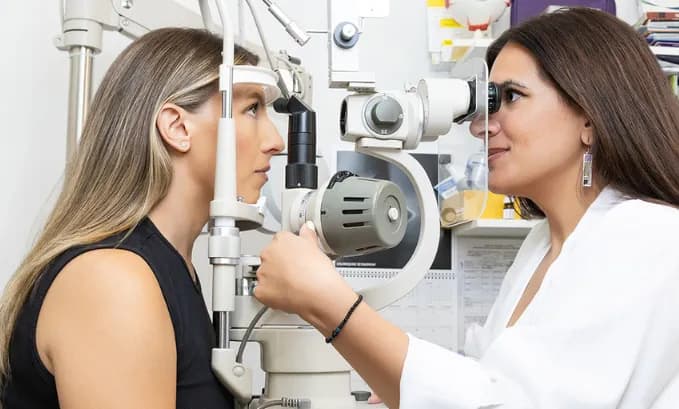
If you have noticed your vision improving with age, the right response is not to assume everything is fine and skip your next appointment. It is to get a comprehensive eye exam so your optometrist can establish exactly what is driving the change.
A full exam will assess your lens for early cataract development, measure your intraocular pressure, check your retinal health, and update your prescription. If second sight or a myopic shift is confirmed, your optometrist can monitor the progression and let you know when and whether treatment becomes appropriate.
If you are over 60, reading about reading glasses by age can also help you understand what normal age-related vision changes look like, and how to tell them apart from something that needs attention.
Book an Eye Exam at OPTYX New York
Whether your vision feels better than it used to or you have simply not had an exam in a while, our optometrists at OPTYX can give you a clear picture of what is happening inside your eyes. We have 13+ locations across NYC and Long Island with comprehensive eye exams available at every one.
Book your eye exam at OPTYX and find out what is really behind your vision changes.
Frequently Asked Questions
Why is my vision improving with age?
The most common reason is second sight, an early sign of cataract formation where lens changes temporarily sharpen near vision. It can also result from presbyopia interacting with existing nearsightedness. Either way, an eye exam is needed to identify the cause.
Can vision actually improve with age?
Vision can shift in ways that feel like improvement, particularly for near tasks. However, this is almost always caused by a change in the lens, such as early cataract development, rather than a genuine improvement in eye health.
Is vision improving with age ever a good sign?
Occasionally a prescription change with age can make certain distances naturally clearer. But any noticeable change in vision, including an apparent improvement, should be checked by an optometrist to rule out underlying causes like cataracts or blood sugar changes.
What is second sight?
Second sight is a temporary improvement in near vision caused by early cataract development. As the lens becomes denser, it increases in optical power, which can reduce dependence on reading glasses. It is a known early sign of cataracts and should be evaluated by an optometrist.
What should I do if my vision seems to be improving?
Book a comprehensive eye exam. A noticeable shift in vision in any direction needs to be assessed, even if it feels positive. Your optometrist can identify whether the cause is a cataract, a prescription change, or something else entirely.
How often should adults get eye exams?
Most adults should have a comprehensive eye exam every one to two years. If you notice any change in your vision between appointments, including apparent improvement, book an exam sooner rather than waiting.