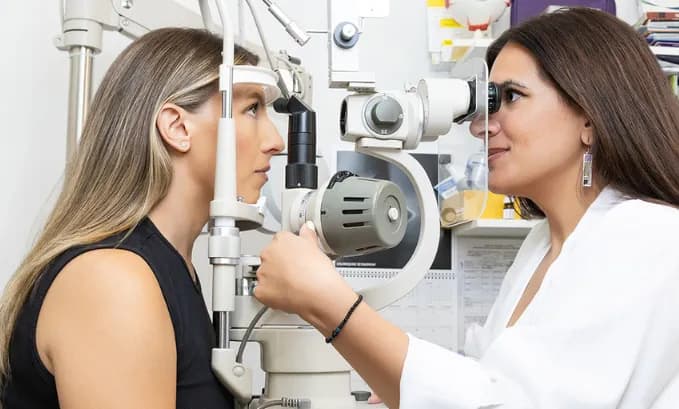

Does diabetes cause glaucoma? While diabetes does not directly cause glaucoma, research consistently shows that people with diabetes face a significantly higher risk of developing it. Understanding how these two conditions are connected can help you take the right steps to protect your vision. At OPTYX, we provide specialized eye exams for diabetic patients to catch glaucoma and other complications early.
How Diabetes and Glaucoma Are Connected
So does diabetes cause glaucoma? The connection starts with blood vessels. Diabetes affects blood vessels throughout the body, and the delicate vessels in your eyes are especially vulnerable. When blood sugar levels remain elevated over time, they damage the small blood vessels in the retina and disrupt normal fluid drainage in the eye. This damage can lead to increased intraocular pressure, which is the primary risk factor for glaucoma.
Studies show that adults with diabetes are roughly twice as likely to develop open-angle glaucoma. The risk increases the longer someone has lived with diabetes, which is why understanding is glaucoma related to diabetes matters for long-term eye health.
Is Glaucoma Caused by Diabetes?
Many patients want to know is glaucoma caused by diabetes. It is not directly caused by diabetes, but diabetes creates conditions that make glaucoma more likely. There are several ways this happens:
- High blood sugar damages retinal blood vessels, reducing blood flow to the optic nerve
- Chronic inflammation from diabetes affects the eye’s drainage system
- Diabetes increases oxidative stress, which can harm the optic nerve over time
- Diabetic retinopathy can lead to neovascular glaucoma, a serious secondary form
Neovascular glaucoma is particularly concerning. When diabetic retinopathy progresses, abnormal blood vessels can grow on the iris and block the eye’s natural drainage channels. This causes a rapid rise in eye pressure and requires urgent treatment. While neovascular glaucoma is less common, it shows clearly that is glaucoma associated with diabetes – the answer is yes, especially when blood sugar is poorly controlled.
Is Glaucoma Related to Diabetes Type?
Is glaucoma related to diabetes type specifically? Both Type 1 and Type 2 diabetes are associated with an increased risk. However, because Type 2 diabetes is far more common and often goes undiagnosed for years, many people develop eye complications before they even know they have diabetes.
If you have been diagnosed with either type, annual comprehensive eye exams are essential. Early detection of elevated eye pressure or optic nerve changes allows your optometrist to begin treatment before vision loss occurs.

Regular diabetic eye exams at OPTYX help detect glaucoma and retinopathy early.
Other Diabetes-Related Eye Conditions
Glaucoma is not the only eye condition linked to diabetes. Understanding the full picture helps explain why diabetic eye care requires a comprehensive approach:
Diabetic Retinopathy
The most common diabetic eye complication, diabetic retinopathy occurs when high blood sugar damages retinal blood vessels. It often develops without symptoms in early stages and can lead to vision loss if untreated. OPTYX uses Optos technology for diabetic retinopathy detection to catch changes before they progress.
Cataracts
People with diabetes tend to develop cataracts at a younger age. High blood sugar causes the lens to swell, leading to cloudy vision over time.
Diabetic Macular Edema
Fluid buildup in the macula from damaged blood vessels can cause blurred central vision. This condition frequently occurs alongside diabetic retinopathy.
How to Reduce Your Risk
Since the question does diabetes cause glaucoma comes up so often, here are practical steps to lower your risk:
- Keep blood sugar levels within your target range consistently
- Monitor blood pressure and cholesterol, as both affect eye health
- Schedule annual diabetic eye exams, even if your vision feels normal
- Stay physically active to improve circulation and blood sugar control
- Avoid smoking, which accelerates blood vessel damage
- Know your family history – if glaucoma runs in your family, inform your optometrist
Managing diabetes effectively is one of the best ways to protect your vision. Whether you are asking is glaucoma caused by diabetes or looking for prevention tips, small daily choices around diet, exercise and medication adherence make a real difference.
How OPTYX Supports Diabetic Eye Health
At OPTYX, we offer comprehensive eye exams for diabetic patients that go beyond standard vision checks. Our exams include tonometry for eye pressure, Optos ultra-widefield retinal imaging and thorough optic nerve evaluation – all critical for detecting glaucoma and diabetic retinopathy in their earliest stages.
Optos technology captures up to 200 degrees of the retina without dilation, making the exam more comfortable while providing detailed imaging that reveals damage invisible to the naked eye.

Comprehensive eye exams at OPTYX include advanced imaging for early detection of diabetes-related eye conditions.
Schedule Your Diabetic Eye Exam
If you have diabetes, protecting your eyes starts with regular screening. Now that you know is glaucoma associated with diabetes, take the next step. Visit any of our locations across NYC and Long Island for a thorough evaluation. Our optometrists will assess your risk for glaucoma, diabetic retinopathy and other complications.
Frequently Asked Questions
Does diabetes cause glaucoma?
Diabetes does not directly cause glaucoma, but it significantly increases your risk. People with diabetes are about twice as likely to develop open-angle glaucoma due to blood vessel damage and increased intraocular pressure.
Is glaucoma associated with diabetes?
Yes. Multiple studies confirm that diabetes is associated with a higher risk of glaucoma, particularly open-angle glaucoma and neovascular glaucoma. The longer you have diabetes, the greater the risk.
Can controlling blood sugar prevent glaucoma?
Good blood sugar control reduces your overall risk of diabetic eye complications. Since does diabetes cause glaucoma is tied to blood vessel damage, keeping sugar levels stable helps. However, it does not eliminate risk entirely, which is why annual eye exams remain important.
How often should diabetic patients get eye exams?
Diabetic patients should have a comprehensive eye exam at least once a year. If you already have signs of diabetic retinopathy or elevated eye pressure, your optometrist may recommend more frequent visits.
What is neovascular glaucoma?
Neovascular glaucoma is a secondary form of glaucoma caused by abnormal blood vessel growth on the iris, often triggered by advanced diabetic retinopathy. It can cause a rapid increase in eye pressure and requires immediate treatment.