A contact lens appointment is a distinct clinical visit, not a repeat of your glasses exam. It involves a health review, corneal measurements, a trial lens fitting, and hands-on instruction before your optometrist issues a contact lens prescription. Most first visits run 60 to 90 minutes. Schedule a contact lens exam at OPTYX to get started, or read on for a step-by-step look at what happens.
Here is what every visit covers:
- Health screening: Your optometrist reviews your eye care history and any conditions that affect lens wear, such as dry eye or corneal scarring.
- Measurements: Corneal curvature, pupil diameter, and iris size determine the correct lens base curve and diameter.
- Trial fitting: A sample lens goes on your eye so the doctor can evaluate centration, movement, and coverage in real time.
- Handling training: You practice inserting, removing, and cleaning lenses before leaving the office.
- Prescription: Once the fit is confirmed, you receive a contact lens prescription and typically a short supply of trial lenses to test at home.
What Happens at a Contact Lens Appointment?

The visit covers health screening, corneal measurements, a trial lens fitting, and hands-on handling instruction.
The visit starts with a conversation. Your optometrist asks why you want to switch to contacts, reviews your eye care history, and checks for conditions that complicate lens wear, such as chronic dry eye, prior corneal injuries, or seasonal allergies. Insurance coverage is confirmed at this stage.
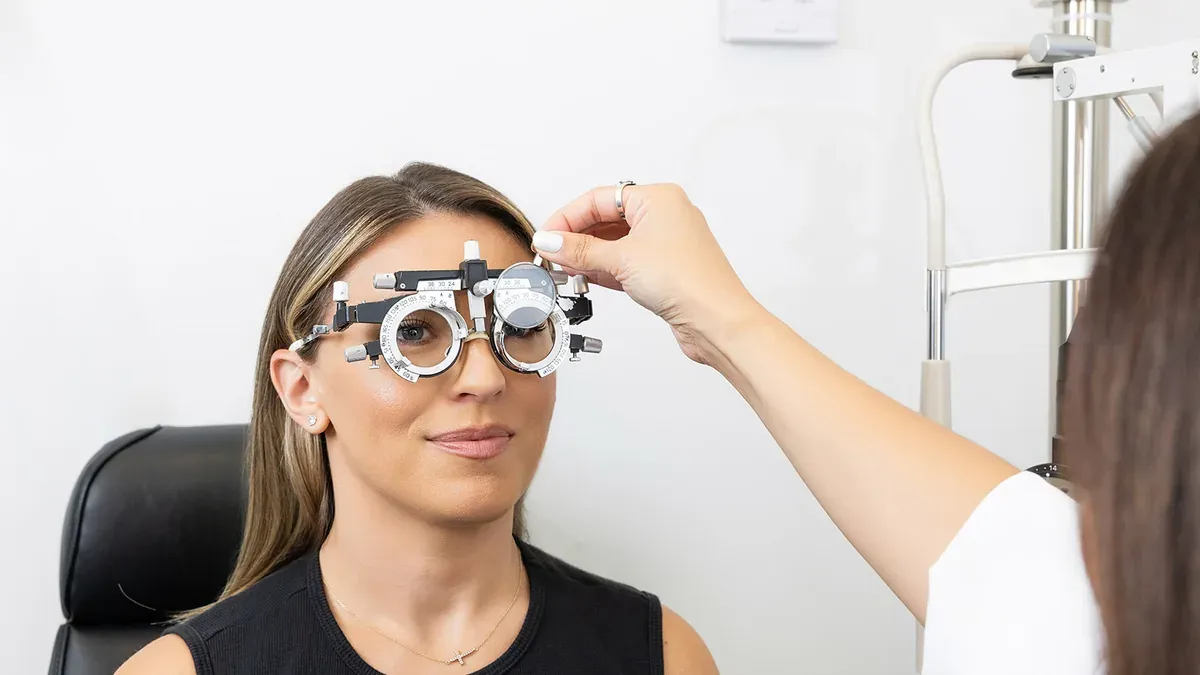
Next comes measurement. The doctor measures corneal curvature, pupil diameter, and iris size. Those numbers set the base curve and diameter of the lens.
Without accurate measurements, a correct prescription power can still feel uncomfortable or move around on the eye. A 2021 review in Clinical and Experimental Optometry found that when an appropriate lens fit is achieved, fitting characteristics may not play a critical role in contact lens-related discomfort.
With measurements in hand, your optometrist selects trial contact lenses from stock. A 2022 review in Contact Lens and Anterior Eye noted that Optical Coherence Tomography can describe changes in corneal and conjunctival surface morphology under different lens types, giving practitioners a noninvasive view of how a lens interacts with the eye surface.
The doctor places the trial lens on your eye and examines it under a slit lamp, checking centration, blink movement, and corneal coverage. Only after this observation does instruction begin. For a closer look at how OPTYX optometrists approach each step, see your contact lens eye exam at OPTYX.
Do You Need a Separate Appointment for Contact Lenses?
In most cases, yes. The fitting is either an add-on to a comprehensive eye exam or a standalone visit, billed separately from either. A glasses prescription tells you the optical correction you need. It does not include the corneal measurements and fit assessment required to prescribe contacts safely.
Skipping the fitting and ordering lenses based on glasses data alone risks wearing lenses that sit incorrectly on the eye, which can cause discomfort or, over time, affect corneal health.
Some practices schedule both exams on the same day. Others book them separately, especially when specialty lens evaluations are needed. Ask your local OPTYX location whether a combined visit is an option. For a detailed breakdown of what each exam includes, see contact lens exam vs. eye exam: the key differences.
What Is the Difference Between an Eye Exam and a Contact Lens Fitting?
A contact lens fitting adds corneal measurements, trial lens placement, and a slit-lamp fit check to what a standard eye exam provides. A comprehensive eye exam checks visual acuity, eye pressure, retinal health, and overall ocular function, ending with a glasses prescription. This builds on that foundation.
The distinction matters clinically. Contact lenses sit directly on the eye surface and interact with the tear film with every blink. The fitting accounts for the individual shape of your eye, not just your refractive error. A contact lens prescription therefore specifies brand, material, base curve, and diameter in addition to sphere, cylinder, and axis.
People with dry eye have an extra consideration. The fitting may require a dry eye assessment before a trial lens is even selected, to identify materials and wear schedules that reduce irritation.
How Long Does a Contact Lens Appointment Take?
For a first-time wearer, expect 60 to 90 minutes. "How long is a contact exam?" is one of the first questions new patients ask. The answer depends on lens type and history, but the first visit always covers the full sequence: intake, measurements, fitting, instruction, and the fit review.
An OPTYX contact lens appointment for established wearers is shorter. Annual follow-up checks typically run 30 to 45 minutes.
Switching from soft lenses to rigid gas-permeable or scleral lenses takes longer. Specialty fitting requires additional measurements and often multiple trial sessions before a final contact lens prescription is written.
What Should I Bring to My First Contact Lens Appointment?

Bring your glasses or most recent prescription, your insurance cards, and a list of any eye drops or medications you use. Here is the full checklist:
- Your most recent glasses prescription or glasses helps the optometrist verify your current correction baseline.
- Insurance cards and vision plan details allow the front desk to confirm your contact lens exam benefits before you begin.
- A list of any eye drops, medications, or supplements you take gives your doctor useful context, since some affect tear production and lens tolerance.
- Any contacts you currently wear, including the box, let the doctor review your current brand, base curve, and wear schedule.
If this is your first time wearing contacts, you do not need to bring lens materials. The office supplies trial lenses. Wear glasses to the appointment rather than contacts so your optometrist gets an unobstructed baseline measurement. Calling ahead to confirm what your vision plan covers for the contact lens exam and materials can also prevent billing surprises on the day.
The Contact Lens Trial Period: What Happens Next

After a successful in-office fitting, many optometrists send patients home with trial lenses before writing the final prescription. This is routine practice. It is not a sign that anything went wrong.
Trial lenses let you test comfort across a full range of daily activities. A lens can feel fine in the office but become uncomfortable during long drives or in dry indoor air. The contact lens trial period gives you and your doctor time to adjust before committing to a full supply.
For patients first time wearing contacts, insertion usually takes several attempts before the lens goes in cleanly. Your optometrist will walk you through technique: how to hold the eyelid open, how to direct your gaze to ease the blink reflex, and how to tell if the lens is inside out.
If you are still struggling at the end of the appointment, the doctor may help directly or send you home with practice lenses to keep trying. Let your optometrist know during the follow-up if lenses feel consistently tight, if vision fluctuates through the day, or if redness appears by afternoon. These observations guide adjustments in brand or base curve before the prescription is finalized.
Lens type also comes up at this stage. Daily disposables and monthly lenses differ in wear schedules, care requirements, and long-term cost. For a full comparison, see daily vs. monthly contact lenses: which is right for you.
Once the trial period confirms comfortable vision, your optometrist finalizes the contact lens prescription and you can order a supply.
Book Your Contact Lens Exam
Whether you are new to contacts or due for an annual check, your OPTYX optometrist can discuss contact lenses, specialty options, and fitting schedules before you commit to a supply. Book an Eye Exam at one of our locations across Manhattan, Long Island, the North Fork, the Hamptons, and Westchester.