If you find yourself braking earlier after dark, gripping the wheel tighter when headlights approach, or quietly avoiding highway driving at night, you are not imagining the problem. Asking why can’t I see at night while driving is one of the most common concerns our patients bring to OPTYX, and in most cases the answer is a specific, diagnosable condition that can be improved.
Why can’t I see driving at night the way I used to? There are several possible explanations, and they are not all the same. Here is what our optometrists look for.
Why Can’t I See at Night? The Basics
Before explaining why can’t I see at night while driving in clinical terms, it helps to understand what night vision actually demands. In low light, your pupil dilates to let more light in, and your retina shifts from cone photoreceptors (daytime color and detail) to rod photoreceptors (dim-light sensitivity).
The catch: a larger pupil exposes more of your optical system to light. Any imperfection in how your eye focuses becomes far more noticeable after dark. That is why why can’t I see at night is a different question from why can’t I see in the morning, even for the same person.
Why Can’t I See Driving at Night? The Most Common Causes
Your Prescription Is Out of Date
This is the most common and most easily fixed reason. Mild myopia manages fine in daylight but becomes much more noticeable after dark, when dilated pupils magnify every optical imperfection. If you wonder why can’t I see driving at night but feel fine in daylight, an updated prescription is the most likely answer. Many patients are years overdue for a new refraction and see a dramatic improvement once they get one.
Early Cataracts
Cataracts cloud the lens of your eye, scattering light and creating glare, halos, and reduced contrast. These effects are significantly worse in dim conditions. If you notice rings around headlights and ask why can’t I see at night while driving, early cataracts are a very common culprit from age 50 onward. Patients often notice the problem mainly at night, well before cataracts start affecting daytime vision.
Higher-Order Aberrations
Even with a technically correct prescription, some people have optical irregularities in the cornea or lens that a standard prescription cannot correct. These create star bursts and halos around light sources. If you have already updated your glasses and still wonder why can’t I see driving at night, higher-order aberrations may be what is left.
Dry Eye
Your tear film is the outermost optical surface of your eye. When it is thin or unstable, visual quality fluctuates, and the effect is worst in low light when visual demands are highest. Dry eye is one of the more overlooked answers to why can’t I see at night. Patients typically notice it as fluctuating blur at traffic lights, not constant blurriness all the time.
Reduced Contrast Sensitivity
Contrast sensitivity declines with age and with certain retinal conditions. Why can’t I see at night while driving even though my prescription seems fine? Reduced contrast sensitivity is frequently the reason. Standard vision tests measure sharpness on a chart, not contrast, so you can pass a visual acuity test and still struggle significantly in low-contrast nighttime conditions.
What an OPTYX Optometrist Evaluates
When a patient comes in wondering why can’t I see at night while driving, an OPTYX optometrist does a structured assessment:
- Refraction: updating your prescription and checking for any nighttime shift toward nearsightedness that affects some patients in low light.
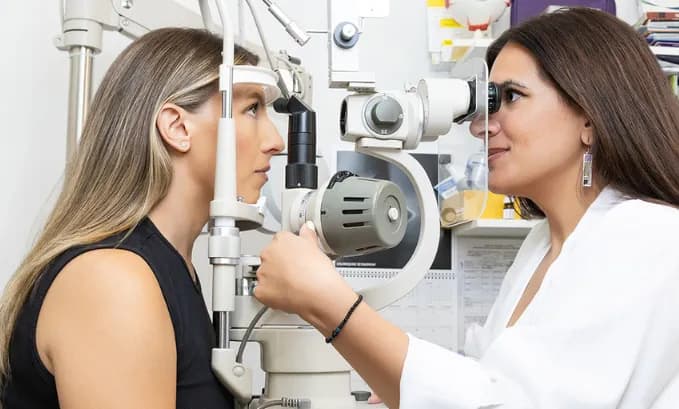
- Slit-lamp exam: looking at the cornea and lens for early cataract formation or surface irregularities contributing to light scatter.
- Dilated retinal exam: checking the retina and optic nerve for diseases affecting rod function or contrast sensitivity.
- Tear film assessment: evaluating whether dry eye is destabilizing your optics after dark.
All of this is part of a comprehensive eye exam at OPTYX. For patients with elevated pressure concerns, glaucoma testing is included too.

What Can Actually Be Done?
Most causes of why can’t I see at night come with practical solutions:
- An updated prescription is the single biggest fix for most patients with uncorrected refractive error.
- Anti-reflective lens coatings significantly reduce glare and halos from oncoming headlights.
- Dry eye treatment stabilizes the tear film and restores optical consistency, day and night.
- Cataract surgery, when cataracts are behind why can’t I see at night while driving, typically produces a dramatic improvement.
Book an Eye Exam at OPTYX
If you are asking why can’t I see driving at night and it is affecting your confidence behind the wheel, an eye exam is the right starting point. Most causes of night vision difficulty are identifiable and treatable, and many patients see significant improvement from a prescription update or dry eye treatment alone.
OPTYX has 14 locations across Manhattan, Long Island, the North Fork, the Hamptons, and Westchester. Book your eye exam and find out exactly why you struggle to see at night.
Frequently Asked Questions
Why can’t I see at night while driving?
The most common reasons are an outdated prescription, early cataracts, higher-order aberrations, dry eye, and reduced contrast sensitivity. An eye exam identifies the specific cause and which treatments will help most.
Why can’t I see driving at night even with glasses?
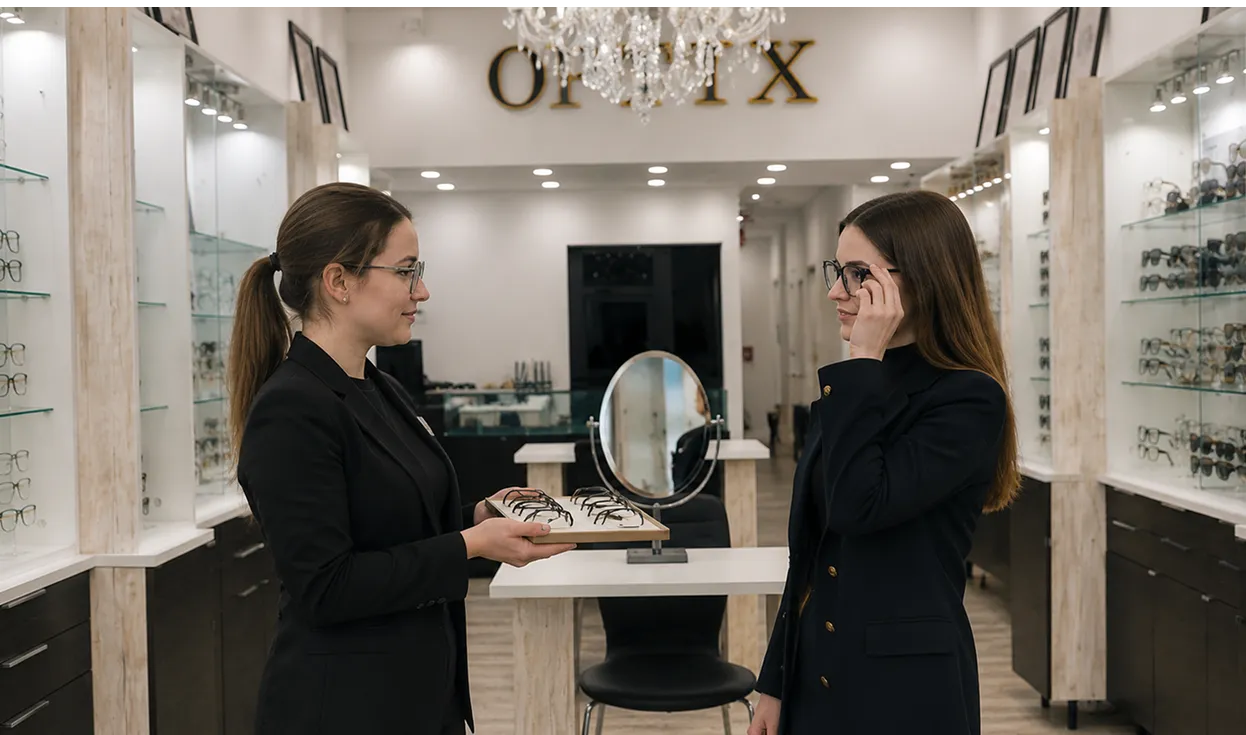
Your prescription may have changed, your anti-reflective coating may have worn off, or you may have higher-order aberrations or dry eye causing fluctuating visual quality. An updated refraction and fresh lens coatings often make a significant difference.
Why can’t I see at night if my daytime vision seems fine?
Cataracts, reduced contrast sensitivity, and higher-order aberrations all affect low-light vision much more than daytime vision. Your dilated pupil at night lets in peripheral light through optical zones your smaller daytime pupil never uses. You can pass a vision chart test and still have serious trouble after dark.
Does wearing glasses at night help with headlight glare?
Glasses with anti-reflective coatings significantly reduce glare and halos from headlights. Yellow-tinted night-driving lenses are not recommended and do not improve vision in most cases. The first step is making sure your prescription is current and your lenses have a proper AR coating.
Is poor night vision a sign of something serious?
It can be, but most cases have a straightforward cause. Sudden severe difficulty seeing at night, especially with peripheral vision changes, warrants a prompt exam. Gradual worsening over time is usually related to a correctable optical issue, aging, or early cataracts.
Can dry eye cause problems with night driving?
Yes. Dry eye destabilizes the tear film, which is the outermost optical surface of your eye. In low-light conditions when your eye is working hardest, an unstable tear film causes noticeable fluctuating blur. Treating dry eye often improves nighttime vision clarity without any prescription change at all.