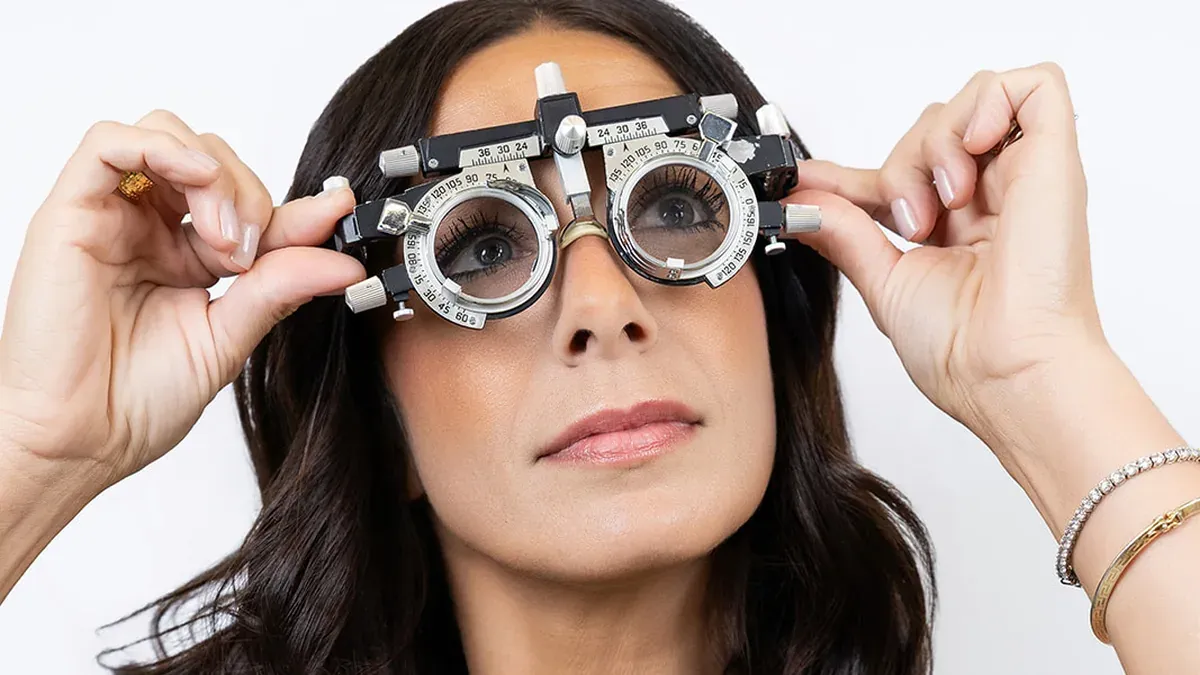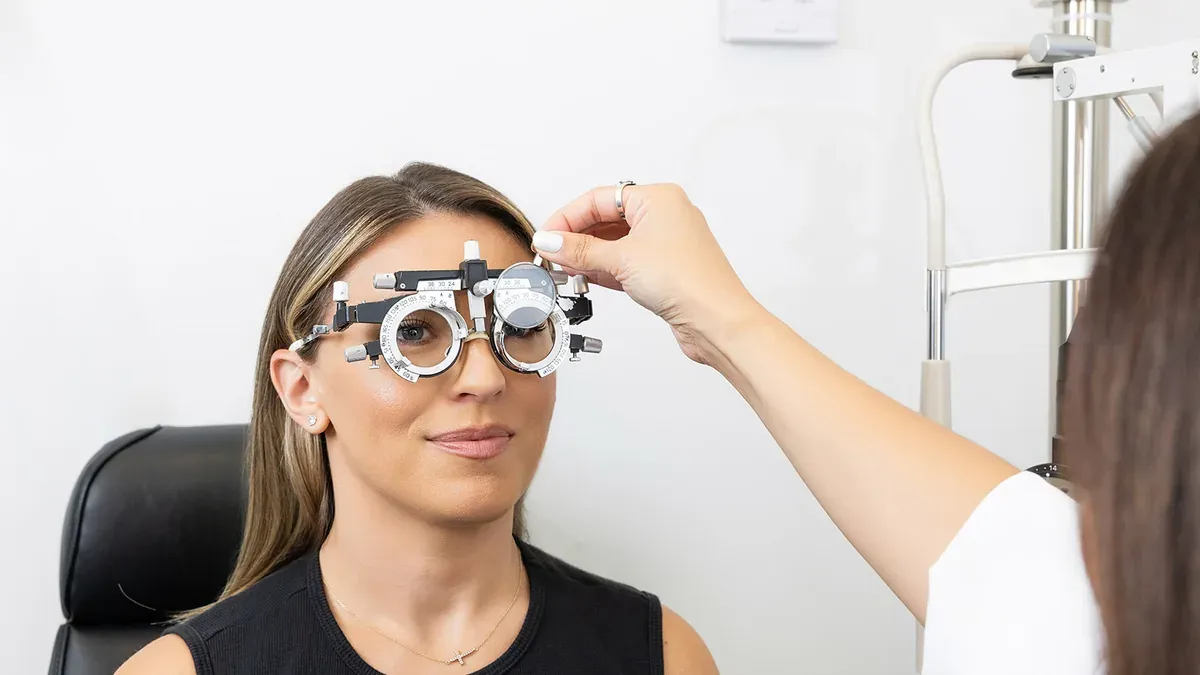
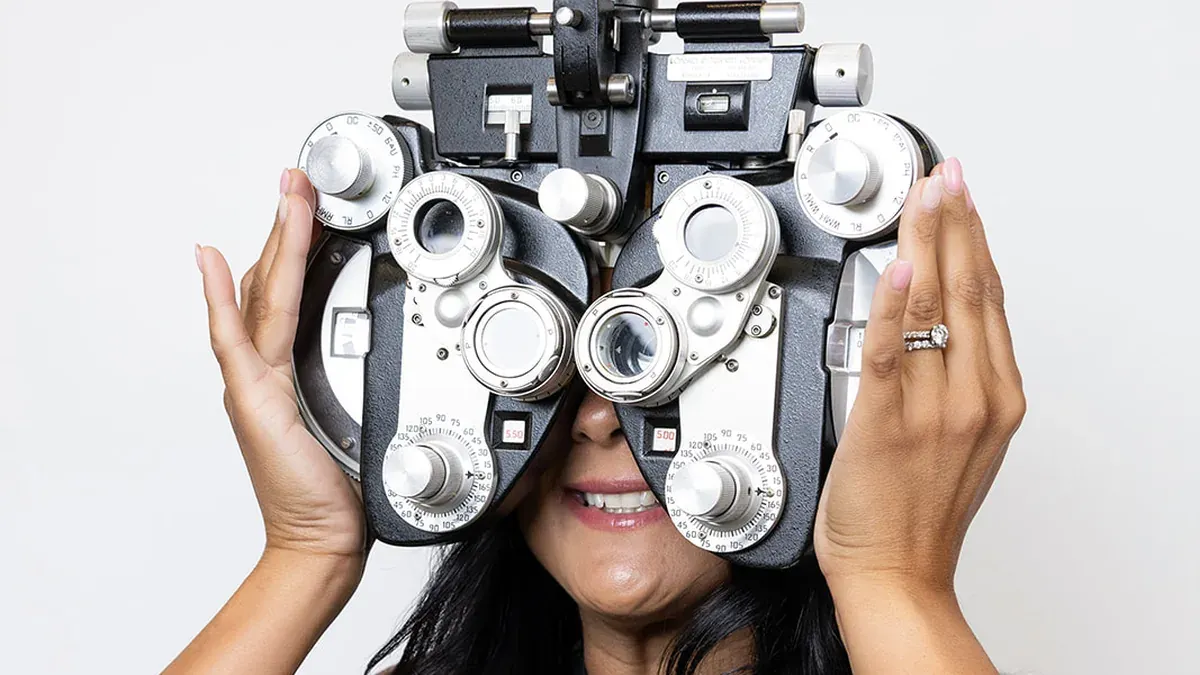
Removing your contacts before an eye exam is the single most important thing you can do to prepare. Soft contact lenses should come out at least 24 hours before your visit; rigid gas-permeable (RGP) lenses need 48 to 72 hours. Contact lenses alter corneal shape, and even a mild alteration can skew the refraction tests and measurements central to any eye exam.
| Lens Type | Minimum Removal Time |
|---|---|
| Soft contact lenses | At least 24 hours |
| Rigid gas-permeable (RGP) lenses | 48 to 72 hours |
| Specialty lenses (orthokeratology, etc.) | Per your optometrist's instructions |
Can I Wear Contact Lenses to an Eye Exam?
For most of the tests performed during a standard visit, no. Contact lenses alter corneal curvature, which affects the accuracy of refraction testing and corneal mapping. Arriving without lenses gives your optometrist a true baseline.
There is one scenario where your provider may ask you to put your lenses in briefly: when evaluating fit and lens performance. If you need a contact lens exam alongside your routine vision check, your optometrist will direct you on exactly when to wear them and when to remove them.
Outside of that specific instruction, leave your contacts out for the full visit. Soft contact lens removal before the exam also matters for the slit-lamp assessment. With lenses in, subtle surface changes like early dryness patterns or low-grade irritation can be harder to detect.
How Long Should I Leave My Contacts Out Before an Eye Exam?
Soft contact lenses should be out at least 24 hours before an eye exam. For most routine visits, that window is sufficient for corneal geometry to settle back toward its natural state. Some providers recommend a full 48 hours before a more thorough assessment.
RGP lenses are stiffer and exert more sustained pressure on the cornea. They need more time. The standard recommendation for contact lens exam preparation is 48 to 72 hours before an RGP wearer's appointment.
If you have recently switched lens brands, changed wear schedules, or have a history of corneal irregularity, let your optometrist know when you book. They may advise a longer removal window.
Soft Contacts Before Eye Exam: The 24-Hour Standard
Soft lenses conform to the cornea rather than reshaping it, so their effect on corneal geometry reverses more quickly after removal. For most patients, stopping soft contacts before eye exam day by 24 hours is sufficient for the cornea to return to its natural curvature.
How Long Do RGP Lens Wearers Need to Remove Lenses Before an Exam?
RGP lenses before an eye appointment should come out at least 48 to 72 hours in advance. Rigid lenses reshape the cornea more persistently than soft lenses do, and that reshaping takes longer to reverse.
A 2025 systematic review by Abid et al. found that corneal stabilization after hard lens removal ranged from 1 to 22 weeks, with a median of 7.6 weeks, in studies using corneal imaging techniques. For routine exams, 48 to 72 hours is the standard clinical floor.
If your optometrist is performing precise corneal topography for a fitting or refractive evaluation, they may ask you to stop wearing lenses for considerably longer. The key difference between contact lens safety guidance for soft lenses versus RGP lenses is this reshaping effect: soft lenses conform to the cornea, while RGP lenses actively reshape it.
What Happens If I Wear Contacts During an Eye Test?
Contact lens wear alters corneal curvature, and that alteration directly affects the two tests most critical to your exam: keratometry and refraction. Both can return unreliable readings.
The result can be a prescription that feels wrong, lenses that cause eye strain or blurred vision, or glasses that do not correct your vision properly. Not a minor inconvenience.
Longer-term, lenses worn on a cornea already stressed by ongoing contact lens wear can conceal early signs of corneal dryness, low-grade inflammation, or reduced oxygen supply to the corneal surface. These changes can be missed on exam if the cornea is not assessed in its natural state.
A 2018 review by McMonnies described how end-of-day dryness symptoms in soft contact lens wearers are linked to a cascade of tear instability, increasing evaporation, and rising osmolarity. Early detection of those changes requires that your optometrist see your eye as it actually is.
What Your Optometrist Checks During a Contact Lens Exam

Understanding what happens during the visit clarifies why contacts before the eye exam need to come out first.
For every eye exam contact lens wearer visit, your optometrist typically assesses three areas:
Corneal health. A slit-lamp examination magnifies and illuminates the eye's surface, letting the clinician detect dryness, irritation, and corneal neovascularization, which is blood vessel growth caused by insufficient oxygen reaching the cornea. Contact lens wear can produce these changes gradually, with no obvious symptoms until the exam.
Lens fit. Keratometry measures the curvature of the cornea to verify that your lenses align correctly with your eye's shape. Poor fit leads to discomfort and can cause abrasion over time.
Prescription accuracy. A refraction test checks whether your current prescription matches your actual visual needs. If you have been wearing an outdated prescription, that test will reveal the gap.
Understanding how a contact lens exam differs from a standard eye exam helps you arrive with the right expectations and prepared to discuss how your lenses have been performing.
Can I Wear Contacts to a Contact Lens Fitting Appointment?

Yes, with one caveat. For an initial fitting or a brand change, your optometrist may want to see your current lenses on your eye before recommending a new pair. Arrive wearing your current lenses if that is what your provider requests.
For a refit after a prescription change, the standard pre-exam removal rules apply: lenses out for at least 24 hours for soft lenses, 48 to 72 hours for RGP. If this is your first contact lens appointment and you have never worn lenses before, the removal question does not apply. Your optometrist will fit you with trial lenses during the visit.
Preparing for Your Appointment: A Quick Checklist

Contacts before eye exam removal is the first step, but a few others make the visit more productive:
- Bring your current lens case and any spare pairs so your optometrist can note the brand and parameters.
- Have your prescription history available, including the date of your last eye exam.
- Note any symptoms: end-of-day dryness, fluctuating vision, irritation, or redness.
- Let the front desk know you are an eye exam contact lens wearer when you book so the right appointment length is scheduled.
- Wear glasses to the appointment if you have them; if you do not, arrange a ride in case your optometrist anticipates dilation.
If you notice sudden redness, pain, or any unexpected vision change after removing your lenses, contact your optometrist the same day rather than waiting for a scheduled visit.
OPTYX's optometrists across Manhattan, Long Island, the North Fork, the Hamptons, and Westchester use slit-lamp microscopy and keratometry alongside other diagnostic tools to give contact lens wearers a thorough, accurate evaluation.
Book Your Eye Exam
If your last contact lens check was more than a year ago, or if your lenses no longer feel as comfortable as they once did, Book an Eye Exam at your nearest OPTYX location.
Sources
- Abid A et al. (2025). Systematic review investigating the time taken for corneal stabilisation following contact lens cessation. The British Journal of Ophthalmology. PubMed
- McMonnies CW (2018). An Amplifying Cascade of Contact Lens-Related End-of-Day Hyperaemia and Dryness Symptoms. Current Eye Research. PubMed