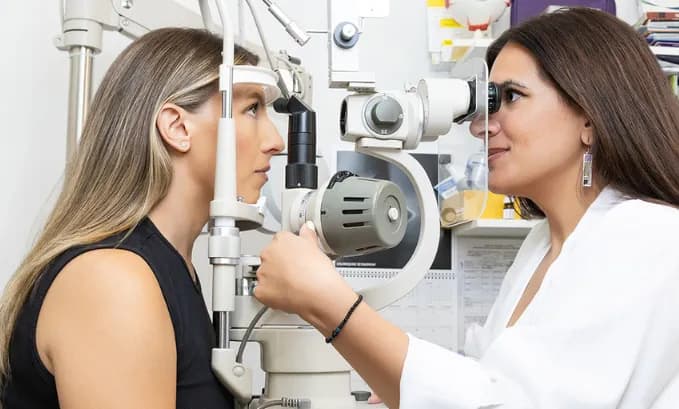

Measuring the pressure inside your eye takes less than a minute. It produces no pain. And it can detect glaucoma years before you notice any vision change. At OPTYX, an eye pressure exam is part of every comprehensive assessment because elevated intraocular pressure is the leading risk factor for glaucoma, and it produces no symptoms at all on its own.
Here is what a tonometry eye exam involves, what the numbers mean, and why it matters more than most patients realize.
What Is an Eye Pressure Exam?
An eye pressure exam measures the pressure inside your eye generated by aqueous humor, the fluid that circulates through the front of the eye. When that fluid cannot drain properly, pressure builds. Over time, that pressure presses on the optic nerve and causes irreversible damage.
Because this process is completely silent, an eye pressure exam is often the only way to catch it before something goes wrong.
What Is a Tonometry Eye Exam?
A tonometry eye exam is the specific technique used to measure intraocular pressure. There are a few different methods.
Non-Contact Tonometry (Air Puff)
A brief puff of air is directed at your cornea. The instrument measures how much it deflects. No drops, no contact with your eye. This is the fastest version and is used as a screening method in the tonometry eye exam.
Goldmann Applanation Tonometry
After numbing drops and a fluorescent dye, a small flat probe gently rests against your cornea and measures the force needed to flatten a standardized area of the surface. This is the gold standard tonometry eye exam, used to confirm elevated readings from air-puff screening.
Rebound Tonometry (iCare)
A tiny probe briefly touches the cornea at high speed and bounces back. The instrument calculates pressure from that rebound motion. No anesthetic needed, and most patients barely notice it.
What Do the Numbers Mean?
Normal intraocular pressure is 10 to 21 mmHg, with an average around 15 to 16 mmHg. A reading above 21 on an eye exam pressure test does not confirm glaucoma on its own. It means your optometrist needs a fuller picture.
Pressure fluctuates throughout the day. Caffeine, exercise, and body position all affect it. Corneal thickness also matters, because thinner corneas can make pressure appear lower than it actually is.
It is also possible to develop glaucoma with pressure in the normal range. That is called normal-tension glaucoma, and it is why an eye exam pressure test is always paired with optic nerve imaging and visual field testing, not used alone.
Can Eye Exam Detect High Blood Pressure?
Yes. Can eye exam detect high blood pressure through what your optometrist sees in the retina? It can. During a dilated examination, your optometrist looks directly at your retinal blood vessels. These are the only blood vessels in the body visible without invasive procedures.
A high blood pressure eye exam finding might include vessel narrowing, arteriovenous nicking (where arteries cross over and compress veins), or in severe cases, retinal hemorrhages. These changes often develop quietly.
Can an Eye Exam Detect High Blood Pressure Before a Diagnosis?
Can an eye exam detect high blood pressure before a formal diagnosis? In some cases, yes. The eye exam high blood pressure relationship is clinically significant because retinal vessel changes often appear before a patient is aware of having elevated blood pressure at all.
This is not a replacement for a blood pressure cuff. A normal-looking retina does not rule out hypertension. But when a high blood pressure eye exam finding prompts a follow-up with your primary care provider, that conversation can genuinely matter. The eye exam high blood pressure component is one more reason why a comprehensive annual exam catches things that nothing else does.

Who Needs Regular Eye Pressure Testing?
An eye exam pressure test is recommended for every adult from age 40 onward. More frequent testing is important for:
- Patients with a family history of glaucoma in a first-degree relative.
- African Americans and Hispanics, who develop glaucoma at higher rates and earlier ages.
- Patients over 60, where glaucoma prevalence increases sharply.
- Patients with thin corneas, which can cause tonometry to underestimate actual pressure.
- Patients on long-term corticosteroids, which raise intraocular pressure as a side effect.
What If Your Pressure Is Elevated?
An elevated reading on an eye pressure exam triggers a more complete evaluation. Your optometrist will assess your optic nerve through dilation and imaging, measure corneal thickness, and order a visual field test to check for peripheral vision changes that characterize glaucoma.
OPTYX pairs the eye pressure exam with comprehensive optic nerve assessment and visual field testing. For a full guide on how glaucoma is evaluated across multiple tests, see the most accurate glaucoma tests.
Book Your Eye Pressure Exam at OPTYX
The tonometry eye exam is part of every OPTYX comprehensive exam. OPTYX has 14 locations across Manhattan, Long Island, the North Fork, the Hamptons, and Westchester. Book your appointment and make sure your eye pressure is part of the picture.
Frequently Asked Questions
What is an eye pressure exam?
An eye pressure exam, also called tonometry, measures the pressure inside your eye. It is the primary screening tool for glaucoma, takes under a minute, and is included in every comprehensive exam at OPTYX.
Can eye exam detect high blood pressure?
Yes. Your optometrist examines retinal blood vessels for narrowing, hemorrhages, and arteriovenous nicking associated with hypertension. These findings can appear before a formal diagnosis has been made.
Can an eye exam detect high blood pressure reliably?
Not definitively on its own. Retinal findings from an eye exam are a strong signal and prompt follow-up, but a blood pressure measurement is still needed for a formal diagnosis. Think of it as an early-warning system.
What is a normal result on an eye exam pressure test?
Normal intraocular pressure is 10 to 21 mmHg. A reading above 21 warrants further evaluation. Because glaucoma can develop within the normal range, pressure is always assessed alongside optic nerve and visual field findings.
Do I need to prepare for a tonometry eye exam?
Remove contact lenses beforehand if possible. Avoid rubbing your eyes before the appointment. Mention any medications you take, especially corticosteroids, and tell your optometrist if you have had LASIK or PRK, since corneal changes affect tonometry readings.
How often should I have an eye pressure exam?
Every adult should have an eye pressure exam as part of their annual comprehensive exam from age 40 onward. Patients with elevated pressure, glaucoma, or a family history of glaucoma may need testing every six months.