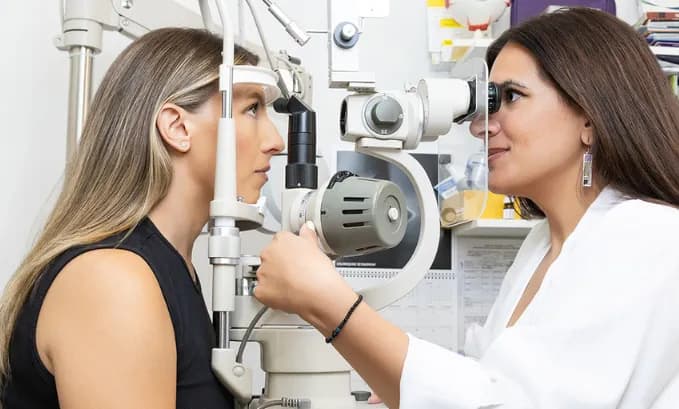

Regarding preserving your eye health, you should be aware of the medical eye exam vs routine eye exam differ. Though they have different functions, each are vital in maintaining your eyesight. Understanding the differences of medical eye exam vs routine eye exam will enable you to select the proper one depending on your requirement and guarantee you receive the most suitable treatment.
Describe a Routine Eye Exam
A routine eye exam is a broad check-up to evaluate your general eye health and vision. Usually carried out by an optometrist, it aims to find whether you require vision correction—that is, glasses or contact lenses. Monitoring your eye health over time and guaranteeing that your vision prescription is precise and current depend on this checkup.
During a standard eye exam, the optometrist will do various tests including:
Tests your visual acuity—that is, your degree of clarity.
The refraction test finds your contact or glass prescription.
Examining your front eye—including the cornea, iris, and lens—the slit-lamp test
Eye muscle tests guarantee correct alignment and operation of the muscles regulating your eye movements.
Examining the health of the optic nerve and retina can be accomplished via pupil dilatation.
Mostly preventive, a routine eye exam looks for common visual problems including nearsightedness, farsightedness, astigmatism, and presbyopia. Though mostly vision-related, it can also highlight some early indicators of underlying eye diseases.
What is a Medical Eye Exam?
Conversely, a medical eye exam is more thorough and usually conducted in response to a specific eye health issue or medical condition that has to be treated. Usually, an ophthalmologist—a medical practitioner specialized in eye problems diagnosis and treatment—conducts this kind of test.
Those having symptoms like these often advised a medical eye exam:
Rapid changes in vision or loss
Vision discomfort or agony
Blurred sight
Bleed or inflammation
Problems associated to diabetes in the eyes
Floaters, sometimes known as flashes of light
Family background in macular degeneration or glaucoma
The ophthalmologist will evaluate your eyes during a medical eye exam for particular disorders such cataracts, glaucoma, diabetic retinopathy, and age-related macular degeneration. Depending on the symptoms and issues being addressed, the tests used in a medical eye exam could be more comprehensive and detailed than those used in a standard eye exam.

Medical eye exam vs routine eye exam: key differences
While both types of exams assess your vision and eye condition, their main differences are related to medical eye exam vs routine eye exam uses rather than anything else.
The main objectives of a routine eye exam are to assess vision and write prescription for corrective lenses. Mostly it’s a preventive measure used to keep visual quality. Conversely, medical eye tests target particular medical conditions, symptoms, or established diseases endangering the eyes. Diagnosis and treatment of eye diseases constitute its main objectives.
Usually performed by an optometrist, who specializes in general eye health and visual care, is a standard eye exam. Generally speaking, though, an ophthalmologist—a medical specialist in eye illnesses and conditions—performs a medical eye exam.
The optometrist will evaluate your vision and whether you require corrective lenses by running simple vision tests like visual acuity and refraction in a normal eye exam. Conversely, depending on the specific eye health issues, a medical eye exam could include more comprehensive testing including visual field tests, OCT scans (optical coherence tomography), and other diagnostic evaluations to identify major diseases like glaucoma or diabetic retinopathy.
Insurance Coverage: Although vision insurance may cover regular eye exams, traditional health insurance policies typically exclude coverage for them. On the other hand, health insurance usually covers a medical eye exam if the appointment is justified by a medical reason, such a confirmed eye condition or symptoms needing assessment.
Knowing the medical eye exam vs routine eye exam differ will help you make sure your eye health demands are getting the correct treatment.
When should you get a routine eye exam vs medical eye exam?

Maintaining ideal eye health depends on eye exam vs medical eye exam, but your need will determine whether you should receive a routine or medical eye exam.
A normal eye exam is enough if you merely want to keep your eyesight and find out whether you need contacts or glasses and have no particular symptoms. Generally advised every 1-2 years, these tests depend on your age, risk factors, and whether or not you wear corrective lenses.
You should make an appointment for a medical eye exam if you have an existing medical condition like diabetes or a family history of eye illness or if you are experiencing any symptoms including vision changes, eye pain or discomfort. Should needed, this test will offer a more complete assessment and treatment plan.
The Part Advanced Technology Plays in Eye Tests
As eye care develops, modern technology has changed routine eye exam vs medical eye exam processes. Digital retinal imaging, sophisticated refraction tools, computerized visual acuity tests, and routine eye exams let optometrists more precisely and quickly evaluate your eye health, therefore enabling the early identification of common visual problems.
Technologies including optical coherence tomography (OCT), fundus photography, and visual field tests give ophthalmologists comprehensive images of the retina and optic nerve during a medical eye exam, so enabling accurate diagnosis of major diseases including diabetic retinopathy, macular degeneration, and glaucoma. These developments guarantee you receive excellent, all-encompassing treatment regardless of the exam type and improve the efficacy of both forms of tests. Maximizing your eye health treatment depends on knowing how technology advances a routine eye exam vs medical eye exam.
Regular Monitoring medical eye exam vs routine eye exam
Apart from knowing the variations between a routine eye exam and a medical eye exam, one should also take into account the need of continuous observation. Regular visits are especially important as your eye condition can change slowly and usually without symptoms. While medical eye exams can identify and cure more difficult eye diseases, routine eye exams help preserve your prescription and general vision clarity. Including both kinds of tests into your medical schedule guarantees the best possible treatment for your general health and eyes.
Moreover, whether routine or medical, frequent eye checkups assist stop the advancement of possibly dangerous eye diseases. Early detection of many disorders, including diabetic retinopathy and glaucoma, might help to control them more successfully. Ignoring medical eye exams could mean lost opportunity for early treatment, so safeguarding your vision and preventing future difficulties. Giving both medical eye exam vs routine eye exam top priority guarantees a complete approach to preserve long-term eye health.
Conclusion
To guarantee you get the right treatment for your eye condition, you must know how medical eye exams vs routine eye exams differ. While medical eye exams handle more serious concerns and diseases that may require treatment, routine eye exams are essential for preserving good vision and detecting early signs of eye problems. Both are valuable in their own right; understanding when to pursue each kind of test will help preserve your vision over the long run.
At Optyx in New York, our team of professionals is dedicated to providing both routine and medical eye exams, ensuring you receive the right care for your needs. See your eye care provider at Optyx to find out whether a routine eye exam or a medical eye exam is appropriate for you, whether you’re due for one or experiencing symptoms. Maintaining your vision and well-being depends on giving your eye health top priority during regular visits to Optyx.